
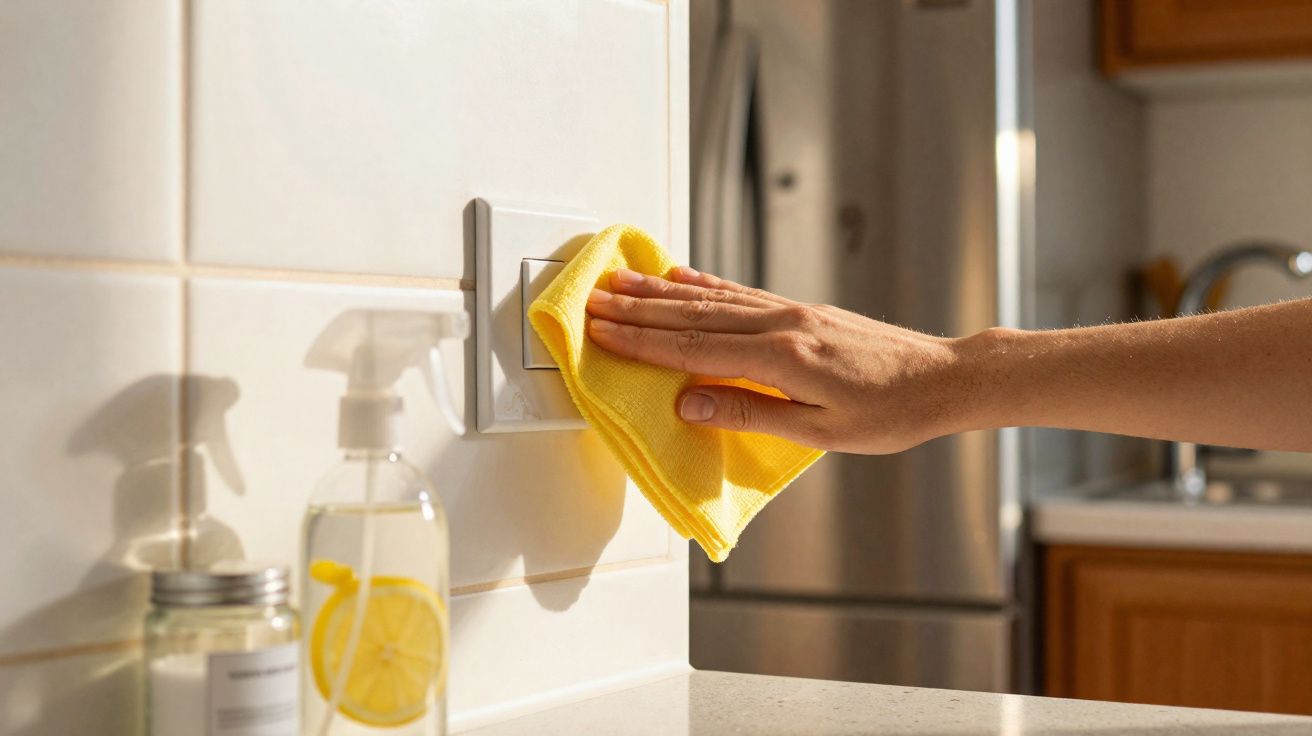
We wipe down worktops, scrub sinks and clean floors - yet one tiny spot at the heart of the kitchen is almost always left out.
It gets touched dozens of times a day, sits right in the spray of grease and water vapour, and is located exactly where raw food is handled: the kitchen light switch. Hardly anyone thinks to clean it regularly. Yet it is one of the dirtiest places in the whole home - and it can be kept far more hygienic with just a few simple steps.
Why the kitchen light switch gets so dirty
Picture an ordinary cooking moment: you are cutting raw meat, realise the lighting is poor, and quickly press the switch. Or you rinse vegetables still covered in soil and turn the lights up in between, so you can see the cooking progress more clearly.
Every one of those actions leaves traces. Tiny amounts of food residue, grease, moisture and bacteria all end up on a surface that rarely appears on anyone’s cleaning rota. Over days and weeks, a proper biofilm can build up there.
The kitchen switch is a cross between a door handle, a chopping board and a phone screen - only we almost never clean it.
What makes it especially concerning is that pathogens such as E. coli or Salmonella do not simply disappear on their own. On hard surfaces, they can survive for surprisingly long periods. Kitchens actually give them rather favourable conditions:
- Warmth from the hob, oven and hot pans
- Moisture from steam and splashes
- Organic residue from hands, grease and food
Studies on kitchen hygiene show that frequently touched surfaces can carry bacterial loads similar to those found on a chopping board used for raw meat. If a switch is handled dozens of times a day by several people, it becomes a hub for germs - from raw chicken breast to the children’s lunch box and back again.
A risk for children, older adults and vulnerable people
In households with several people, the effect becomes even stronger. Children grabbing a snack in a hurry, older family members who steady themselves more often, stressed parents cooking and talking on the phone at the same time - they all use the same switch.
For healthy adults, this often causes no obvious problem. But more vulnerable groups such as toddlers, older people or anyone with a weakened immune system can react much more quickly to germs picked up in the kitchen. Stomach bugs, nausea and diarrhoea are often caused by exactly these overlooked touch points.
How often a kitchen light switch should be cleaned
Experts advise that once a week is enough for most households to reduce the bacterial load noticeably. If you regularly handle raw meat, live in a busy home or have small children, you can shorten the interval to every two or three days.
The exact cleaner matters less than the habit itself - what counts is that the switch gets cleaned at all, and on a regular basis.
If you already do a more thorough clean of the kitchen and bathroom once a week, you can simply add the switch to that routine. A fixed day in the calendar - for example Saturday morning - helps the habit stick.
How to clean a kitchen light switch properly and safely
Electricity and moisture are not a good match. That is why the right method matters far more than aggressive scrubbing with clouds of spray.
Step-by-step guide
- Switch off the power if in doubt - especially if you want to be extra careful or if the switch is old.
- Prepare a cloth - lightly dampen a microfibre cloth with a mild cleaning or disinfecting solution.
- Never spray directly - do not spray cleaner straight onto the switch; always apply it to the cloth first.
- Wipe the surface thoroughly - pay particular attention to edges and grooves, where most dirt collects.
- Work on fine details - a lightly moistened cotton bud helps you reach narrow gaps.
- Dry the area - finish with a dry cloth so no moisture is left near the electrics.
A sensible extra precaution is to check whether the switch plate is loose, cracked or damaged before cleaning. If anything looks unsafe, it is better to leave it alone and have it checked by a qualified electrician rather than forcing the issue with moisture or pressure.
Gentle alternative: home-made solution instead of chemicals
If you prefer to avoid harsh cleaners near food, a simple mix will do: one part white vinegar, one part water.
This solution is enough to cut down most germs significantly and it also helps remove greasy marks. The faint smell disappears quickly, leaving behind clean, less contaminated surfaces.
Two minutes a week at the switch saves you many unnecessary germ contacts over a year - a tiny hygiene habit with a big effect.
Other kitchen spots that are just as important
The light switch is rarely the only problem area. Anywhere you reach with “cooking hands”, similar amounts of bacteria collect. It makes sense to group a few surfaces together and clean them on the same schedule.
- Fridge handles - opened and closed constantly while cooking.
- Cupboard knobs and drawer pulls - grease and flour settle here particularly easily.
- Tap handles and levers at the sink - often touched with dirty hands before the water is even running.
- Microwave control panels and buttons - quick presses in a rush, rarely cleaned.
- Hob controls and other knobs - a magnet for grease and sticky residue.
If you clean these areas along with the kitchen light switch, you reduce the cycle of contamination throughout the kitchen much more effectively. An extra ten minutes once a week is often enough.
Why long-term hygiene habits make such a difference
A switch that is sparkling clean once does very little if it is then ignored for months. The real benefit lies in consistency. If a surface is wiped regularly, the layer of grease, dust and food debris that germs love never gets the chance to form properly.
For children and older adults, that can make a noticeable difference. The number of germs they come into contact with goes down. The risk of stomach and bowel problems caused by contaminated hands after cooking can therefore be reduced significantly.
Any professional chef looking at a domestic kitchen would say the same thing: the small details matter, not just the shiny worktops.
In commercial kitchens, light switches, door handles and control panels have been part of standard hygiene plans for years. Anything that is touched regularly is disinfected there. Following that example brings a higher level of safety into the home kitchen too - without industrial-strength products or hours of effort.
How to keep the new cleaning habit going without stress
To stop the plan disappearing into everyday life again, a few simple tricks can help:
- Checklist on the fridge - a short weekly list of surfaces to tick off.
- Fixed order - always clean in the same sequence: fridge handle, switch, cupboard handles, tap.
- Small bottle of mixture - keep the vinegar-and-water solution to hand in a spray bottle, but spray it only onto the cloth.
- Reminder on your phone - a weekly alert until the routine becomes automatic.
That way, what feels like an extra chore becomes just another quick household task, like emptying the dishwasher. After a few weeks, it tends to happen almost on autopilot.
A better understanding of hidden germ hotspots in the kitchen
Many people are very careful about how long food stays in the fridge or whether meat is cooked to the right temperature. What is less often noticed is the route germs take through the room via hands and switches.
Keeping an eye on these contact points reduces several risks at once: fewer bacteria on lunch boxes, fridge handles and children’s crockery - and therefore fewer chances of digestive upset. Combined with simple measures such as regular airing and a clean dish cloth, you can create a much more hygienic kitchen with very little effort.
Another useful habit is to keep one cloth or wipe specifically for high-touch surfaces such as handles and switches. That prevents you from spreading grease from one area to another and makes the whole cleaning routine quicker, neater and more effective.
In the end, the message is simple: the tiny plastic switch on the wall may look harmless, but it plays a major part in the hygiene puzzle. Wipe it down for a moment every week, and you take a surprisingly big step towards a cleaner, safer kitchen - without any pressure to be perfect.



Comments
No comments yet. Be the first to comment!
Leave a Comment