
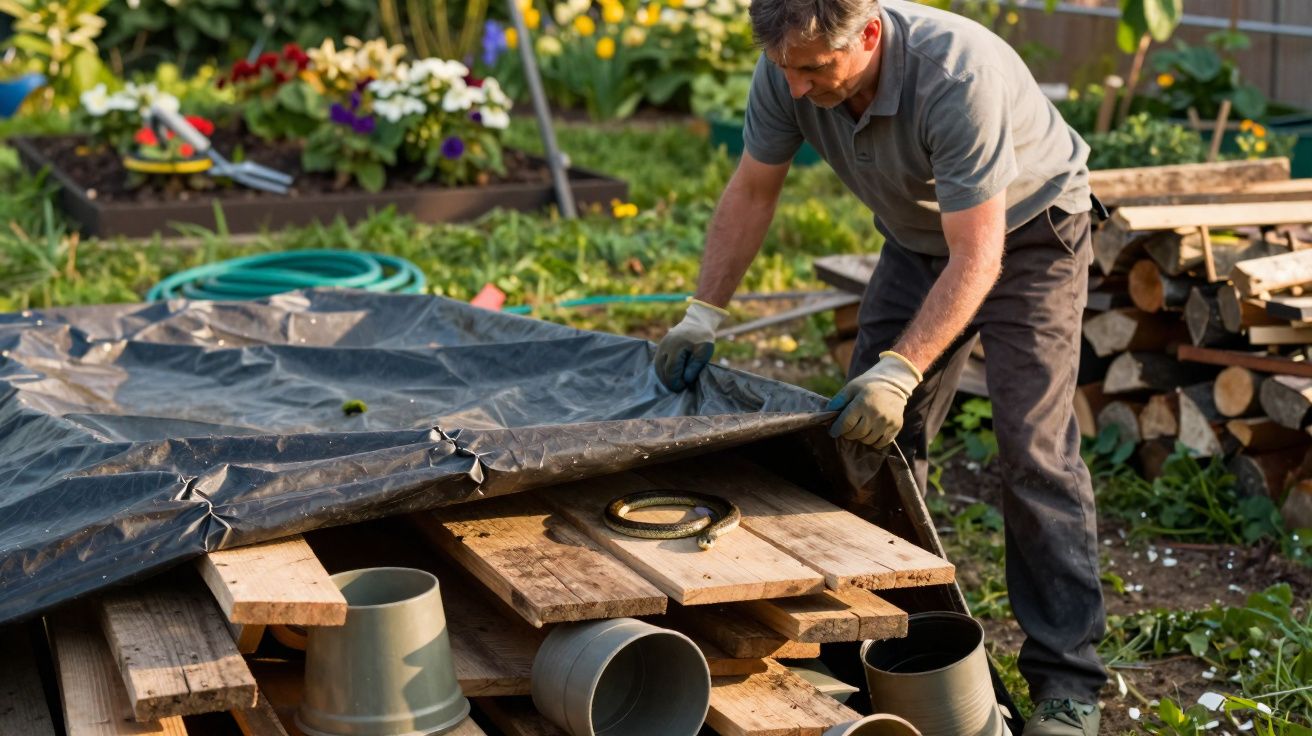
Many amateur gardeners spring into action as soon as the weather improves: they tidy the garden, bring the furniture back outside and start planning the first barbecue of the year. What often gets left behind, unnoticed, is a plain item from the previous project that quietly turns into an ideal hiding place for snakes - right on the lawn, just a few steps from the family’s favourite spot.
The underestimated risk in the garden
When temperatures rise again, it is not only the grass that comes back to life. Reptiles also leave their winter shelters and actively look for warm, protected places. That is where an everyday garden item comes in: a dark plastic tarpaulin or sheet, often simply laid out on the ground as a cover.
These sheets, along with old metal panels, corrugated iron, leftover slate or fibre-cement boards, look harmless enough. They are left behind after building work, used to cover firewood, compost or tools, and then quickly forgotten. For snakes, however, they are exactly the kind of spot they are looking for.
Plastic tarpaulins, sheets and old metal panels on the ground act like underfloor heating for snakes: warm, sheltered and almost impossible to see through.
Why tarpaulins and sheets attract snakes
The mechanism is straightforward: beneath a dark tarpaulin or metal sheet, a kind of miniature greenhouse forms. The sun heats the surface, and the warmth builds up in the soil underneath. Snakes love that, because they are cold-blooded and regulate their body temperature through the environment.
Specialists refer to this as the “ground-level greenhouse effect”: as early as April, one sunny day can be enough to raise the temperature beneath a cover to 25 to 30 degrees Celsius - the ideal working temperature for snakes. At the same time, the ground stays slightly damp, which also suits insects and small animals. For a snake, that creates a near-perfect hideout: warm, dark, sheltered from predators and hidden from people.
Typical snake magnets in the garden
- Black or dark plastic tarpaulins laid directly on the ground
- Covers over compost heaps or grass cuttings
- Old corrugated iron or metal sheets laid flat
- Stacks of firewood with no gap from the ground
- Fibre-cement boards or roofing offcuts left in the back corner of the garden
If several of these elements are combined, a small snake retreat is almost created automatically - often just a few metres from the patio, swing or vegetable patch.
A quick seasonal check can prevent trouble
After building work, garden clearance or a spell of mild weather, it is worth taking a slow walk round the plot and checking anything that has been left on the ground. The biggest risk usually comes from items that stay in place for weeks without being moved. If you lift or shift them regularly, you remove the stable, warm shelter that makes them so attractive in the first place.
How to stop your property becoming a snake hotel
The good news is that a few simple habits can noticeably reduce the risk without having to turn the whole garden upside down. The main aim is to avoid warm, flat hiding places sitting directly on the soil.
Tidy up in a systematic way
As a rule of thumb, anything that is flat, dark and left on the ground for long periods should be removed or stored higher up. A critical look is especially worthwhile after building work or larger gardening jobs.
- Always take tarpaulins away after use instead of leaving them “until tomorrow”.
- Roll covers up and store them in a shed, garage or on a shelf.
- Do not pile metal sheets or fibre-cement offcuts in the grass; stand them upright against a wall instead.
- Place stacks of firewood on a rack or pallets so air can circulate underneath.
Anyone who follows that consistently removes several attractive hiding places at once. Snakes will usually move elsewhere, for example to calmer spots such as embankments, hedge lines or woodland edges - well away from the barbecue area and sandpit.
What to do if you find a snake
Even with the best precautions, it can still happen that a reptile suddenly appears when an old tarpaulin or sheet is lifted. The key rule at that moment is simple: stay calm and keep your distance.
Never lift tarpaulins or sheets in the garden carelessly with your bare hands - always tilt them first with a boot or a tool.
The most important rules of behaviour
- Do not strike at the snake or try to grab it.
- Move back at least two to three metres.
- Call children and pets away and keep them indoors.
- Walk backwards slowly rather than running off in a panic.
Most native species are shy and disappear as soon as they notice movement. Attacks on people are extremely rare and usually happen only if the animal is cornered or touched.
Legal situation: snakes are protected
Many people react on instinct with defence or violence as soon as they see a snake. That can be dangerous and expensive at the same time. In Germany and across much of Europe, native snake species are protected. Anyone who injures or kills one is breaking nature conservation law and may face a fine.
If snakes are seen repeatedly in the garden and you are unsure what to do, contact local organisations such as:
- the local council’s environmental or conservation team
- municipal advice services
- reptile or wildlife conservation groups
They can usually provide practical guidance on how to shape a garden so that it remains pleasant for people without turning into a magnet for snakes.
How dangerous are garden snakes really?
The image of snakes is heavily shaped by films and sensational headlines. In everyday life on Central European properties, encounters are harmless in the vast majority of cases. Many species are non-venomous, and bites are extremely rare. Even with venomous species, a bite is seldom life-threatening if medical help is obtained quickly.
Even so, the issue should not be taken lightly. Anyone living in an area where venomous species are known to occur can ask local doctors or pharmacies what to do in an emergency and which symptoms need immediate attention.
Garden care that helps both snakes and people
A garden with structure, dead wood, stone piles and dense planting provides an important refuge for many animal species. At the same time, most people do not want snakes right next to the patio. Both aims can be met if shelter areas are created slightly away from the main living space.
If you allow a small natural corner at the edge of the plot or in a part of the garden that is rarely used, many animals will naturally choose that area. The crucial point is to remove or relocate the “prime spots” - warm, flat covers close to where people spend time.
Practical additions for greater safety
- Mow the lawn regularly, at least in areas with heavy foot traffic.
- Reduce tall grass where children play.
- Do not place compost heaps directly beside the patio or front door.
- Wear sturdy shoes when working in wilder parts of the garden.
Keeping these points in mind reduces the risk of unwanted encounters significantly, without turning the garden into a sterile expanse of paving and stone.
Why dark tarpaulins are especially problematic
Dark sheets store particularly large amounts of heat because they absorb sunlight strongly. Light-coloured covers reflect more of the radiation, warm up less and are therefore often less interesting to snakes. Even so, the basic rule still applies: light-coloured tarpaulins can also offer protection from predators and may still be used.
If you cannot do without covers - for example to suppress weeds in a vegetable bed - choose firmly secured systems that lie close to the ground and do not create large hollow spaces underneath. It is also worth checking the edges before reaching in with your hands or leaning your face close to the cover.
In the end, routine matters most. Anyone who places tarpaulins, sheets and stacks of timber carefully and checks them regularly will reduce the snake risk in the long term - and can enjoy the summer in the garden with far greater peace of mind.

Comments
No comments yet. Be the first to comment!
Leave a Comment