
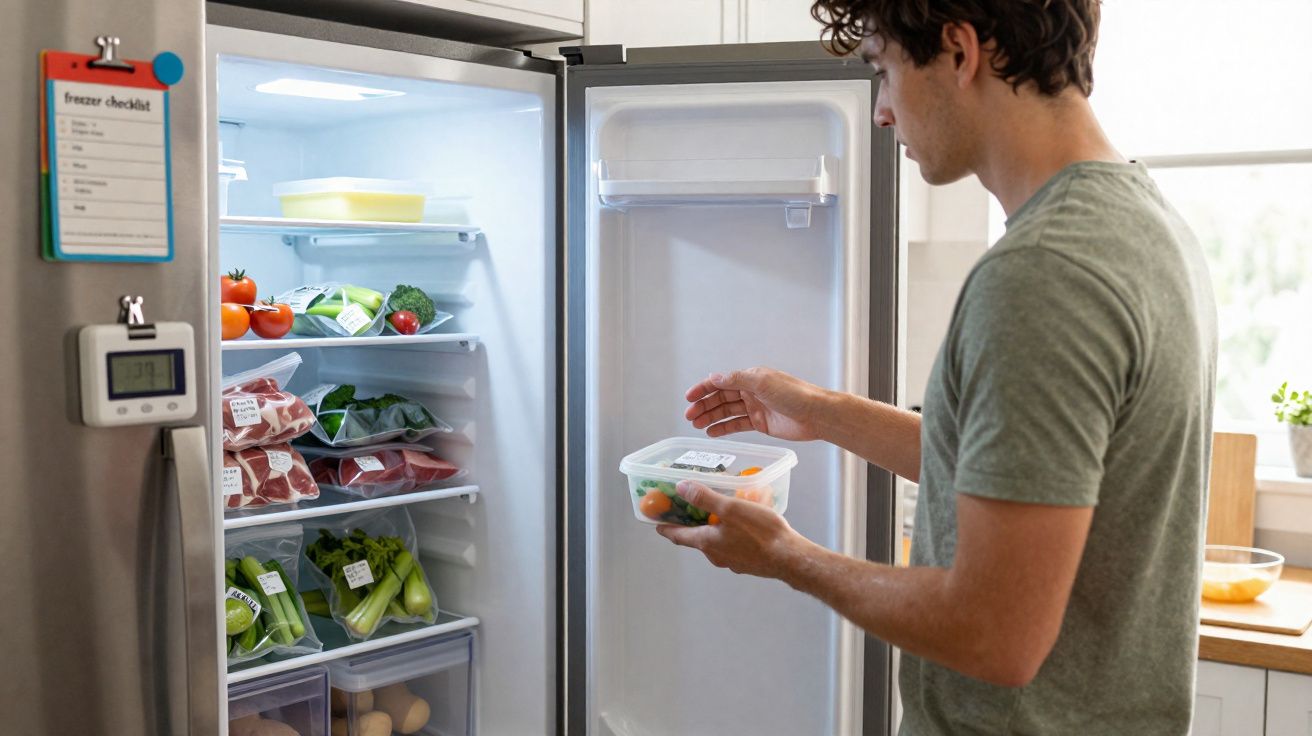
Who has not been there? You have done a big shop, the fridge is packed, everyday life is hectic, and then the critical date on the packet suddenly appears. Before long, chicken breast, minced beef or salmon fillet ends up in the freezer. A virologist explains when this move is still acceptable, where the real risks lie, and why handling the dates on packaging correctly remains crucial.
What really happens in the freezer just before expiry
Virologist Océane Sorel, well known in specialist circles for her work on viruses and micro-organisms, takes a clear-eyed view of this spontaneous “last-minute freezing”: in principle, a well-chilled, untouched product can still be frozen on the day before the use-by date, and in some cases even on the date itself.
Freezing only pauses bacteria temporarily. They do not die; they simply go on hold.
Sorel uses an image that sticks: deep-freezing is like pressing pause on a remote control. Most germs stop multiplying, but they are still there. As soon as the food thaws, the film starts again - and the bacteria pick up from exactly where they left off.
That is precisely where the catch lies. If a product is frozen only after it has already sat in the fridge for many days, the number of germs that has built up over weeks is frozen too. Once thawed, this “microbe community” becomes active again and can continue to spread. For healthy people, that is not automatically disastrous, but the risk of stomach and bowel upset does increase.
Use-by date and best before date: the packaging date jungle
Before anything goes into the freezer, it is worth understanding which date is actually printed on the label. In everyday life, many foods are thrown away unnecessarily because this distinction is not clear.
Use-by date: this is where the line is drawn
The wording “Use by …” marks particularly sensitive foods. These include, among others:
- Fresh meat products such as mince, steaks and poultry portions
- Fresh fish and seafood
- Fresh dairy products such as certain desserts or raw-milk products
- Chilled ready meals with a short shelf life
Once that day has passed, the product is regarded as potentially risky. Experts are clear on this point: if the date has been exceeded, the food should neither be eaten nor frozen. Even if it still smells fine, invisible germs may already have reached a level that can cause unpleasant consequences.
Best before date: quality, not safety
The wording “Best before …” belongs in a different category. It mainly applies to longer-lasting foods such as:
- Pasta, rice and flour
- Tins and jars
- Chocolate, biscuits and crisps
- Dried pulses, coffee and tea
After this date, flavour, texture or colour may decline slightly, but the food is often still perfectly edible. Many consumers throw such products away out of caution. Studies show that this mix-up sends huge amounts of perfectly edible food to the bin - a loss of quality is mistaken for a health risk.
Last-chance freezer: when “late” is still safe
Health authorities advise freezing meat and fish as soon as possible after shopping if it is already clear that they will not be cooked in the near future. Anyone who only reacts at the last minute should look more closely.
Checklist for the freezer emergency brake
Before a product goes into the freezer on the day before its use-by date, it is worth doing a quick safety check:
- Visual check: no discolouration, no slimy film, no unusual coating.
- Smell test: does it smell neutral or as expected? A musty or sharp odour is a clear warning sign.
- Packaging: is it still sealed, with no tears or bulging areas?
- Cold chain: was the food chilled quickly after purchase and not left for ages in a warm car?
- Fridge temperature: ideally steady at around 4 °C or below.
If you are freezing something late, check twice beforehand that the product still looks completely sound.
If there is any doubt, it is better not to put the food in the freezer at all and to throw it away instead - however painful that may be financially.
A further point is packaging size and the temperature in your freezer itself. Smaller portions freeze more quickly and evenly, which helps reduce quality loss. A freezer that is overcrowded or opened constantly also struggles to keep a stable temperature, so the contents may deteriorate faster than expected.
How long can frozen food stay in the freezer?
Once a product is safely in the freezer, time behaves differently. Bacteria remain dormant at -18 °C, but quality and flavour gradually change. Practical household guidelines are:
| Food | Recommended time in the freezer |
|---|---|
| Red meat (steak, roast) | 6–12 months |
| Poultry | 6–8 months |
| Minced meat | 3–4 months |
| Fish | 3–6 months |
| Ready meals, stews | 2–3 months |
| Bread and pastries | 1–3 months |
These figures relate to quality, not a hard safety limit. If you write the freezing date on the packet with a pen, you keep track easily and stop packs disappearing for years among the ice crystals.
It also helps to label the contents clearly, especially if you freeze portions in storage bags or boxes. A simple note of what the food is and when it was frozen can save a great deal of confusion later and prevents forgotten leftovers from becoming freezer fossils.
Thawing properly: this is where most mistakes happen
As important as the moment of freezing is the thawing process. This is where bacteria regain their advantage. Experts recommend:
- Thaw in the fridge, ideally on the bottom shelf in a bowl.
- Alternatively, thaw in the microwave immediately before cooking.
- Do not thaw on the worktop at room temperature.
- Do not reuse thawing liquid; pour it away.
The thawed food should be cooked quickly and eaten soon afterwards. And one rule is especially strict: food that has already been thawed should not be frozen again - especially not if it was already close to its use-by date before the first freezing.
If you are cooking for vulnerable people, it is also wise to avoid the “half-thawed” stage altogether. Make sure meat is fully cooked through, and keep raw juices away from salads, bread and other ready-to-eat foods to prevent cross-contamination.
Reducing food waste without risking your health
The big challenge lies in day-to-day life: nobody wants to throw food away unnecessarily, but nobody wants to experiment with spoiled minced beef either. A smart approach to the fridge helps combine both goals.
It makes sense to plan roughly when shopping: what will I eat today, what tomorrow, and what is unlikely to be used? Foods for later are best placed straight into the freezer as soon as they are unpacked. The emergency rescue on the eve of the use-by date then remains the exception rather than the routine.
Practical aids can include:
- A “eat soon” shelf in the fridge, clearly visible right at the front
- Freezing food in small portions rather than in large blocks, so everything freezes through fully and thaws more quickly later
- Planning meals two or three days ahead instead of playing uninspired fridge Tetris
Why children, pregnant women and older people need to be especially careful
People with a strong immune system often cope with minor hygiene slip-ups without serious consequences. For some groups, the picture is different: pregnant women, young children, older adults and people with long-term health conditions react much more sensitively to germs in food.
In these households, it is worth taking an especially strict look at dates and storage conditions. When in doubt, it is better to use the freezer earlier - or to decide against late freezing altogether and shop more conservatively next time.
Anyone who understands the basic logic - read the date correctly, freeze in good time, thaw cleanly - gains a great deal of freedom in the kitchen. The freezer then becomes not a desperate last resort at the final moment, but a considered tool against food waste, without putting your health at risk.




Comments
No comments yet. Be the first to comment!
Leave a Comment