
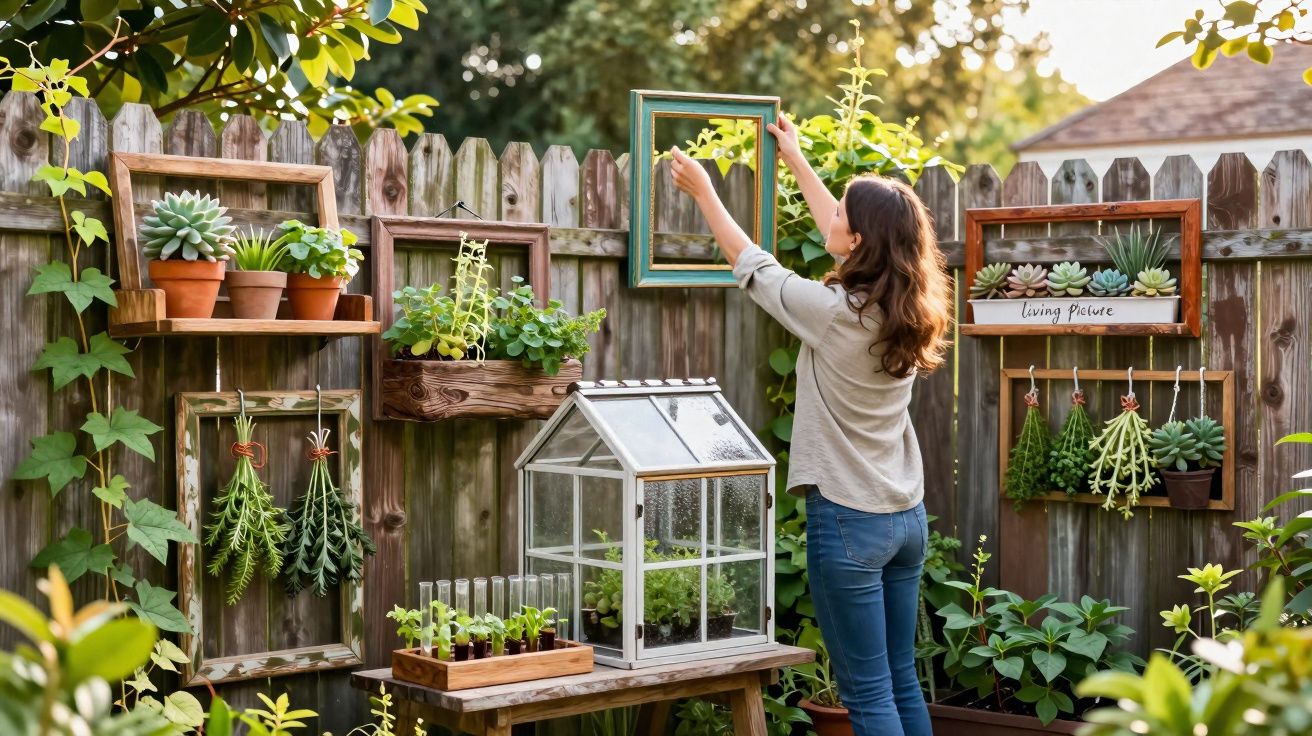
With a few simple steps, old frames can be turned into genuinely useful garden pieces.
In many homes, old picture frames pile up while people keep buying new items for herbs, cuttings and decorations. Yet that very clutter can be transformed surprisingly easily into shelves, planters, ornaments and even miniature greenhouses with tools that are already found in most households.
British amateur gardeners have long stopped seeing old wooden frames as something meant only for family photos. They turn them into small shelves, planting containers and eye-catching features for fences and balconies. The appeal is obvious: these projects cost very little, save resources and bring structure to small spaces.
Before you start, it is worth checking each frame carefully. Loose glass, splintering wood and flaking paint can all be fixed or removed, and older frames should be cleaned thoroughly before they are used outdoors. If a frame is going to face the weather, a protective finish will help it last much longer.
Discarded frames become building blocks for shelves, planters, mini greenhouses and herb stations - ideal for small gardens and balconies.
Wooden frames are sturdy, light and often already available in useful sizes. If you no longer want them as living-room decoration, they can be put to excellent use outside. Usually, all that is needed is some sandpaper, a little paint, glue or a few screws.
Why old picture frames in the garden suddenly make sense
Trick 1: A floating plant shelf made from one frame
The easiest place to begin is with a single frame turned into a small hanging plant shelf. This is especially handy for a houseplant in a window or a pot of herbs above a kitchen worktop.
- Choose a solid frame with glass, clean it and remove any loose parts.
- Glue or screw a thin sheet of plywood or a scrap board to the back as a support panel.
- Attach two strong lengths of string or cord to the top corners of the back.
- Hang the frame and place a light pot in the middle on the glass.
The important thing is that the glass is not cracked and that the pot is not too heavy. For extra peace of mind, the glass can be replaced with a thin wooden board.
Trick 2: Turn four frames into a rustic planter
If you have several matching frames, you can build a rectangular planter for herbs, pansies or succulents.
- Stand four frames upright side by side so they form a rectangle.
- Join the vertical edges with wood glue and hold them in place with clamps.
- Glue or screw small wooden blocks inside the corners so everything stays square.
- Screw or nail a wooden base to the underside.
- Remove the glass or replace it with thin decorative panels, then paint the outside of the frame.
- Line it with membrane, add a drainage layer and soil, then plant it up.
This creates a striking container that looks especially good on a windowsill or a small balcony shelf.
Trick 3: A living plant picture with succulents
A shallow, box-like frame is perfect for a living wall picture. Succulents work best because they need very little soil.
So here is how to make it:
- Line and secure the back of the frame with garden fleece or landscape fabric.
- Fill the interior with succulent compost.
- Stretch wire mesh or plastic mesh across the front and fasten it securely.
- Carefully push small plants or cuttings through the openings in the mesh.
- Store the frame flat at first so the roots can settle in.
- After a few weeks, hang it up carefully.
If succulents are not your thing, you can use moss and small ferns instead - in that case, the position should be shady and fairly moist.
Trick 4: A tiny greenhouse from six frames
Six frames of the same size can be turned into a small table-top greenhouse, ideal for young plants in spring or more delicate herbs.
Basic build
- Clean the frames thoroughly and remove old hangers and clips.
- Join four frames together as the side walls using small hinges.
- Fit the remaining two frames as the roof, again using hinges.
- Seal the gaps with wood filler or epoxy resin and leave it to dry.
- Paint or stain everything on the outside; leave the inner surfaces untreated or use a safe finish.
- Reattach the glass with silicone so it cannot slide out of place.
Inside, there is room for a long planter or a small propagation tray. The roof can be lifted slightly for ventilation.
Trick 5: A propagation station in a frame
Anyone who enjoys propagating plants can make a decorative propagation station. Instead of a picture, the front holds a glass of water for cuttings.
How to make a DIY frame for cuttings
- Remove the glass and the backing board.
- Fit and attach a new wooden back panel.
- Drill two holes through the back panel.
- Wrap wire around the neck of a narrow glass, feed the ends through the holes and twist them together at the back.
- Hang the frame on the wall, fill the glass with water and insert the cuttings.
A simple propagation station can quickly become a little focal point above the kitchen table or on a balcony wall.
Trick 6: A hanging drying rack for herbs
Especially if you cook often with your own herbs, two wooden frames can be turned into a practical drying rack. It also works well in a kitchen or pantry.
- Remove the backs from the frames.
- Staple a piece of fine wire mesh or flyscreen mesh to the back of each frame.
- Attach four equal lengths of string or ribbon to the corners of the upper frame.
- Hang the second frame underneath using four slightly shorter lengths of string.
- Tie on a hanging loop at the top.
Herbs such as basil, sage and thyme can be spread out loosely on the mesh to dry. The key is to hang the rack somewhere airy and not press it directly against a damp wall.
Trick 7: Garden signs and romantic frame decoration
Empty frames can also be used purely as decoration. They add character to a dull fence or a shed.
One idea is a garden sign with lettering:
- Paint the frame with chalk paint and, once dry, sand it lightly.
- Glue artificial flowers, small bows or dried grasses around the edge of the frame.
- Attach a little sign in the centre with a word or phrase, such as “Herb Corner” or “Balcony Bar”, on a cord.
That way, even a plain part of the garden becomes a small stage set.
Trick 8: A colourful frame gallery on a fence or pergola
If you have several different frames, you can make a bright outdoor gallery from them - without glass, just as a visual feature.
Method
- Clean the frames and remove the glass.
- Spray-paint each frame in a different bold colour.
- Let them dry properly, then fasten them to a fence, gate or pergola with wire or cable ties.
- If you want, thread fairy lights or climbing plants through and around the frames.
For children in particular, a colourful frame wall is an easy, creative project - and the perfect start to an upcycling corner in the garden.
Material, care and a few safety rules
If you want to use your frame ideas outside, the material matters. Solid wood lasts longest when protected with weatherproof stain or paint. Chipboard or very thin MDF frames swell quickly outdoors.
| Material | Suitability outdoors | Tip |
|---|---|---|
| Solid wood | Good to very good | Treat with wood protection and seal the edges carefully |
| MDF / chipboard | Only partly suitable | Keep it away from direct rain and use it under cover |
| Plastic | Good | Ideal for damp areas and easy to clean |
| Metal | Good | Watch for rust and repaint when needed |
Glass parts should always be held firmly in place, especially in hanging constructions or where children play in the garden. If you are unsure, replace the glass with acrylic sheet or thin wooden panels.
A good rule is to match the frame to its job: heavier structures need stronger joints, while decorative pieces can stay lighter and more open. A coat of outdoor sealant on cut edges and screw holes also makes a big difference to how long the project lasts.
Why frame upcycling is really worth it
With a little time, old decoration can become a whole range of helpers: shelves, planters, drying racks and mini greenhouses that suit a balcony, terrace or garden perfectly. Instead of buying new plastic products, you use what you already have, reduce waste and save money.
Beyond the environmental benefit, there is also something personal about it. No two frame projects ever look the same. In small urban gardens, on back-yard balconies or in front of rental-house facades, these solutions bring character - and turn dusty loft finds into a real conversation starter at the next barbecue.



Comments
No comments yet. Be the first to comment!
Leave a Comment