
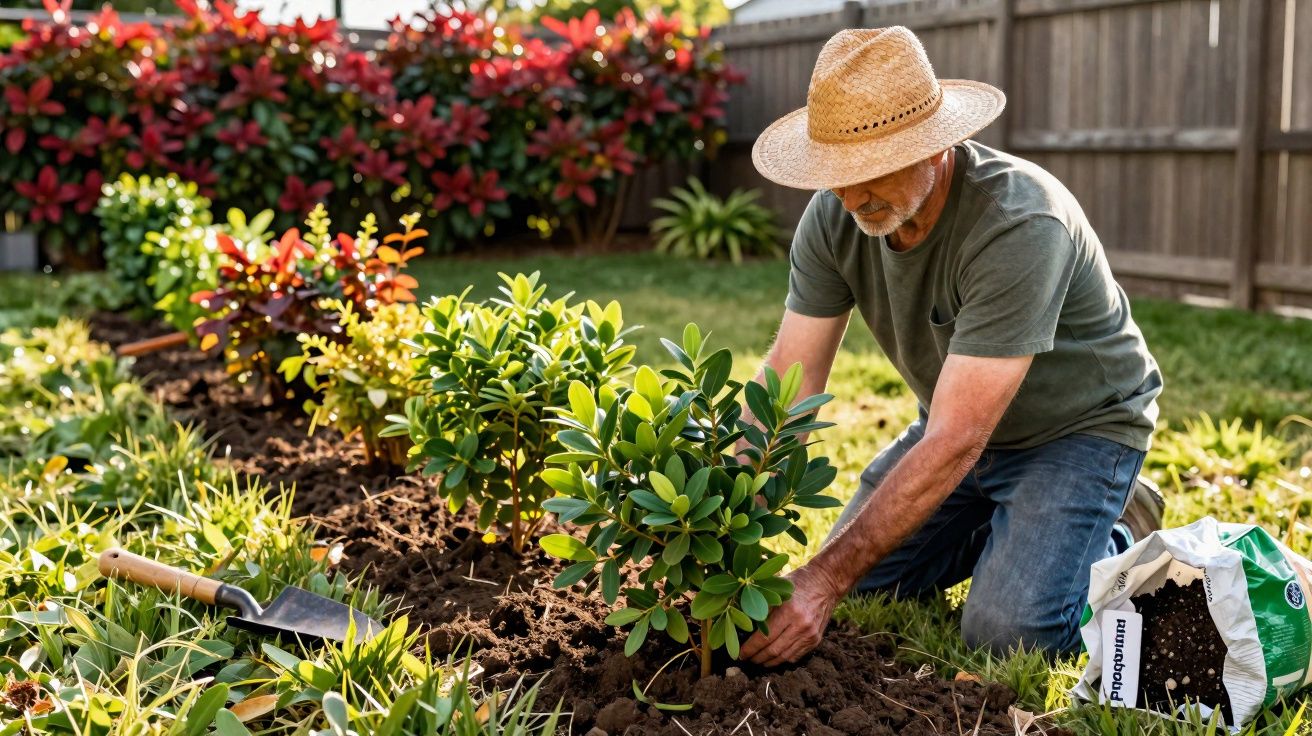
For years, Photinia was promoted as the miracle shrub for fast, dense hedges. Red new growth, rapid development, little effort - that was the promise. But in more and more gardens, the picture has changed: spotting, bare patches and thin growth are becoming common. For spring 2026, attention is now turning to an alternative shrub that brings fresh colour and reliable structure to the garden without demanding constant attention.
Why Photinia is becoming a problem hedge in many places
Anyone walking through rows of terraced houses or suburban gardens today will often see the same thing: once-vigorous Photinia hedges now marked by brown patches, pale gaps and a generally tired appearance. The cause is rarely down to the gardener alone.
In many cases, a fungal disease is to blame, and it often strikes after mild winters and damp springs. Leaves first develop red or brown spots, then dry out and drop early. The shrubs lose vigour, put on only weak fresh growth and become thinner year by year.
Instead of a solid screen, many Photinia hedges are left as a patchy framework of branches - the exact opposite of the privacy they were meant to provide.
There is another issue too: many hedges are planted far too closely together. Wet foliage dries slowly, and fungal spores find ideal conditions. Leaves with signs of disease are often left on the ground, where they act as a permanent refuge for the pathogen. If the same shrub is then replanted without improving the soil, the problem is effectively started again from scratch.
The new favourite: Pittosporum as a Photinia replacement
Among gardening professionals, one name is coming up more and more in this context: Pittosporum. This shrub is seen as a straightforward, dependable alternative that holds its own visually as well.
It stays in leaf all year round, and the foliage can be dark green, cream-and-green variegated or lightly silvered depending on the variety. That gives the hedge a lively look without becoming garish. It creates particularly attractive contrast against plain house façades.
Pittosporum’s real strength lies in its growth habit: it grows quickly, but not uncontrollably. For many gardeners, one prune a year is entirely enough. If you like a sharper finish, you can go over it a second time. Even so, it does not create a stressful calendar of constant maintenance.
Pittosporum hedges keep their shape without needing repeated corrective cuts - a clear advantage over sensitive problem species.
Because the shrub is less prone to the leaf-spot problems that affect Photinia, the plants stay healthier for longer. That reduces both the amount of work involved and the frustration factor in everyday gardening.
It is also worth noting that for homeowners who want year-round screening in smaller gardens, a reliable evergreen like Pittosporum can be especially useful. It provides structure without dominating the space, and it can be used just as effectively in a formal design as in a softer, more natural planting scheme.
Mixed hedge instead of monoculture: more resilience, more life
One lesson from the Photinia damage is clear: hedges made up of only one species are risky. A single disease can wipe out an entire stretch of planting. For that reason, garden designers are increasingly turning to mixed hedges.
If you choose Pittosporum, it can be combined with robust partners such as:
- Eleagnus for tough sections that cope well with salt and wind
- Cornus for vivid red stems in winter
- Hazel shrubs for a more natural, native feel and edible nuts
These combinations add structure throughout the year: blossom in spring, berries or colourful bark in autumn and winter. In addition, insects and birds benefit from more food and more shelter.
Step by step: how to replace an old hedge successfully
Assessing the hedge and preparing the soil
Anyone wanting to replace an old Photinia row should proceed in a structured way. Pulling everything out at random and replanting straight away rarely ends well. A sensible order is:
- Check the condition of the old hedge: is the damage limited to individual shrubs, or does it affect several metres at a time?
- Remove diseased shrubs completely, including the root ball.
- Do not compost leaves, pruning waste or fine roots that show signs of disease; dispose of them with green waste or burn them where permitted.
- Loosen the soil deeply and remove large old roots.
- Work in around 10 litres of well-rotted compost for each planting hole.
In heavier soils, it is also worth improving drainage. A sandy amendment or a thin gravel layer in the planting zone can prevent waterlogging, which weakens many shrubs.
Correct spacing and planting method
When planting Pittosporum as a new hedge, the spacing needs careful planning. Planting too tightly will come back to haunt you after a few years.
- Plant spacing: about 80 to 100 centimetres between shrubs
- For 10 metres of hedge, 10 to 12 plants are usually enough
- In a mixed hedge, you could plant, for example, 6 Pittosporum, 2 Eleagnus and 2 Cornus per 10 metres
- Apply a 5-centimetre layer of organic mulch around each plant
- In exposed sites, tie each young shrub to a sturdy stake for at least one year
Getting the spacing right not only keeps the plants healthier, it also means far less long-term hedge-trimming work.
Day-to-day care: little effort, strong results
Once the new screen is in the ground, the ongoing care routine remains manageable. The most important period is the first 12 months after planting.
Young shrubs need regular watering. In midsummer, 10 litres per plant once or twice a week is a good guide, depending on the soil and the weather. Later on, occasional watering is enough during prolonged dry spells.
A light feed in spring helps the hedge get off to a strong start. If you work in around 50 grams of a balanced garden fertiliser per linear metre, the plants will be well supplied. The mulch should be refreshed every two years so that soil life and moisture levels stay stable.
When it comes to pruning, one cut after the main flush of growth in early summer is usually sufficient. If you prefer a very crisp line, you can lightly tidy it again in late summer. The key point is not to cut back into old wood, but to shorten the fresh shoots.
Another practical point is to keep an eye on the hedge’s light and airflow. Even a robust shrub benefits from enough space to dry quickly after rain, especially in narrow urban gardens or areas with poor air circulation.
Typical mistakes gardeners should avoid
Many problems can be prevented from the outset with a few basic rules. The most common pitfalls include:
- replanting the same weak species in exactly the same spot without improving the soil
- planting too closely, which causes the hedge to become bare inside and more labour-intensive over time
- leaving diseased leaves on the ground, allowing pathogens to remain in the garden for years
- heavy soils without drainage, leaving roots effectively sitting in water during wet periods
If you instead choose a sensible mix of species and pay attention to the soil, you create a much more resilient garden structure. Many amateur gardeners notice after just two or three years how much easier a well-planned hedge is to live with.
What Pittosporum and similar shrubs do for the garden microclimate
One point that is often overlooked is this: a healthy hedge that is dense but not overcrowded helps regulate the microclimate. It breaks wind, filters dust, provides shade and keeps the edge of the garden moist for longer. That matters more as summers become drier and winters more changeable.
Mixed hedges made up of Pittosporum, Eleagnus, Cornus and native shrubs also offer far greater ecological value than a monotonous wall of one problematic exotic species. Different flowering times provide pollen and nectar over many months, while various kinds of berries become a feast for birds.
Before ordering plants, it is also wise to check the site conditions properly. Sun, shelter, soil type and drainage all influence how well a hedge establishes itself. Choosing shrubs that suit the location will save work later and make the planting look better for longer.
So if you are replacing a struggling Photinia hedge in the coming years, you are not just making a visual choice. Selecting a tough, colourful shrub such as Pittosporum - and moving towards a mixed hedge - improves maintenance, resilience and biodiversity in the garden over the long term, and ultimately also raises the quality of life behind the garden fence.



Comments
No comments yet. Be the first to comment!
Leave a Comment