
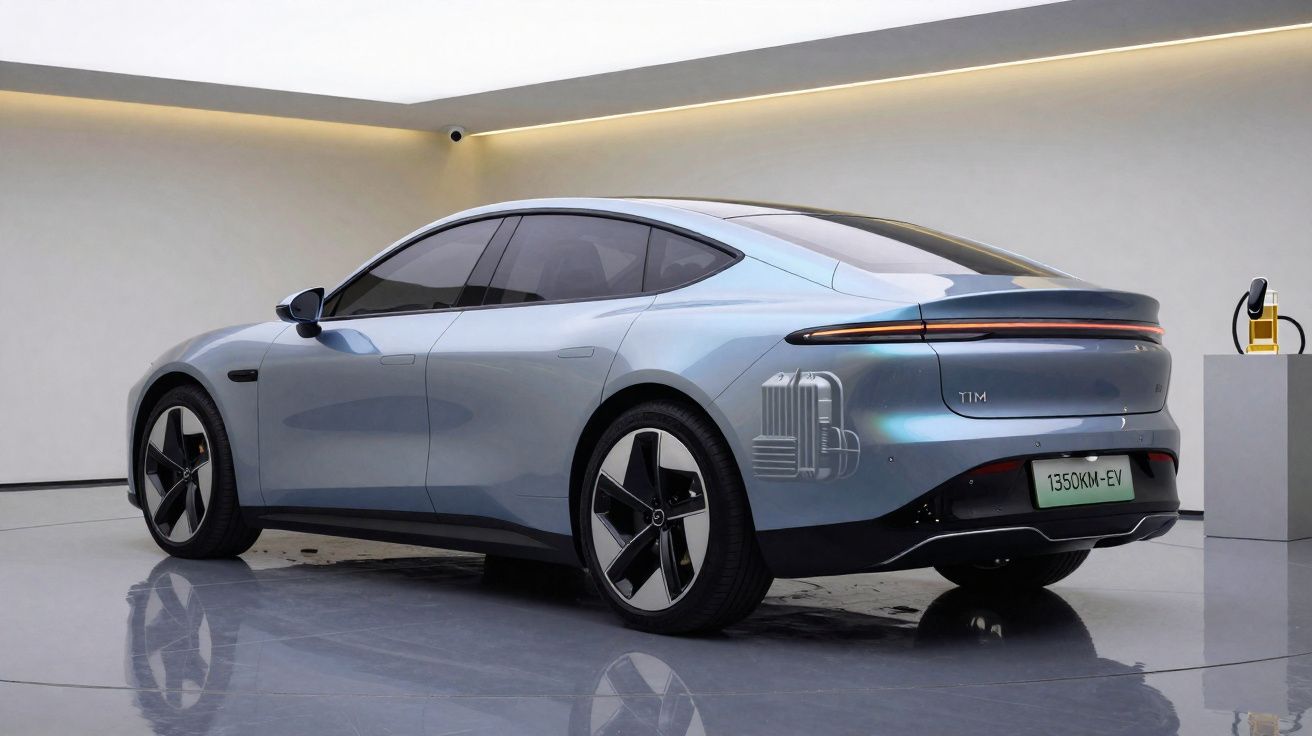
A fresh idea aims to take the tension out of EV range worries.
Rather than bolting on ever-larger battery packs, a supplier from Stuttgart argues that clever thermal management paired with a small on-board generator can extend real-world distance dramatically. The company is MAHLE, and it says its production-ready set-up could enable a typical battery-electric car to cover up to 1,350 km between stops, depending on the vehicle it is fitted to.
MAHLE and the headline figure
MAHLE is not a vehicle manufacturer. It supplies the unseen hardware drivers depend on every day-thermal modules, high-voltage components and powertrain parts. At IAA Mobility in Munich, it presented a package combining two key elements: a compact, high-efficiency generator and an integrated heat pump-based thermal module.
Together, they target the two major constraints on day-to-day EV range:
- energy consumed to keep the cabin and battery at the right temperature, particularly in winter; and
- the sheer battery size usually required to make long motorway journeys convenient.
MAHLE says the combination of a compact multi-fuel generator and a high-efficiency heat pump can support up to 1,350 km on a single charge-equivalent, depending on the vehicle.
The basic proposal is straightforward: specify a battery that makes sense for everyday driving, then use a lightweight on-board generator to cover peak energy demand on longer trips by feeding the high-voltage system. Meanwhile, the thermal module reduces consumption further by controlling heat precisely, rather than simply blasting warmth when conditions turn cold.
A mass-production range extender: MAHLE generator + heat pump thermal module
MAHLE positions this as far more than a motor-show concept. The range extender is built around a small combustion engine whose sole task is electricity generation. The company says it can run on multiple fuels, including ethanol, which it frames as an additional route to reducing lifecycle CO₂ where suitable fuels are available.
At the same time, the thermal module relies on a heat pump to recover, shift and reuse energy around the vehicle instead of letting it dissipate. By integrating functions that are often split across multiple parts, it aims to reduce both plumbing complexity and avoidable losses.
MAHLE argues the thermal module addresses the harshest winter hit-cabin heating and battery conditioning-and claims up to 20% more range in low temperatures.
Cold conditions remain a weak point for many modern EVs. Resistive heaters can draw heavily from the battery, while a cold-soaked pack typically delivers less power and charges more slowly. MAHLE’s approach centralises temperature control: one device manages coolant circuits for the battery, power electronics and cabin, with the goal of cutting both energy demand and system complexity.
What drivers would notice with the MAHLE range extender generator
- Fewer journeys would depend on repeated ultra-rapid charging stops.
- A smaller battery could reduce vehicle mass, with potential benefits for agility and ride.
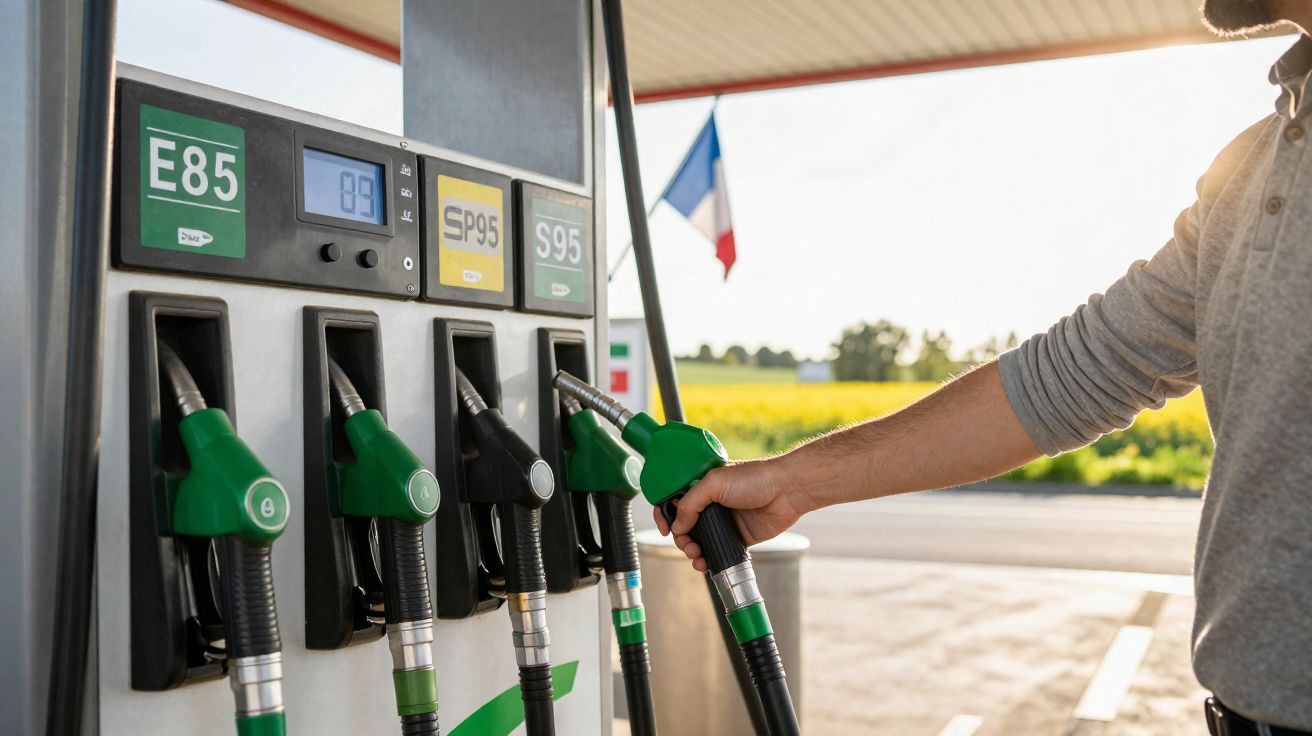
- When required, refuelling the generator would take minutes at conventional forecourts.
- Winter trips should see more consistent range thanks to active heat management.
- Battery durability could improve if temperatures are kept within an optimal operating window.
Why “up to 1,350 km” is plausible (and why it is not universal)
MAHLE’s figure is best treated as an upper bound for the overall system, not a blanket guarantee for every model. Results depend on the base vehicle, battery capacity and how the system is calibrated.
The intended usage pattern is this: with a modest battery sized for everyday mileage, the car behaves as a pure EV for most driving. On long-distance runs, the generator starts to sustain the battery’s state of charge or provide supplementary electrical power, operating as a serial hybrid. Because the engine is not mechanically connected to the wheels and can be held at a narrow, efficient operating point, MAHLE suggests fuel consumption in steady cruising could compare favourably with conventional hybrids in similar conditions.
Cost, weight and packaging considerations
Battery cells remain the most expensive single ingredient in many EVs. MAHLE’s logic is that downsizing the pack, then adding a compact generator, may create a more balanced cost structure. The mass story is similar: removing a large amount of battery weight can outweigh the mass added by a small engine-generator unit.
Packaging is also presented as a benefit. By combining multiple heating and cooling functions inside one thermal module, the system can reduce the number of separate components, pipe runs and junctions that otherwise occupy space and add losses.
| Architecture | Long-trip strategy | Winter efficiency | Estimated vehicle mass | CO₂ pathway |
|---|---|---|---|---|
| Large battery EV | Regular fast charging stops | Larger heating penalty | Higher due to big pack | Zero tailpipe emissions; grid-dependent footprint |
| MAHLE extender EV | Charge plus short refuelling when needed | Heat pump reduces losses | Smaller pack partly offset by small generator | Potentially lower with ethanol option and optimised engine mapping |
The ethanol angle, policy, and what regulators may decide
MAHLE also works on components for engines capable of running on 100% ethanol, which matters in countries with strong biofuel supply and in any future regulation that places more emphasis on well-to-wheel carbon accounting.
European rules today largely focus on tailpipe CO₂, and there is ongoing debate about how (or whether) low-carbon liquid fuels should be credited. MAHLE’s stance is that competing solutions should be judged by real climate impact and affordability, rather than by a single technical pathway.
With multi-fuel capability, MAHLE frames the generator as a policy tool: combine electricity with lower-carbon liquids to reduce emissions without resorting to oversized batteries.
An additional practical consideration is fuel availability and quality. Ethanol infrastructure and blend standards vary widely, and any real-world benefit depends on the carbon intensity of the fuel supply chain as well as how the vehicle is used.
What this concept is not
MAHLE is not describing a plug-in hybrid where a sizeable engine can drive the wheels. Here, the combustion engine exists to produce electricity only-full stop. That simplification allows tighter control and keeps the engine in its most efficient zone.
It also preserves much of the EV driving character: immediate torque delivery, smooth progress and quiet cruising. With no mechanical drive to the wheels from the engine, there are no gearshifts in response to engine load because there is no traditional gearbox involved in propulsion.
Questions that still need clear answers
Noise, vibration and harshness will require careful calibration. Even a small engine can become intrusive if it starts at inconvenient moments or runs at an audible frequency under motorway loads.
Ownership will also change slightly compared with a battery-only car. There will be high-voltage servicing requirements alongside periodic checks for the generator system. Adding a fuel tank introduces further design constraints around crash safety and compliance, and fleet operators will want robust data on total cost of ownership over typical cycles of three to seven years.
The charging network trajectory matters too. If reliable ultra-rapid sites become widespread quickly, the argument for a range extender weakens in some regions. Where distances are long, temperatures swing widely and infrastructure develops slowly, the case strengthens.
A further point often overlooked is user education: drivers will need clear information about when the generator is likely to run, what fuels are permitted (including any ethanol limits), and how consumption should be interpreted when the vehicle is used across mixed duty cycles.
Who is likely to benefit first
MAHLE’s approach appears especially well suited to compact SUVs and crossovers, which often carry families, occasionally tow, and are frequently used through winter weather. Delivery fleets may also gain, as lighter battery packs and consistent thermal control can reduce downtime and help maintain predictable performance.
Rural drivers-and markets where fast charging is patchy-could see the most immediate advantage, particularly where ethanol or other low-carbon fuels are easy to source.
What to watch next
- Which manufacturer signs the first series-production agreement, and for which vehicle segment.
- Certified efficiency and range results under WLTP and EPA cycles.
- Cold-soak test outcomes at sub-zero temperatures.
- Generator operating noise at motorway speeds.
- Battery degradation performance with tighter thermal management.
Extra context for readers who want the bigger picture
Range extenders are not new. The BMW i3 REx used a small two-cylinder unit to stabilise battery charge, while Mazda’s MX-30 R-EV brought back a rotary engine as a compact generator. MAHLE’s differentiator is the combination of deeper thermal module integration with multi-fuel operation aimed at reducing emissions. This matters because, in many real winter scenarios, a significant share of lost range is linked to heat management rather than propulsion energy alone.
A quick at-home sense-check can help frame the idea. Estimate how many miles you cover each week in normal use, then compare that with the mileage you rack up on your longest annual journeys. If around 85–95% of your driving is short and local, a smaller battery can handle daily life efficiently. The generator then becomes a tool for the occasional long trip, reducing the likelihood of extended charging stops. In that pattern, liquid fuel use remains limited to the relatively few days when you actually need it, while the car continues to drive electrically the rest of the time.
There are still risks and trade-offs. Regulation could reclassify such vehicles in ways that affect taxation, incentives or access rules. Some buyers will prefer the simplicity of a battery-only layout, and residual values will depend on how second owners perceive generator maintenance. Against that, potential gains-lighter vehicles, more stable winter range, and a possible reduction in manufacturing cost-could make long-distance-capable EVs more affordable without adding motorway anxiety.



Comments
No comments yet. Be the first to comment!
Leave a Comment