
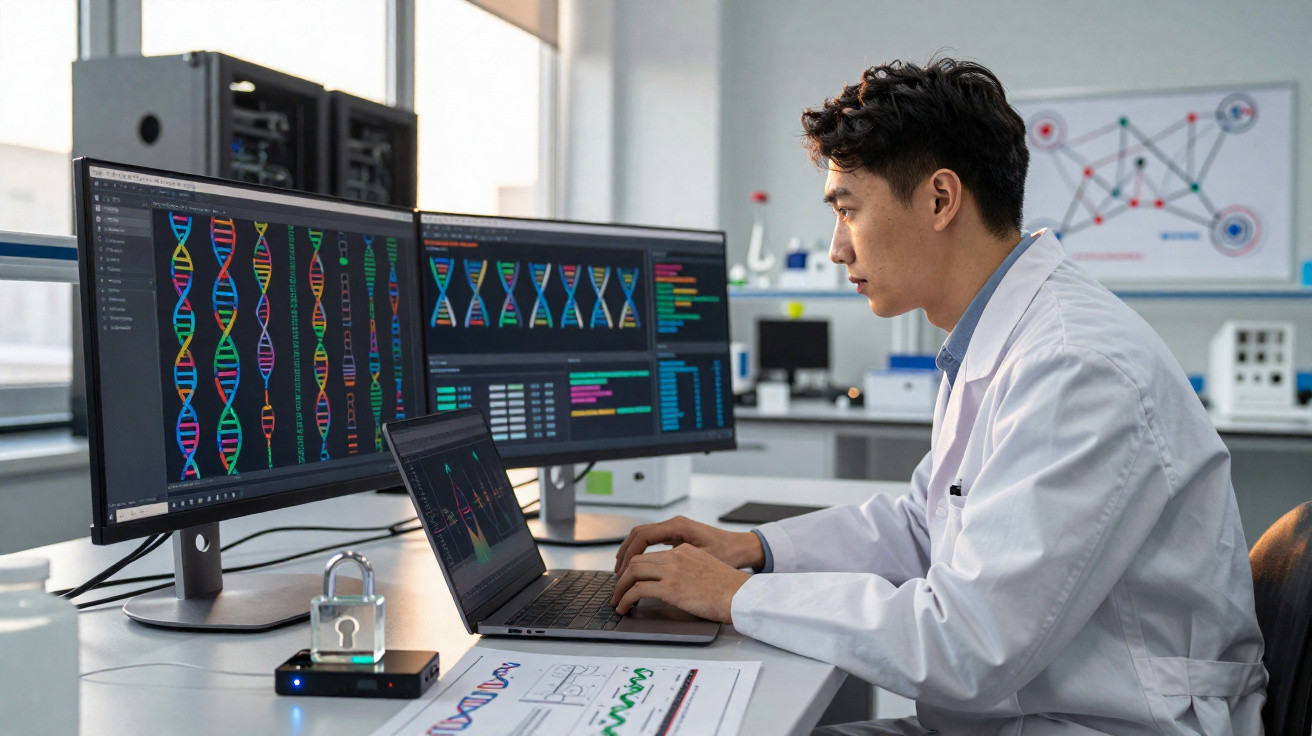
The ability to sequence the human genome is no longer the main challenge in modern medicine. The real difficulty starts afterwards: deciding what to do with the data.
Over recent decades, genomic sequencing technologies have advanced at an extraordinary pace. Costs have fallen sharply, processing capacity has grown, and bringing genomics into routine clinical care is beginning to become a reality across many healthcare organisations.
From genomic sequencing to human genome data stewardship
What has changed is not the science, but the structure needed to support it. A single complete human genome sequence can produce hundreds of gigabytes of data. Multiply that volume by thousands-or even millions-of genomes, and it becomes clear that data generation itself is no longer the primary constraint.
The pressing questions now are how to store this information, how to manage it, and how to turn it into something clinically useful. International initiatives such as the 1 Million Genomes Project illustrate this shift in thinking. We are moving into an era where our ability to produce information far outstrips our ability to organise it and use it efficiently.
Storage and infrastructure: hybrid systems and the cloud
Hospitals, research centres and laboratories are now dealing with several critical issues: where these datasets should live, how to preserve them for the long term, how to keep them accessible for future clinical interpretation, and-at the same time-how to protect patient privacy while meeting increasingly demanding regulatory requirements.
A likely route forward is hybrid infrastructure, combining on-site computing with scalable cloud-based storage and analytics. The goal is not only to hold data securely, but also to enable safe sharing, advanced analysis, and the use of artificial intelligence applications.
Interoperability for genomic medicine across institutions and countries
Interoperability is another major hurdle. If genomic medicine is to deliver on its full promise-particularly in areas such as rare diseases, oncology, and personalised medicine-data must be shareable and analysable between institutions in different countries. That requires common standards, harmonised data structures, and resilient digital infrastructure.
Security, privacy and compliance in genomic data
Security is just as critical. A genome contains highly sensitive, permanent information that cannot be changed in the way a password can. Protecting it calls for advanced encryption, access controls, anonymisation and audit mechanisms.
Within this context, new technological approaches are emerging, including the use of blockchain technology for genomic data management. Although still at an early stage of adoption, it may allow distributed, tamper-evident logs of data access, improving transparency, traceability and trust in how information is shared between institutions.
Long-term value: reanalysis and evolving clinical interpretation
It is also important to recognise that genomic data is not static. As scientific knowledge develops, information generated today may yield new clinical insights in the future. A genome sequenced now could support different interpretations several years from now. That makes long-term storage and the ability to reanalyse data essential elements of any modern healthcare infrastructure.
In practice, it is becoming increasingly clear that genomics’ core challenge is no longer sequencing alone, but building sustainable systems that can manage, safeguard and interpret data over time.
Because, ultimately, genomics is no longer just about reading DNA. It is about managing and interpreting data on an unprecedented scale. That is where the future of medicine is being decided today.





Comments
No comments yet. Be the first to comment!
Leave a Comment