
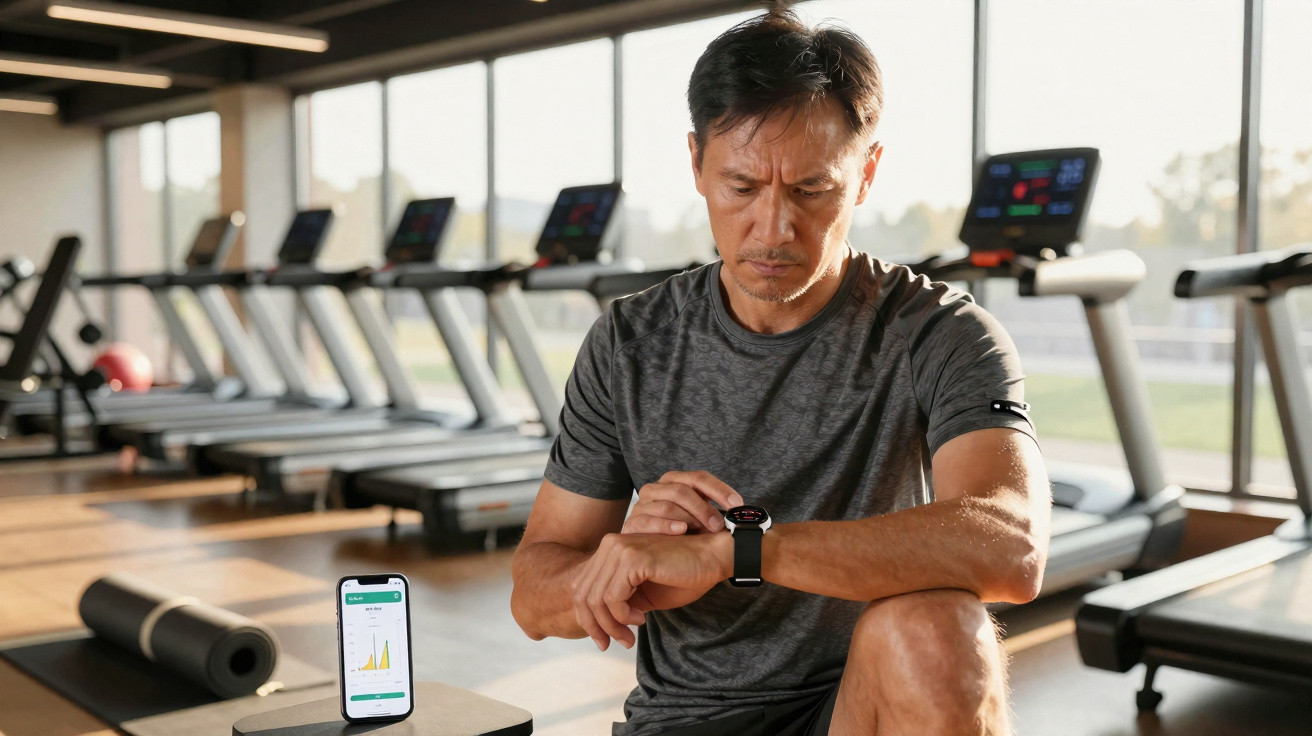
You glance at your smartwatch after finishing a run. Your fitness score is down. It claims you’ve barely burned any calories. Your recovery score is poor. It even advises you to avoid exercise for the next 72 hours.
The frustrating part is that the run itself felt brilliant.
So why is your watch reporting the opposite?
In short, it’s because smartwatches and other fitness trackers don’t consistently produce accurate readings.
Smartwatches can shape how you exercise
Wearable fitness tech, including smartwatches, has sat near the top of fitness trends for almost ten years, and millions of people across the globe rely on it every day.
These devices influence how people understand health and training. They serve up figures on how many calories you’ve burnt, how fit you are, how well you’ve recovered since your last session, and whether you’re “ready” to train again.
The catch is that your smartwatch doesn’t directly measure most of these outcomes. Many of the headline figures are calculated estimates - meaning they’re often less precise than they appear.
1. Calories burned
Tracking calories is one of the most-used smartwatch features, but it’s also one of the least reliable.
Wearables may under- or overestimate energy expenditure (often shown as calories burned) by more than 20%. The size of the mistake can also change depending on what you’re doing. Strength training, cycling and high-intensity interval training, for instance, can produce even bigger errors.
That matters because many people use these values to decide how much to eat.
If your watch overestimates calories burned, you may assume you need extra food when you don’t - which could contribute to weight gain. If it underestimates calories burned, you might eat too little, which can harm performance in training.
2. Step counts
Step counts can be a helpful indicator of overall physical activity, but wearables don’t record them perfectly.
In typical exercise conditions, smartwatches can under-count steps by around 10%. Certain activities - such as pushing a pram, carrying weights, or walking without much arm swing - are likely to reduce accuracy further, because many devices depend on arm movement to log steps.
For most people this won’t be a big issue, and step counts can still help you monitor general activity. It’s best to treat them as a rough guide rather than an exact total.
3. Heart rate
Smartwatches calculate heart rate with sensors that detect changes in blood flow in the veins at your wrist.
This approach tends to be accurate when you’re resting or exercising at low intensity, but accuracy commonly drops as intensity rises.
Arm movement, sweat, skin tone and how snugly the watch is worn can all affect the heart rate reading it produces, so precision can differ from person to person.
This is a concern for anyone using heart rate zones to structure training, as even small errors may push you into the wrong intensity.
4. Sleep tracking
Almost every smartwatch available provides a “sleep score” and divides your night into light, deep and REM sleep.
The gold-standard sleep test is polysomnography - a laboratory assessment that records brain activity. Smartwatches, however, infer sleep from movement and heart rate.
As a result, they’re generally reasonable at spotting whether you’re asleep or awake, but they’re far less dependable at distinguishing between sleep stages.
So if your watch tells you that you had “poor deep sleep”, that may not actually be true.
5. Recovery scores
Many smartwatches monitor heart rate variability and combine this with your sleep score to generate a “readiness” or “recovery” score.
Heart rate variability indicates how your body responds to stress. In a laboratory it’s measured with an electrocardiogram. Smartwatches, by contrast, estimate it using wrist-based sensors, which are much more vulnerable to measurement errors.
That means many recovery scores are built on two imperfect inputs (heart rate variability and sleep quality), producing a result that may not accurately represent how recovered you really are.
In practice, if your watch says you’re not recovered, you might miss a session - even when you feel fine (and are genuinely ready to train).
6. VO₂max
Most devices also estimate VO₂max - a marker of maximal fitness. It represents the greatest amount of oxygen your body can use during exercise.
The most accurate way to measure VO₂max is to wear a mask that analyses the oxygen you breathe in and out, allowing researchers to calculate how much oxygen you’re using to produce energy.
Your watch can’t measure oxygen use directly, so it predicts VO₂max using your heart rate and movement instead.
However, smartwatches often overestimate VO₂max in less active people and underestimate VO₂max in fitter people.
So the number displayed on your watch may not match your true fitness.
What should you do?
Even though smartwatch data is prone to error, it isn’t useless. Wearables can still help you monitor broad patterns over time - but it’s wise not to obsess over day-to-day swings or single headline numbers.
It’s equally important to listen to your body: how you feel, how you perform and how you recover. That information will often tell you more than your smartwatch does.
Hunter Bennett, Lecturer in Exercise Science, Adelaide University
This article is republished from The Conversation under a Creative Commons license. Read the original article.



Comments
No comments yet. Be the first to comment!
Leave a Comment