
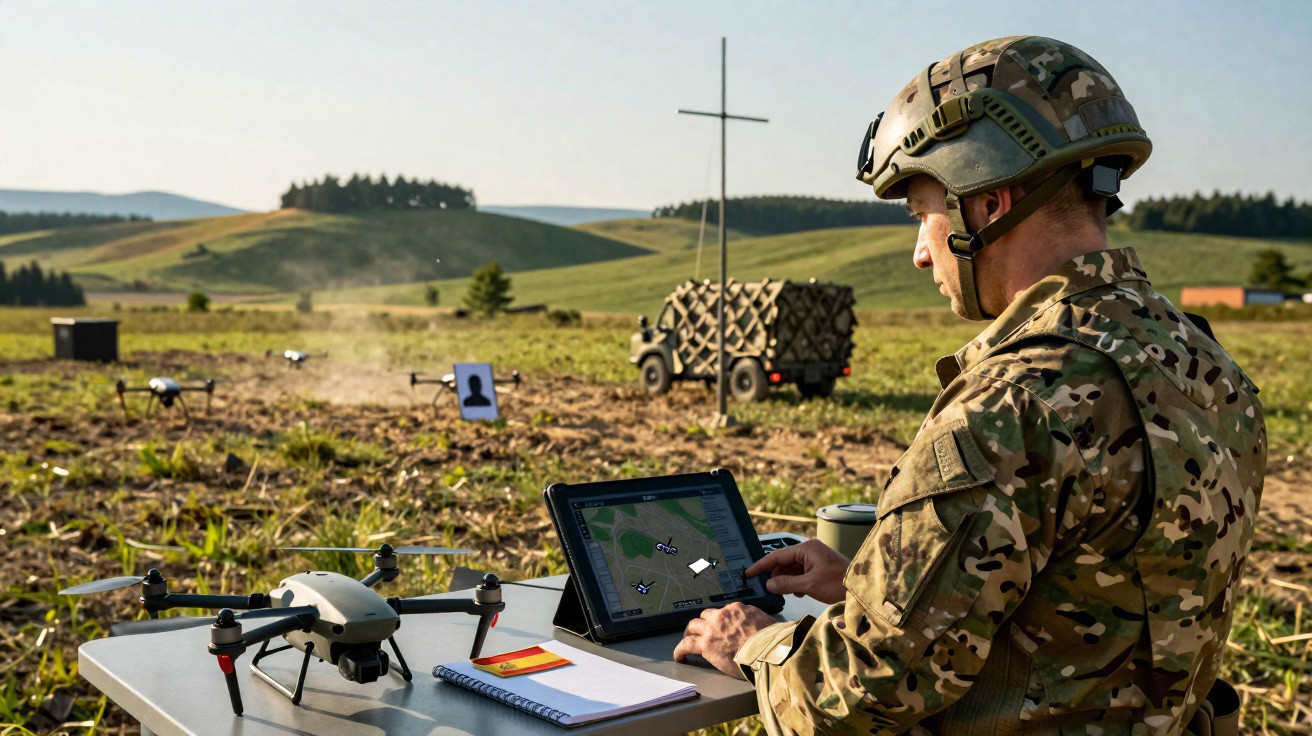
Spain’s Ejército de Tierra recently took charge of the advanced multinational exercise CIERVO IV, a training event focused on the employment of unmanned systems technology. Within the Multinational Brigade Task Force Slovakia, Spanish personnel led activities centred on drone operations, alongside the assessment and practical application of countermeasures.
CIERVO IV and the Multinational Brigade Task Force Slovakia
One of CIERVO IV’s aims is to broaden and consolidate the use of technology linked to unmanned systems-an area of major current relevance, as can be seen on the battlefields of Ukraine, for example. The exercise took place at the MTA Lešť training area in Slovakia and included troops from contingents from Spain, the Czech Republic, Slovakia and Portugal.
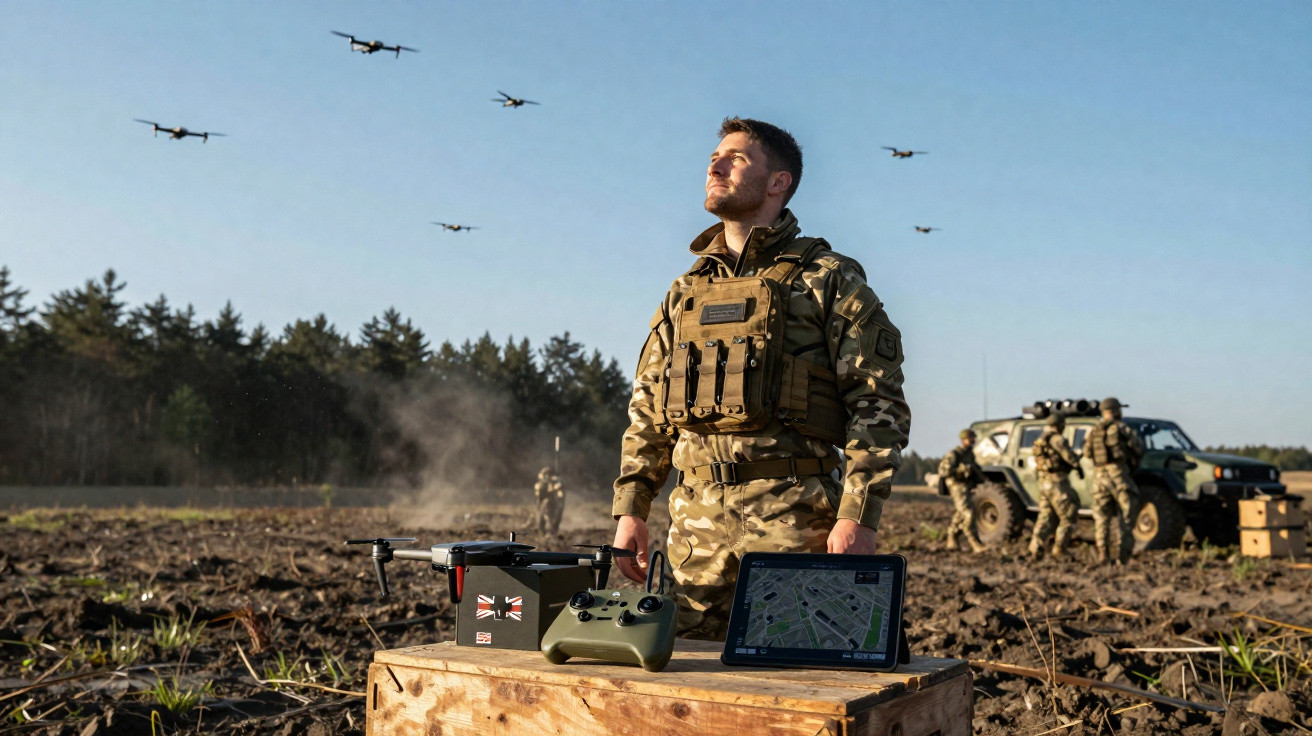
According to Spain’s Estado Mayor de la Defensa (EMAD), during CIERVO IV “…more than 30 UAS flew simultaneously, combining commercial platforms, FPV (First-person view) drones -capable of sending live video images- available on the market, as well as systems issued to the Ejército de Tierra, in order to reproduce realistic scenarios of aerial saturation…”.
Drones, countermeasures and lessons from Ukraine
In this way, NATO troops are seeking to recreate combat conditions that are as close to reality as possible, as is evident on Ukraine’s battlefronts. It is worth noting that both the Ukrainian and Russian armed forces make extensive use of unmanned systems, which are not limited to air platforms, but have also expanded into the land and maritime domains.
The widespread employment of drones has driven the idea of a “transparent battlefield”, where there are few-or virtually no-areas without some form of oversight by unmanned aerial vehicles. In addition, improvements in drone endurance and range have pushed activities further away from the lines of contact, significantly widening the gap between hot zones and safe areas. This has had a direct effect on multiple aspects, from logistics through to tactics.
Adiestramiento con drones y con el sistema CERVUS
With responsibility for delivering CIERVO IV, the Spanish Ejército de Tierra conducted three training phases. During the first, drone operators received instruction, with their mission being “…to sustain a constant number of aircraft in the air and carry out reconnaissance, transport and payload-drop tasks, as well as simulated strike missions, coordinating actions between units and managing the airspace, the interference produced and potential collisions…”.
The second phase of CIERVO IV concentrated on training with the CERVUS detection and counter-drone system. Throughout the activities carried out at the MTA Lešť training area by the various manoeuvre units, teams equipped with CERVIS detected and managed “…an exceptionally high volume of simultaneous drones, which made it possible to assess their ability to process complex information within very short time windows…”.
Finally, a CERVUS capability verification phase was conducted, during which the system “…demonstrated a sound level of performance in highly dynamic scenarios with great aerial density, confirming its operational maturity in complex scenarios. Likewise, the exercise made it possible to identify aspects that will help to further optimise its capabilities and strengthen its integration across C/UAS defence…”, EMAD detailed in its statement.
From the Spanish Estado Mayor de la Defensa’s perspective, CIERVO IV is regarded as a starting point for developing drone and countermeasure capabilities within the Multinational Brigade Task Force Slovakia, with a view to exploring and implementing a layered protection concept based on complementary tiers.
Cover image: EMAD

Comments
No comments yet. Be the first to comment!
Leave a Comment