
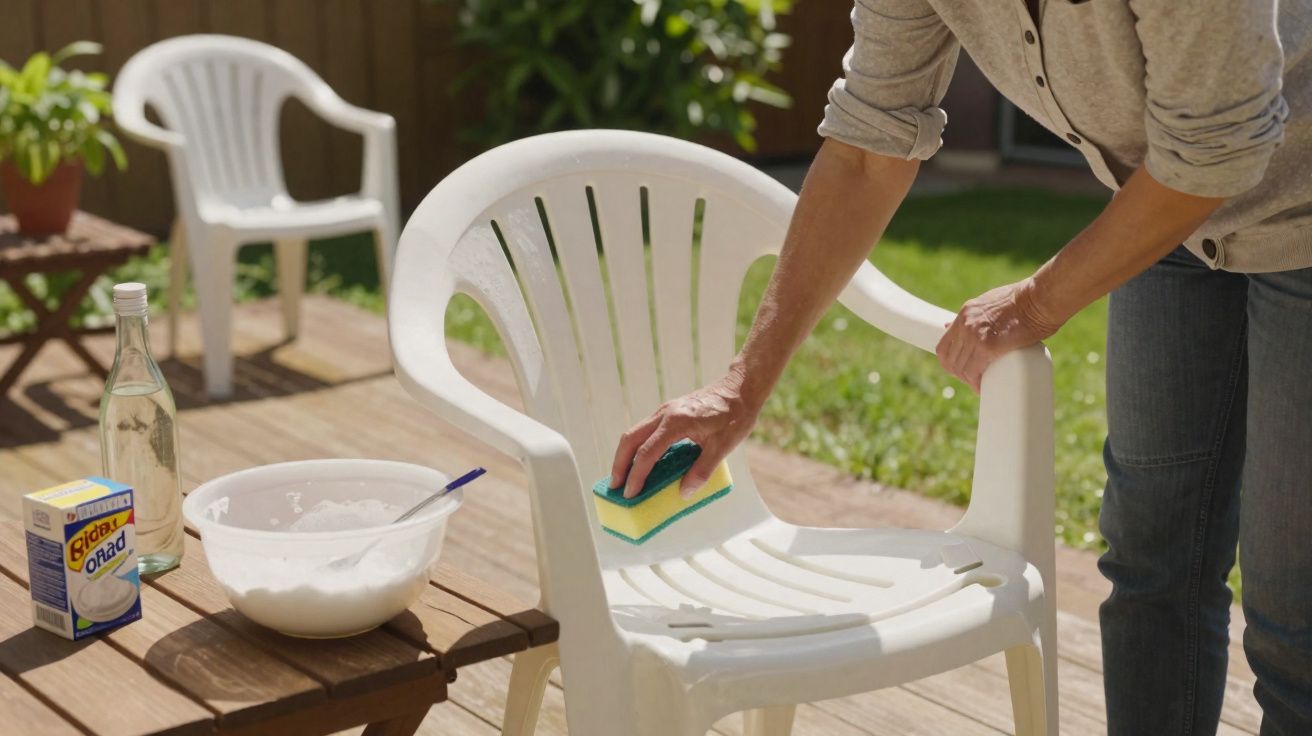
Many owners of plastic patio sets will recognise this scene. After winter, dirt has lodged itself into the surface, UV exposure has aged the plastic, and what was once a bright white set suddenly looks ready for the skip. Anyone who throws it out too quickly is effectively giving away money, because a simple homemade cleaning mix can often rescue these pieces surprisingly well.
Why plastic garden furniture greys and yellows so quickly
Plastic is often seen as low-maintenance, but outdoors, nature works steadily against it. Sunlight, rain and dirt gradually change the surface in a noticeable way.
UV rays attack the top layer of the plastic. They make it more brittle and micro-porous. Dust, pollen and soot particles settle into these tiny pores, creating the impression of a grey film from a distance.
This is especially obvious on white PVC chairs, which often develop a yellowish tint that makes them look dirty and old. On coloured furniture, the effect tends to show up as fading: red turns pink, green becomes pale and uneven.
The more the surface is damaged, the more firmly dirt sticks to it - and the older the whole set appears, even though the frame is often still perfectly serviceable.
Compared with wood, metal or woven materials, plastic is still relatively easy to revive. Wood needs oil and sanding, metal has to be de-rusted and repainted, and synthetic rattan can split or fray. Plastic furniture may look worn quickly, but with a sensible cleaning process it can often be made to look much better again.
The home remedy that brings dull plastic back to life
The trick works in two stages: clean thoroughly first, then tackle the discolouration with a targeted mixture. Many people fail because they go straight for the “miracle paste” while the coarse dirt is still clinging to the surface.
Step 1: thorough basic cleaning
- Remove cobwebs, leaves and loose dust with a soft brush or hand brush
- Fill a bucket with warm water and a little washing-up liquid
- Wipe all surfaces with a soft cloth or sponge
- Leave briefly, then rinse with clean water
This first pass removes grease, pollen and loose deposits. Only then can the actual mixture work properly on the greyed or yellowed surface.
Step 2: the cleaning mix using household ingredients
The base is a combination of lukewarm water, white vinegar and bicarbonate of soda. Add a small amount of washing-up liquid as well.
| Ingredient | Amount | Purpose |
|---|---|---|
| Water (lukewarm) | 500 ml | loosens dirt, helps the mixture spread |
| White vinegar | 1 tbsp | dissolves limescale, neutralises odours |
| Sodium bicarbonate | 2 tbsp | gentle abrasive and cleaning booster |
| Washing-up liquid | 1 small splash | lifts grease and light discolouration |
Pour the mixture into a spray bottle, shake briefly and spray it generously over the furniture that has already been pre-cleaned. Then work it in with a soft sponge using circular motions. Leave it for a few minutes, then rinse thoroughly with clean water.
The combination of vinegar and bicarbonate gives a mild abrasive effect without scratching the plastic, and it can remove typical grey build-up remarkably well.
If you do not have a spray bottle, you can mix the solution in a bowl and apply it with a sponge instead. The important thing is not to let it dry for too long, otherwise the minerals can leave white streaks.
Plastic garden furniture cleaning: what helps with stubborn stains, and what can damage it
Some pieces have endured more than one rainy summer. Resin marks, barbecue grease or black rubber scuffs from chair legs need a bit more effort.
Gentle helpers for problem areas
- Cleaning stone / clay-based cleaning paste: ideal for white furniture because it lightly polishes without leaving grooves
- Soft cream cleaner: use only with plenty of water and very gentle pressure, and test first on an inconspicuous area
- An old toothbrush: perfect for grooves, engraving and hard-to-reach corners
For coloured furniture, it is always worth testing a small hidden spot underneath first. Some pastes can slightly alter the shade or make glossy surfaces look matt.
Avoid these products
- Chlorine-based or bleach-based mould removers: attack the material and may make stains more noticeable
- Steel wool, pot scourers and coarse sandpaper: create scratches where dirt will collect even faster later
- Pure cooking oil or car polish not intended for plastic: leaves greasy, sticky surfaces behind
Overly aggressive methods often create a short-lived “wow” effect, but they also shorten the life of the plastic considerably.
Repair rather than throw away: when the effort is worthwhile
Before you spend hours scrubbing, it is worth carrying out an honest check. Not every chair is still safe, even if it could look respectable again.
Safety check before cleaning
- Inspect the frame and seat surfaces for cracks and breaks
- Flex the chair legs slightly - if the material gives way too much, there is a risk of failure
- Avoid pieces with hairline cracks in discoloured areas, as the plastic there is often brittle
If you find deep cracks or hear snapping noises when weight is applied, the item belongs at a recycling centre, not back on the patio. Safety clearly comes before appearance here.
Cosmetic repair for worn surfaces
If the structure is still sound, quite a lot can be done. Fine sandpaper, around 120 grit, smooths matt, slightly eroded surfaces. After that, a specialist plastic paint can be applied to restore a more even finish.
Spray paints designed for outdoor plastic are well suited to chairs and tables with lots of curves. Anyone using a brush should work in thin coats to avoid runs. Above all, follow the manufacturer’s instructions on drying time and weather resistance.
A useful extra step is to clean the underside and the joints at the same time. Dirt often collects there unnoticed, and if those areas stay neglected, the furniture can look dirty again very quickly even after the visible surfaces have been refreshed.
How to delay yellowing and greying for much longer
Once the furniture is clean again, its future depends on how it is cared for over the coming months. A few simple habits can noticeably extend its life.
- Choose the position carefully: do not leave it in the full midday sun all the time if shade is available
- Use a cover: a simple protective cover reduces UV exposure and dirt significantly
- Store it over winter: stack chairs and keep them in a garage, cellar or a dry shed
- Give it a quick wash regularly: wipe it down with soapy water every few weeks instead of doing a major clean once a year
If you treat plastic furniture a bit like a car - covered, washed occasionally and not permanently parked in the harshest sun - you will enjoy it for far longer.
It also helps to let the furniture dry completely before putting covers back on or stacking it away. Trapped moisture can encourage fresh grime, dull the finish and, in some cases, leave marks that are harder to remove next time.
Why vinegar and bicarbonate work so well
A lot of household remedies sound promising but produce very little measurable effect. Here, however, there is some chemistry behind the method, and it is worth looking a little closer.
White vinegar contains acetic acid. This breaks down limescale and mineral deposits such as those left by rainwater or splashing. Those layers are exactly what make surfaces look dull and blotchy.
Bicarbonate of soda is slightly alkaline and acts like a very fine scouring powder. Combined with water and a bit of friction, it loosens stubborn dirt without being too harsh on the material. Together with washing-up liquid, it forms a mix that tackles grease, organic residue and light limescale in one go.
A realistic example: what the mix can really do - and what it cannot
If a white plastic chair has spent ten years outside in direct sun, no home remedy will make it look factory new again. But over a weekend, you can often save a surprising amount.
In most cases, the mix noticeably lightens grey build-up, removes many yellow shadows and creates a more uniform appearance. Small patches of shading may remain visible, but they no longer dominate the look. For a barbecue with friends, that is usually more than enough - and the replacement can wait for several more seasons.
A before-and-after photo can be useful here. It shows what the treatment has achieved and whether a second round is worth trying, or whether you have reached the practical limit.
When it makes sense to change the material
If you face the same problems every year, it may be worth thinking more strategically when you next buy furniture. Not all plastic is the same, and not every material ages in the same unforgiving way.
- UV-protected plastic: labelled by the manufacturer, usually a little more expensive, but noticeably more durable
- Through-coloured plastic: the colour is mixed through the material rather than applied only on top, which reduces visible wear
- Combination furniture: a metal frame with plastic seating combines stability with less surface area for dirt to attack
- Wood or metal: need more care, but offer a different look and different ageing characteristics
If you already own a set, you can also take a step-by-step approach: replace heavily damaged parts, restore the sound ones with the home remedy, and gradually upgrade the set instead of throwing everything away at once.

Comments
No comments yet. Be the first to comment!
Leave a Comment