
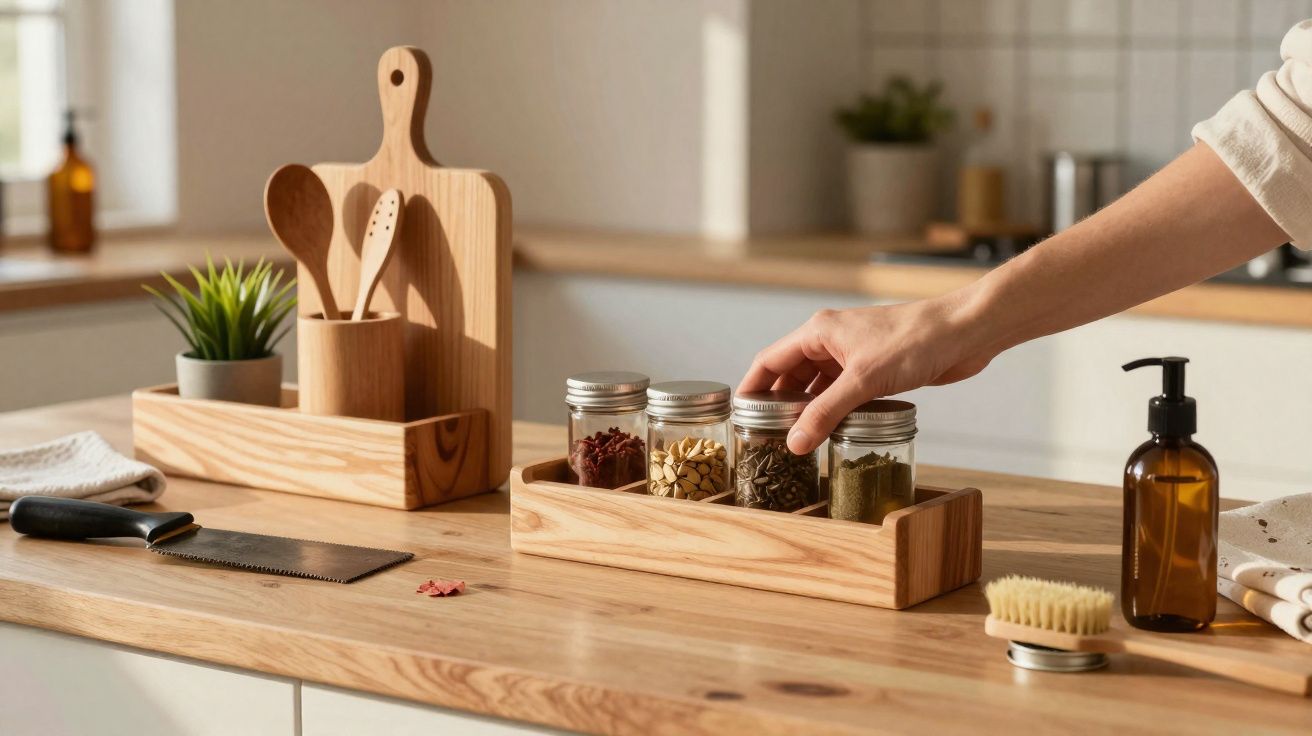
Oily bottles, coffee pods, note slips - and nowhere to put anything: with a few leftover boards from the cellar, a worktop can suddenly look neatly organised.
Many kitchens, home offices and bathrooms do not feel untidy because they lack storage, but because the available storage is poorly used. At the same time, old shelf boards, pallet offcuts or pieces left over from the last furniture project often sit forgotten in the cellar. It is precisely these unremarkable scraps of wood that can make the decisive difference and transform a crowded surface into a structured workspace.
Why wood offcuts make the perfect basis for tidying aids
Offcut wood costs nothing, conserves resources and adds warmth to a room. Unlike plastic boxes, wood blends visually into almost any interior style - from country kitchen to industrial loft. Anyone who has once seen how a small wooden stand can make an entire surface feel calm looks at their workshop materials differently.
Pieces of discarded board can be turned into bespoke organisers that fit a kitchen, desk or washbasin area exactly.
Another advantage of offcuts is that you can start cutting without worrying too much about mistakes. That removes pressure from the project and makes DIY easier to get into, even for beginners with little experience.
Choosing and preparing the right wood
Not every found piece is suitable for every room. If food or moisture is involved, it is worth looking more carefully.
Suitable wood types for kitchen and bathroom projects
- Clean offcuts from solid-wood furniture
- Undamaged plywood or multiplex cut-offs
- Dry floorboard or parquet leftovers
- Pallet boards without major cracks and without questionable coatings
Avoid pressure-treated wood, boards from outdoor use with a strong smell, or pieces with flaking old paint if the finished item will later live in the kitchen or bathroom. Hygiene and peace of mind matter here.
The basic process is almost always the same: brush the wood down thoroughly, allow it to dry fully, then sand it with a medium grit and finish with a finer grit. This turns a grey-looking board back into an attractive piece of timber.
Protecting the surface: varnish, oil or paint?
In kitchens and bathrooms, moisture always has a say. A tough finish helps prevent staining and swelling.
- Acrylic paint with a clear varnish on top: easy to wipe clean, wide choice of colours
- Hardwax oil: brings out the grain, looks more natural, needs refreshing from time to time
- Polyurethane clear varnish: for heavily used surfaces or splash zones
If you are unsure, test the finish on a small leftover piece first. That way you can see how much the colour deepens and whether the surface feels smooth enough.
14 clever wood offcut organisers that free up every worktop
The principle behind all these projects is the same: group items into families, stack them upwards and place them into clearly defined zones. That keeps the surface free while everything stays within easy reach.
- Raised bottle stand for oil, vinegar and sauces - a slim board on feet that sits against the wall at the back.
- Carrying caddy for cooking utensils with a handle, for wooden spoons, whisks and spatulas.
- Narrow spice rack for the wall or the back edge of the worktop.
- Vertical holder for chopping boards, so they can dry upright without taking up space.
- Pod or capsule organiser beside the coffee machine, tailored precisely to your preferred brand.
- Box for coffee filters and serviettes, to organise the breakfast area.
- Mini tray for hand soap and washing-up liquid beside the sink, slightly raised so nothing sits in water.
- Pen and note holder for the home office, with room for paper clips and USB sticks too.
- Monitor riser with storage underneath for a keyboard and notebook - more ergonomic and tidier.
- Charging station for smartphone and tablet with routed cable channels.
- Wall pocket for post and bills in the hallway or at the desk.
- Tray for toiletries in the bathroom, keeping creams and bottles together.
- Wooden bowl for keys and small items right by the front door.
- Small book crate for favourite books or cookbooks on a sideboard or worktop.
If you divide a surface into functional zones - coffee area, cooking area, washing-up area - scattered items quickly become a clear system.
A few simple extras can make these organisers even more useful. Felt pads on the base prevent scratches, labels make it easier for everyone in the household to keep items in the right place, and slightly angled fronts help you reach things quickly. If several pieces are built to the same width and finish, they look like a deliberate set rather than a random collection.
Adapting each project to the room and everyday routines
Before the saw comes out, it pays to reach for a tape measure. How deep is the worktop really? How much space is there under the wall cabinet? Is the screen higher than expected? Knowing these measurements in advance avoids having to trim things back later.
A quick pencil sketch helps with planning compartments, drill holes and handles. With a charging station in particular, it matters where the cables leave the wood and whether the plug will fit through.
Simple construction, even without a professional workshop
Most of the 14 ideas are made from just a few straight boards. Often you need little more than a handsaw, cordless screwdriver, wood glue and a few screws. If you have very little equipment, you can ask for the cut list to be made up at a DIY store.
- Join the surfaces with glue, clamp them in place, then screw them together
- Round off edges with sandpaper so nothing splinters
- Drill holes for handles or cables before applying the finish
With each project, confidence grows, and before long every strip of timber in the cellar becomes a possible answer to a small everyday problem.
How wood organisers change the feel of a home
Organisation systems made from offcuts do more than improve the look of a room. They shape routines. Anyone who starts the morning in a tidy kitchen can find coffee pods and favourite mugs without thinking. Clear desks make home office work easier because piles are no longer constantly in the line of sight.
Wood also feels warmer than metal or plastic. In a cool new-build kitchen especially, a few oiled boards on the worktop can restore a sense of comfort. Small details - recessed handles, bevelled edges, a strip of colour - make the organisers look less like temporary fixes and more like carefully chosen accessories.
Sustainable benefits and useful additions
Using offcut wood saves money and reduces waste. Retired shelf boards stay in circulation instead of going into bulky waste collection. That not only protects resources, it is also simply enjoyable because every organiser has a small story behind it: “That used to be our old bookcase.”
Anyone who enjoys projects like these can go a step further and plan combinations: a continuous wooden rail stretching from the spice area to the oil rack. A hallway set made up of a key tray, letter holder and coat rail in the same style. Even simple hook rails or magnetic knife boards made from offcuts complete the look and make use of every nook.
One thing remains essential in every project: solid fixings, neatly sanded edges and a surface that is easy to clean. That way, self-built tidying aids will last for years - and worktops can finally be what they were meant to be: space for cooking, working, crafting and living.
Comments
No comments yet. Be the first to comment!
Leave a Comment