
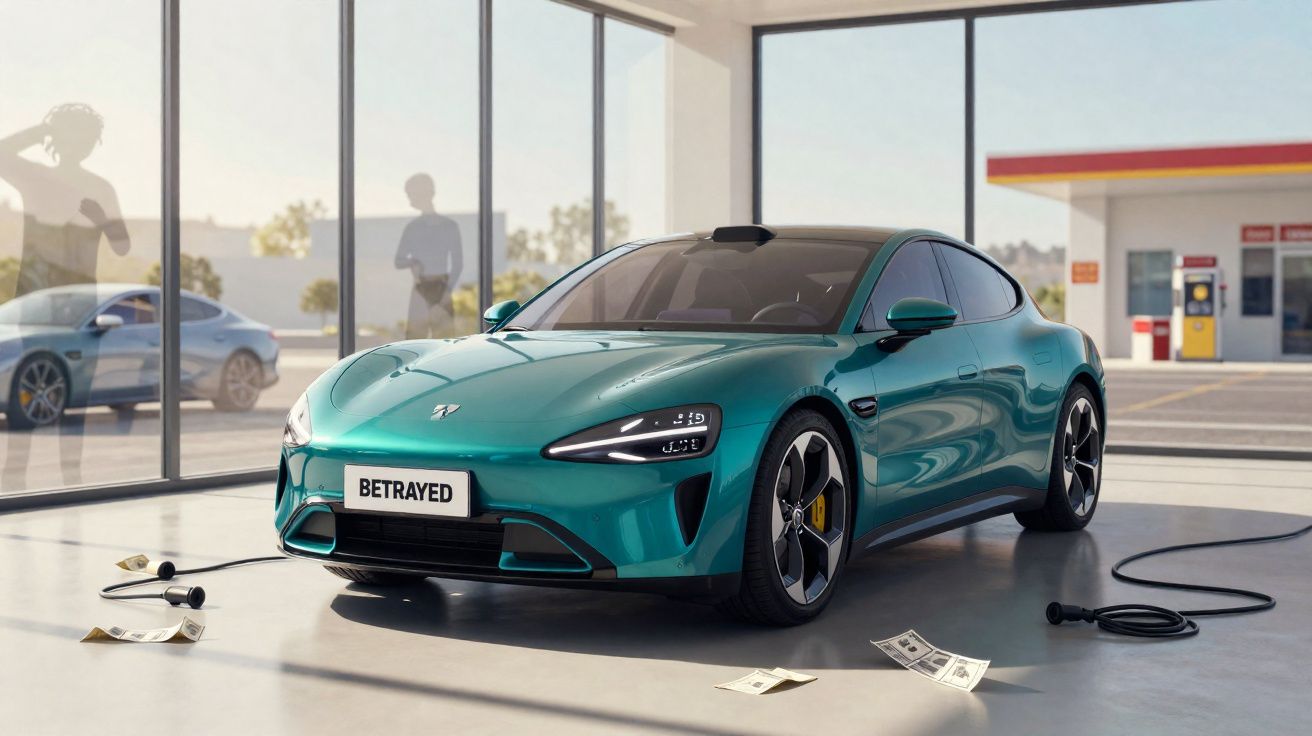
On a bleak Tuesday morning, Daniel switches off the motor of his two‑year‑old electric SUV and stays in the driver’s seat, both hands tight on the steering wheel. The display still reads 8% battery. Three vehicles sit in front of him, all waiting for the same fast charger at a motorway service station that advertised “ultra‑rapid” charging… at least in the brochure. His coffee has gone lukewarm. The school run is already slipping. And the figure on the charging screen is rising far quicker than he imagined when he signed that polished lease agreement in 2022.
At the time, the message was relentless: lower running costs, cheap electricity, freedom from fuel price shocks, and the warm satisfaction of making a greener choice. Now, Daniel scrolls through his banking app and sees the reality stacked line by line-higher insurance premiums, climbing electricity tariffs, fresh “charging fees”, and maintenance costs he was assured would be minimal.
Something about the bargain feels like it has failed. And it is not just him.
When the promise of cheap, clean driving starts to crumble
For many owners, the first warning sign turns up in the monthly budget, not in the car itself. Early adopters of electric cars ran the numbers: no petrol, fewer moving parts, generous subsidies, and lower tax. On paper, it looked straightforward. So people pushed a little further than they usually would-bigger loans, longer leases, higher trims-built around one conviction: “It will pay for itself in savings.”
A few years on, plenty are facing invoices that tell a less flattering story. Electricity no longer feels like a bargain. Home energy tariffs have jumped, public chargers add “session fees”, and free workplace charging has quietly evaporated in some places. For certain drivers, the cost per mile is now uncomfortably close to a modern hybrid. What stings most is not a single shocking bill-it is the sense that the original understanding has been quietly rewritten.
In the UK, Germany and parts of the US where early buyers were aggressively wooed, drivers describe public fast‑charging sessions that can cost as much per mile as running an efficient diesel. On a French motorway at peak times, a charge can feel like the price of filling a small petrol tank-except you pay it while watching a progress bar for 40 minutes. In California, “dynamic pricing” means that what should have been a cheap overnight top‑up can suddenly spike when the grid is under strain.
That is why so many people feel caught out. They remember the billboards promising to “charge for pennies” and “save thousands a year”. What they see now are pages of conditions: network add‑ons, idle fees, parking penalties, membership tiers, peak rates. The feeling of being misled comes from a steady accumulation of extra charges that slowly erodes the story they were sold.
The logic behind the disappointment is harshly simple. EVs were marketed as a financial shelter from volatile fuel prices. When electricity prices surge or governments trim subsidies, that shelter starts to leak. At the same time, resale value trends for some models have dropped sharply as newer, cheaper EVs arrive. That is painful for owners who believed they were buying into the future, not acquiring a rapidly depreciating piece of tech.
Many drivers still spend less overall than they would with petrol. But expectations do the emotional heavy lifting: when you are promised a revolution and end up with a marginal saving at best, it does not feel like progress. It feels like a bait‑and‑switch-on four wheels.
The hidden bill of electric car ownership: from EV charging chaos to resale shock
One practical step reshapes the whole discussion more than any slogan: track costs with ruthless honesty. Not “I think I’m saving”, but a simple record of every charge at home and in public, plus insurance, servicing, tyres, breakdown call‑outs-everything. Then place it alongside what your previous combustion car actually cost (or a realistic estimate if you do not have the paperwork). Cold numbers cut straight through glossy marketing.
When people do this, the results often split into two camps. Drivers with a driveway and a cheap overnight tariff usually come out smiling. Those without off‑street parking-depending on supermarket chargers and motorway stops-often discover exactly why they feel financially squeezed. It is not that EVs are “too expensive” in principle; it is that day‑to‑day use can amplify every weak point in the system.
The most common error is believing the advert instead of mapping the technology onto your real life. You are told, “Charge overnight at home, pay next to nothing.” Then you remember you live on the fifth floor with no allocated parking. Or you move house, your supplier changes, and your “cheap night rate” disappears in a quiet tariff update. Suddenly, public charging shifts from an occasional backup to a weekly necessity-priced like a motorway convenience purchase.
Wear and tear is also frequently underestimated. EVs tend to be gentler on brakes (thanks to regenerative braking) but tougher on tyres, particularly heavy SUVs with instant torque. That can mean replacing rubber more often, in larger and pricier sizes. Most buyers do not spend hours reading long‑term ownership reports before signing-they decide using a blend of social pressure, climate guilt, and a monthly payment that looks manageable.
“Honestly, I wanted to believe,” says Lara, a 39‑year‑old commuter who swapped her diesel Golf for an electric crossover in 2021. “They told me I’d save about €150 a month (roughly £130). Now I might save €20 in a good month. And when the battery warranty ends, I genuinely don’t know what this car will be worth.”
There is another cost many drivers only learn about later: the upfront spend needed to make home charging genuinely cheap. A dedicated home charger, electrical work, and (in some homes) a consumer unit upgrade can turn “cheap overnight charging” into a longer payback than expected. If you cannot install a charger at all, you are effectively locked into public pricing-where convenience, not cost efficiency, often sets the rate.
It also pays to understand how energy pricing works in practice. Some tariffs reward off‑peak charging; others have standing charges and price bands that make savings smaller than they look in adverts. Smart charging can help, but only if your routine allows it-and only if the supplier keeps the deal stable.
- Ask for total cost of ownership projections over 5–8 years, not merely the monthly payment.
- Compare public charging prices per kWh with your old fuel cost per mile, not per tank.
- Check resale value trends for your specific model, not just the manufacturer’s claims.
- Build higher tyre costs into your annual budget, especially for heavy EV SUVs.
- Read the battery warranty details: years, mileage, and permitted degradation thresholds.
From anger to “never again”… or to a different kind of transition
Beneath the spreadsheets, something more fundamental is changing: trust. Many early adopters feel they did their bit for the wider green transition and then watched the rules shift mid‑game. Incentives disappear soon after they sign. City policies change in ways that nudge people towards larger batteries than they need. Some governments float new road taxes specifically for EVs, framed as “fairness”.
That emotional whiplash matters. The person stuck in a charging queue is not only irritated about time and money; they are quietly questioning why they allowed politicians and car brands to reshape their mobility around a technology that can still feel unfinished in everyday use. The danger is not simply that they return to petrol. It is that they stop believing any climate policy promise at all.
The more realistic path for many households is not an all‑or‑nothing choice. For some, the best move is a smaller EV that is cheaper to insure and easier on tyres. For others, a plug‑in hybrid reduces charging pressure while still cutting fuel use in town. And for certain lifestyles, car clubs, occasional rentals, or keeping an older car for longer can reduce financial strain while the charging network matures and pricing becomes more transparent.
| Key point | Detail | Value for the reader |
|---|---|---|
| Real costs vs. promises | Track every expense and compare it with your previous car, including charging, insurance and depreciation. | Gives a clear personal picture rather than relying on marketing or averages. |
| Infrastructure reality check | Judge charger availability, reliability and pricing where you actually live and drive. | Helps avoid routine frustration and surprise costs caused by poor charging access. |
| Exit and pivot options | Consider smaller EVs, plug‑in hybrids, car‑sharing, or keeping an older car longer. | Restores control from the “all‑or‑nothing” narrative and reduces financial stress. |
FAQ
Question 1: Why do some EV owners feel financially betrayed now?
Because many bought on the promise of major fuel savings, low maintenance and strong subsidies. With higher electricity prices, reduced incentives, unexpected charging charges and depreciation, the gap between expectation and reality can feel like a broken deal.
Question 2: Are electric cars always more expensive to run than petrol or diesel now?
No. If you can charge at home on a favourable tariff, you can still save money. The biggest pain tends to hit drivers who rely on public fast chargers, live in areas with expensive power, or chose large, heavy EVs with higher tyre costs and steeper depreciation. Context matters as much as the technology.
Question 3: What can I do if I feel stuck in an expensive EV lease?
Start by calculating your true running costs-sometimes the situation is better (or worse) than it feels. Then look at practical options: a lease transfer, renegotiation, moving to a cheaper tariff, switching charging networks, or reducing mileage by mixing the EV with public transport or car‑sharing.
Question 4: Is going back to a combustion engine really the only way out?
Not necessarily. Some drivers downsize to a smaller EV, others move to a plug‑in hybrid to reduce charging stress. Some keep an older petrol car a little longer while waiting for prices, incentives and infrastructure to stabilise. The key is choosing what matches your daily reality, not the loudest slogan.
Question 5: What should I check before buying an EV now?
Focus on three essentials: (1) reliable, affordable charging access for your routine; (2) long‑term total cost of ownership, not just the monthly payment; and (3) realistic winter range with heating on. One practical truth‑test: drive your normal commute or weekend route in a rented EV before committing.





Comments
No comments yet. Be the first to comment!
Leave a Comment