
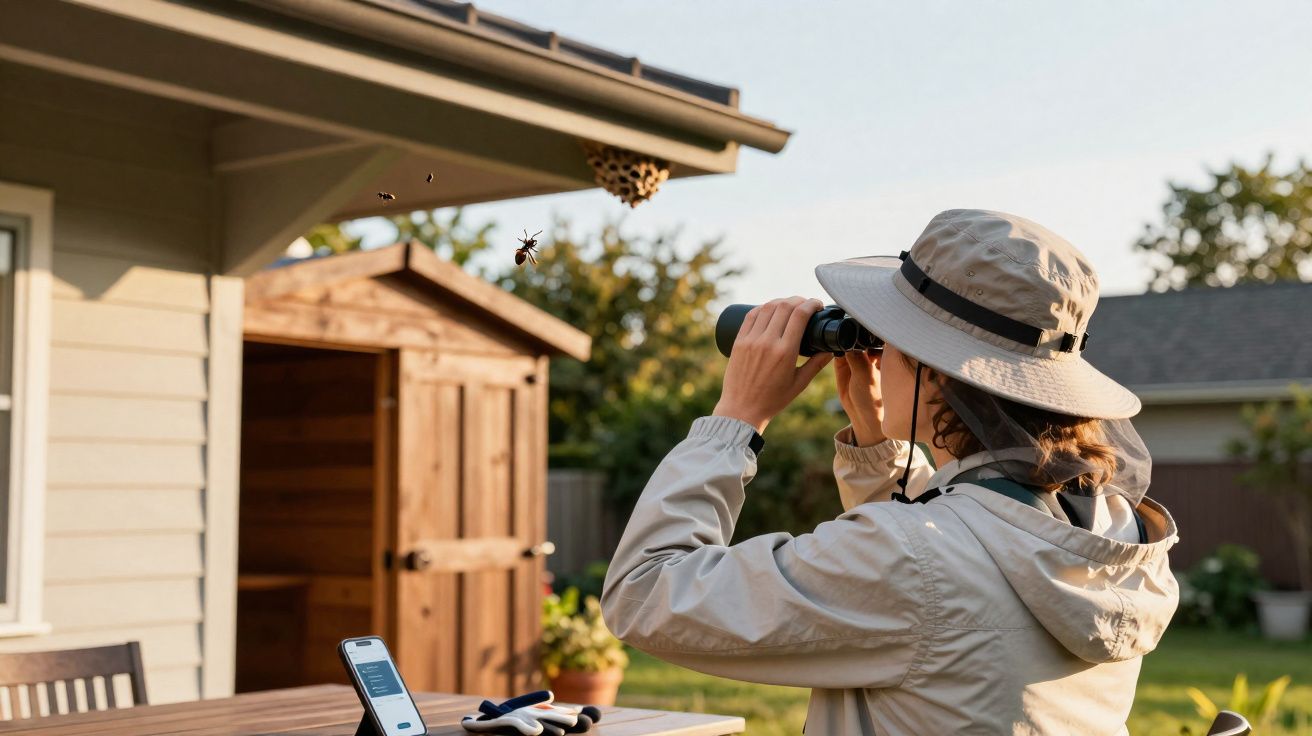
Between February and May, the Asian hornet often builds its first mini-nests on houses and garden sheds. If you know where to look, you can spot the insects early and stop a large, defensive colony forming right beside your patio, guttering or tool store.
Why the Asian hornet becomes a problem now
The Asian hornet is classed as an invasive species and has been spreading across Europe for years. It hunts, among other prey, honeybees, and it can pose a risk to people if a nest is disturbed. The biggest danger is not deep in the woods but much closer to everyday life: on roofs, balconies, garages and garden buildings.
In late winter and early spring, queens that have overwintered become active again. They look for somewhere sheltered, dry and slightly warm-ideally close to people. This is where a so-called primary nest is created: the first, small nest of the season.
"This primary nest is often no larger than a table-tennis ball-easy to miss, but the key to the later large colony."
From this unremarkable paper-like ball, a sizeable nest with hundreds of workers can develop within a few months. If you find it at the early stage, you can prevent the whole build-up before it becomes genuinely risky.
The favourite hiding places on buildings: where to check first
Your main search area is, quite literally, above your head: the roofline. The hornets take advantage of warmth from the building, available wood fibres, and a spot that is protected from wind. They pick locations that are hard to notice from below, but ideal for them.
Under the eaves: the number-one hiding spot
Begin your check from ground level-no ladder and no added risk. Step back far enough to see the full roof edge, focusing especially on the side facing the sun.
- Look along overhangs and protrusions
- Check boards along the eaves and any cladding
- Watch for fixtures and boxes beneath the guttering
At first, the insects’ activity is more telling than the nest itself. Spend a few minutes watching for:
- repeated flights to and from the exact same point
- a single, slightly larger “wasp-type” insect that keeps disappearing and returning
- a faint buzz or hum from one spot when it is otherwise quiet
The nest is often attached to the underside of the overhang. Typical signs include:
- a grey-brown sphere made from paper-like material
- around 3 to 5 centimetres in diameter
- a smooth surface with slight marbling
- a small entrance opening underneath or to one side
That tiny ball is the start of the colony. Finding it at this point can save you dealing with a large, defensive nest in summer-often high in tree canopies or other hard-to-reach places.
Facades, balconies, carports: underestimated hotspots
Beyond the underside of the roof edge, the insects also use other parts of buildings that are often overlooked:
- timber cladding on gable ends
- the underside of balconies made of wood or plastic
- exposed beams on carports
- covered entrance porches
A short walk around the property, plus a bit of patience, is often enough. If you can spare a few minutes two or three times a day-such as in the morning and evening-you are more likely to notice distinctive flight paths.
In the garden shed: the hidden nest at eye level
Garden sheds and tool stores are ideal: little disturbance over winter, plenty of wood, a roof immediately overhead, and lots of dark corners people rarely inspect. That is exactly why queens particularly like founding their first nest there.
Typical places to find a nest inside a shed
If you have a garden building or storage room, it pays to take a deliberate look before you start using it regularly again. Pay close attention to:
- where the ceiling meets beams
- corners directly beneath the roof panel
- wooden braces above shelves and tools
- internal roof boarding, especially in darker areas
The nest is often hanging within reach: above a tool rack, behind a ladder, or just above the door. Many people come very close to it while grabbing a rake or lifting a box without noticing it beforehand.
"A single careless movement can alert the queen-and then the sting often follows in a fraction of a second."
Check safely-without getting close
For an inspection inside a shed, a good torch is usually enough. Open the door gently, stay in the doorway, and sweep the light slowly across the ceiling, beams and dark corners. Keep your distance and move calmly.
Out in the garden, simple tools can help:
- Binoculars: to check eaves and high corners from a safe distance
- Smartphone zoom: to take a closer look at suspicious spots on the wall
If you repeatedly see the same hornet flying in and out at one location, there is a high chance a nest-or an early nesting site-is there.
If you find a nest: what you must not do
If you discover a nest, the main thing is to avoid playing the hero. Even a small nest can become dangerous if you attack it directly. The insects defend their site, and their stings can be more severe than those from common wasps.
Basic rules if you find one:
- Increase distance and back away calmly
- Restrict the area for children and pets
- Avoid sudden movements near the nest
- Do not start motorised equipment nearby (for example a lawnmower or drill)
Above all, avoid improvised “solutions”:
- no jet of water or garden hose
- no burning or smoking out
- no off-the-shelf sprays from DIY shops
- no sealing the entrance with foam or tape
Trying to block the opening in particular can make the insects more aggressive. They then often look for alternative exits-sometimes into indoor spaces or directly towards people.
How to report a nest properly
Rather than taking action yourself, document the nest and report it. A photograph taken from a safe distance helps enormously. Zoom in, avoid using flash, and note the exact location.
| Information | Example detail |
|---|---|
| Location on the building | Underside of the roof overhang on the south-facing side |
| Height | Roughly at first-floor level |
| Access | Visible from the garden side |
| Activity | Several entries and exits per minute |
In many areas there are designated contacts who deal with nests: local councils, environmental authorities, pest controllers or beekeeping associations. Your local authority can usually tell you who is responsible and whether costs are covered.
How to protect yourself and your surroundings long term
Regular checks around your home reduce the risk significantly. Two or three quick visual inspections in spring can already make a big difference. Pair it with other routines-for example the first lawn cut, spring cleaning on the patio, or opening the garden shed after winter.
At the same time, it is worth reviewing potential nesting spots:
- Close off or cover open voids beneath roof overhangs
- Repair loose timber and gaps on sheds
- Clear unnecessary stored items close to the ceiling
This removes some of their preferred sites without needing to redesign your whole garden.
How to identify the Asian hornet
Many people confuse this species with native hornets or large wasps. Knowing what to look for helps avoid false alarms-and ensures genuine sightings are reported accurately.
- distinctly dark body, almost black-brown
- a broad orange band on the abdomen
- legs with yellowish ends
- usually slightly smaller than the native European hornet
Native European hornets are protected in Europe and are highly beneficial. They behave differently and, for example, hunt pest insects. Correct identification therefore supports conservation as well.
Risks for people and pets
A single insect in the garden is usually not a major issue for healthy people. The situation becomes serious when someone gets too close to a nest or shakes it without realising. Multiple stings can then trigger severe reactions, especially in people with allergies.
Particularly problematic are:
- nests close to patios and seating areas
- colonies near children’s play areas or sandpits
- nests beside paths where lawnmowers or trimmers cause vibration
Pets sometimes snap at insects or poke their noses into suspicious corners. If you know the typical nesting locations, you can avoid or secure those areas more effectively.
In practice, a quick, trained spring check is often enough with the Asian hornet: the roof overhang, corners of the facade, and the shed ceiling. Turning that into a habit reduces stress, costs and stings-and stops colonies before they properly get going.




Comments
No comments yet. Be the first to comment!
Leave a Comment