
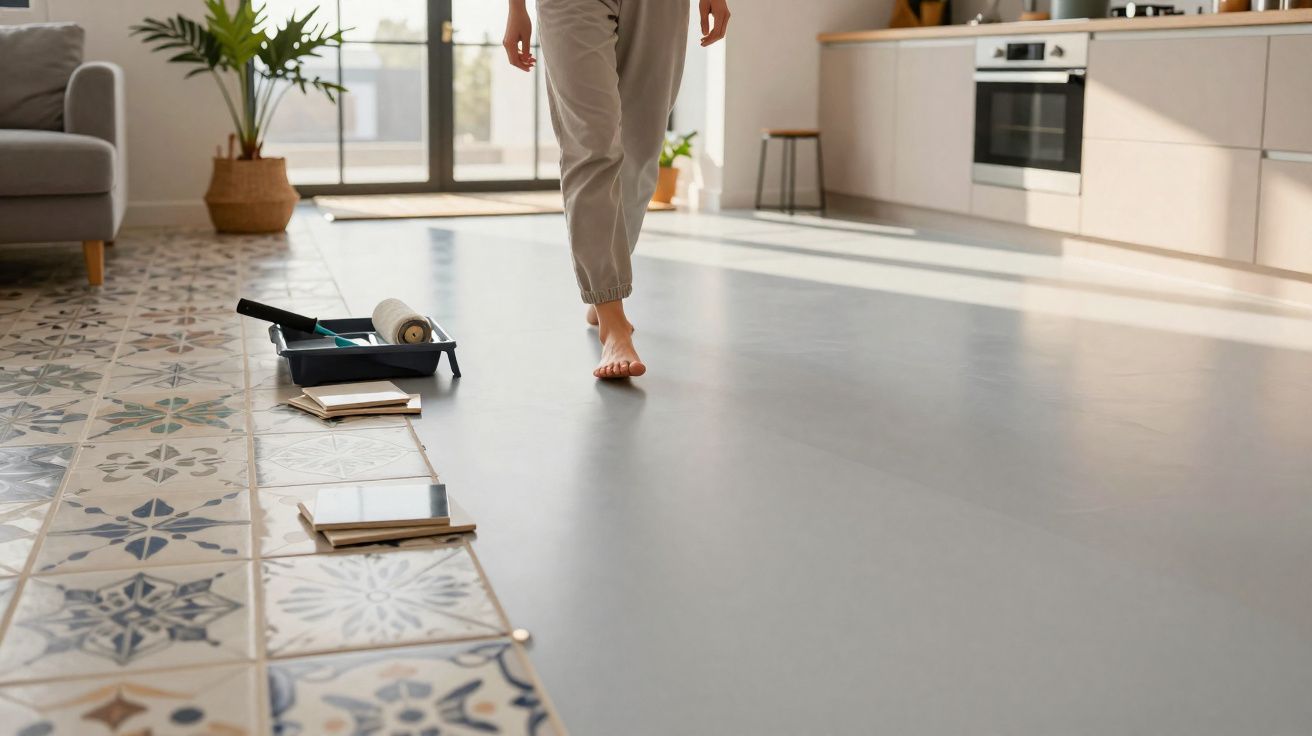
There is a way out, and it is surprisingly simple.
Many flats and houses only look dated because of the floor. Beige small-format tiles, kept immaculately clean, but visually straight out of the 1990s. Anyone who then thinks of jackhammers, piles of rubble and days of renovation chaos usually puts the project off again and again. This is exactly where a solution comes in that makes the tiles disappear visually without ripping them out.
Why a new surface over old tiles changes so much
A traditional tile replacement always follows the same pattern: break out the old tiles, dispose of the rubble, repair the screed, then lay the new finish. That costs money, time and patience - and turns the home into a building site for days. For many homeowners and tenants, that is simply not an option, especially straight after moving in.
A much calmer approach is a finish that goes directly on top of the existing tiled floor. The idea is simple: the old base stays in place and is used only as the supporting layer. A new, continuous surface is created above it, with no visible joints. The room feels quieter, more contemporary and is easier to clean.
A modern coated floor can transform old tiles into a seamless surface - with no demolition and no skip outside.
This type of floor covering is usually a specialist resin coating, typically based on epoxy resin or polyurethane. The material is applied in liquid form and then cures into a hard-wearing, closed surface. The advantage is clear: it is water-resistant, scratch-resistant and suitable for kitchens, hallways, bathrooms and even living areas.
Resin design floor over old tiles: from tired tiles to loft style
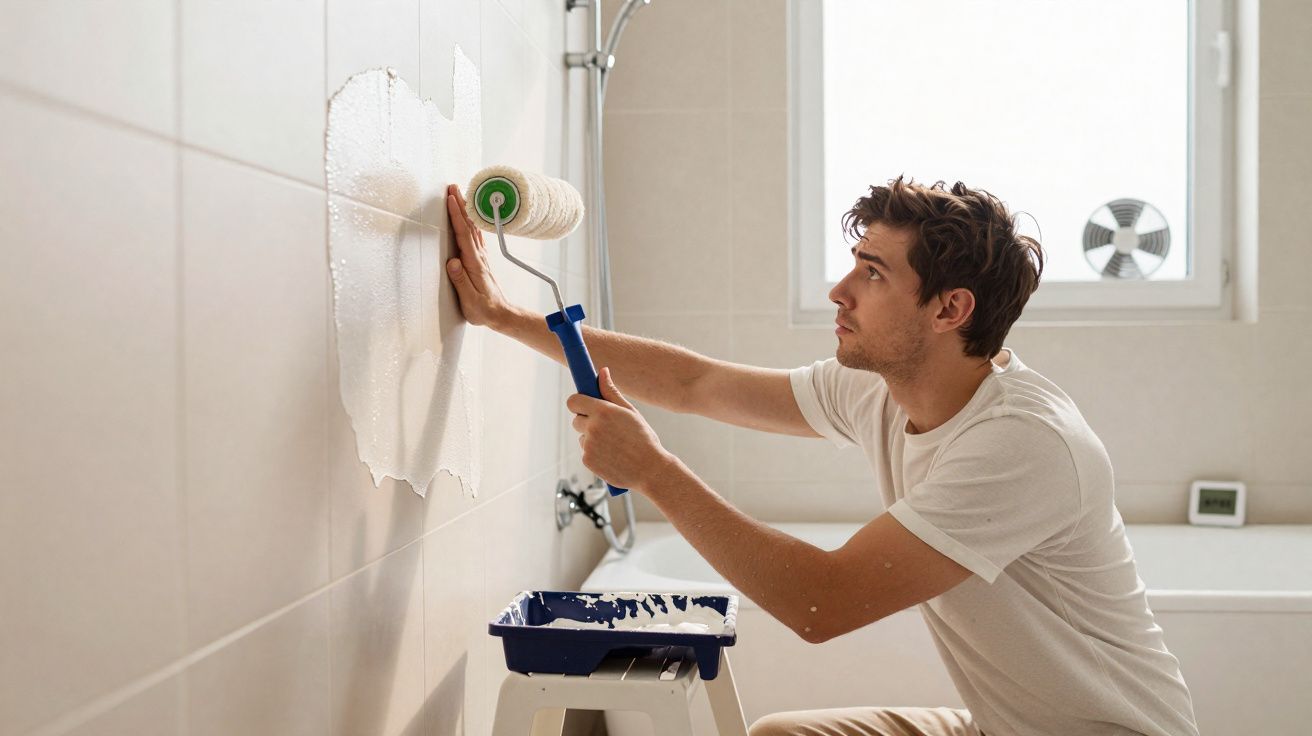
The decorative resin coating arrives as a thick liquid that spreads across the existing tiled floor. It flows over tiles and grout lines, then hardens into one continuous surface. Depending on the product, the finished look may resemble concrete, a poured industrial floor or a very calm, modern design floor.
In visual terms, almost anything is possible: cool stone greys, warm greige tones, near-white surfaces for minimalist rooms or bold colours as a statement feature. That means the coating works just as well in a family kitchen as in a compact bathroom or an open-plan kitchen-diner.
In rooms that see heavy use, this floor scores highly thanks to its uniform, durable character. There are no grout lines to trap dirt, and no chipped edges that need constant attention years later.
Because the layer is so thin, it can also be a practical option where finished floor height matters. In many homes, that means fewer problems with door clearances, kitchen units and thresholds than you would face with a full strip-out and rebuild. If underfloor heating is already in place beneath the tiles, compatibility should always be checked in advance, but many systems are designed to work with that kind of substrate.
When a resin floor over tiles is worth it
Before the resin tin is opened, the existing floor needs to be looked at honestly. The base must be structurally sound. Loose tiles or hollow-sounding tiles rule the project out. If you simply coat over those areas, you risk later debonding or cracking across larger sections.
The tiled surface must:
- be stable, with no loose or hollow-sounding tiles
- appear clean and free from grease
- be dry, especially in bathrooms
- be as level as possible, with larger depressions filled beforehand
The grout lines are cleaned, lightly filled if necessary and smoothed off. On very smooth, glossy tiles, a special bonding primer is recommended. It ensures the new layer does not peel away like a film, but bonds properly with the old surface.
The new floor is only as good as the preparation beneath it - skimping at this stage will be paid for later.
The main advantages of a resin floor on old tiles
Anyone who decides to have a tiled floor coated benefits from several advantages at once.
- Seamless surface: nothing gets trapped in grooves, and the floor looks larger.
- Easy cleaning: damp mopping is usually enough, even in a bathroom or kitchen.
- Many looks available: from matt and understated to high-gloss, depending on the style of the home.
- Faster than a full refurbishment: often only one or two days are needed.
- Long service life: with proper preparation and the right care, the floor stays attractive for many years.
The finish can be adjusted with different sealants. Matt and slightly textured surfaces look more like concrete, while a glossy finish gives a smart loft-style appearance. In wet rooms, an anti-slip version is advisable; in living areas, a smoother, gently satin finish usually works best.
Step by step: how the renovation works without demolition
Most systems follow a similar process. The exact instructions vary by manufacturer, but the basic sequence remains the same.
- Cleaning: vacuum the tiles thoroughly, degrease them and lightly sand the surface if needed.
- Repairing damage: close cracks, holes and crumbly grout with filler.
- Priming: apply a bonding primer, especially on very smooth surfaces.
- Mixing the resin: combine the components exactly as instructed and observe the pot life.
- Applying the coating: spread the resin and level it evenly with a roller or squeegee.
- Sealing: depending on the system, add a protective layer against scratches and UV light.
On smaller, straightforward areas - such as a guest cloakroom or a compact hallway - experienced DIYers can manage the job with ready-made kits from a DIY store or specialist supplier. Prices start at roughly €18 per square metre for simple systems. The key is to follow the instructions precisely and respect the drying times.
While the coating cures, the room should be kept as free from dust and moisture as possible. Good ventilation is also important so that the surface can harden properly and any odours can disperse. That is one more reason why planning the work carefully pays off, especially in occupied homes.
When a professional is worth it
The larger and more awkward the area, the more sense a specialist contractor makes. In a large kitchen-diner, a fully tiled bathroom with shower, alcoves and slopes, or anywhere the visual finish has to be particularly high, a professional is the better choice.
Tradespeople who specialise in floor coatings usually work with higher-grade systems and know the common pitfalls. Depending on materials, colour choice and effort involved, costs often fall between €100 and €150 per square metre. That normally includes preparation, coating and sealing.
That experience is especially valuable around anti-slip wet-room areas, transitions to other floors and sensitive points such as floor drains. Variations in layer thickness or visible join marks are very difficult to correct afterwards.
Where the new surface works well - and where it does not
The coating shows its strengths in these rooms:
- Bathrooms: a low-joint, water-resistant floor that looks far more modern than old small tiles.
- Kitchens: easy to clean, with no grease or sauce collecting in grout lines.
- Hallways and entrances: resistant to street dirt and wetness brought in from outside.
- Living and dining rooms: a calm, expansive appearance that lets the furniture stand out.
It is less suitable on substrates that move significantly, such as timber boards with noticeable flex. In those cases, cracking is a risk. The same applies if there is serious damp damage beneath the tiles or if mould is already present: the cause must be fixed first, before a coating is even considered.
Tips for everyday use, care and long-term planning
Once the new floor has fully cured, upkeep is usually easier than with a conventional tiled surface. Neutral cleaners are enough; harsh scouring products are unnecessary and can sometimes damage the seal. Furniture should have felt pads fitted, and soft protectors help under heavy cabinets.
If you like to rearrange furniture often or regularly move heavy items, it is worth asking for a particularly durable seal with strong scratch resistance. In households with dogs or children, a system that tolerates minor wear and can be repaired in sections if needed is often the smartest choice.
From the point of view of property value, the floor works in two ways at once: it avoids expensive demolition work and gives older homes a noticeably more modern appearance in one step. If another floor covering is chosen many years later, the coating can still serve as a stable base - for click vinyl, parquet or carpet, for example.
If you are still unsure, you can order sample boards or visit a showroom. Resin floors often look different in person than they do in photos: lighter, calmer and less industrial than many people expect. In small bathrooms in particular, they can make a room feel bigger because the usual grid of grout lines disappears and the eye no longer lands on every individual tile.



Comments
No comments yet. Be the first to comment!
Leave a Comment