
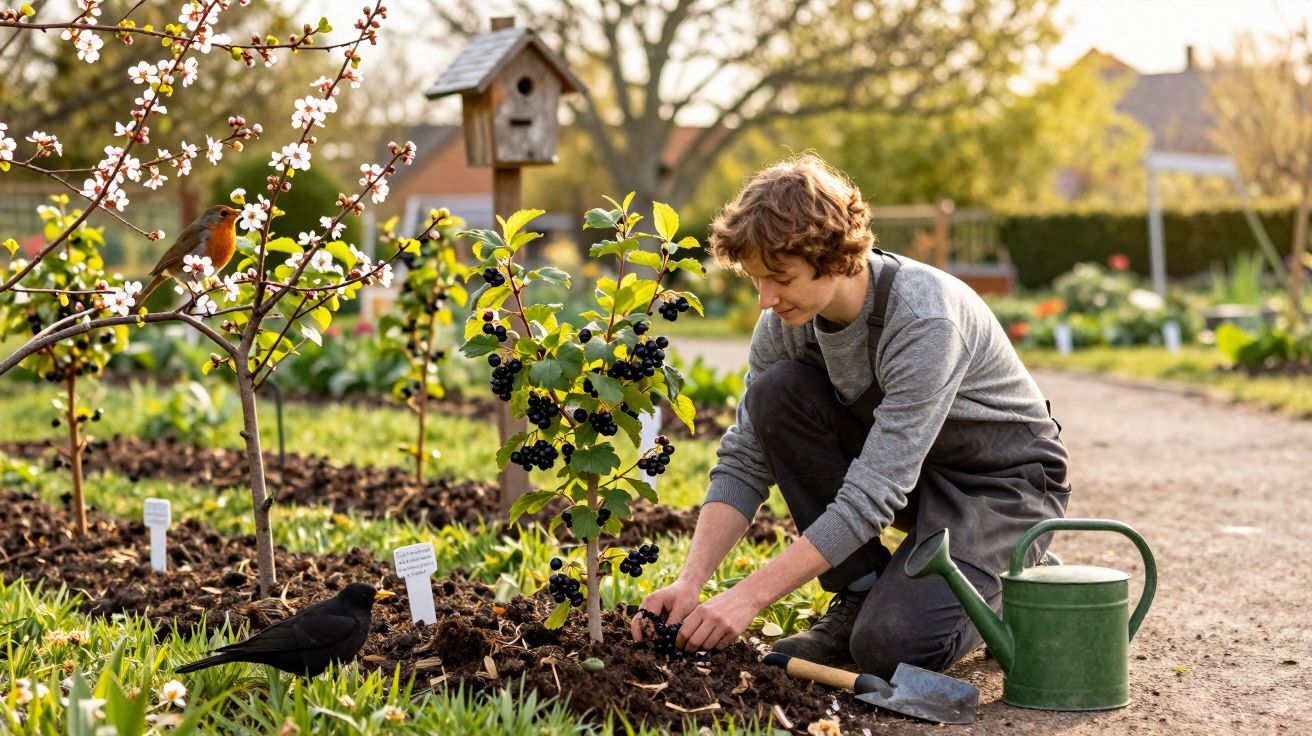
Winter is moving on, the garden looks bare - yet with one clever planting move in March, your greenery can quickly become a stage for birds, insects and plenty of life.
Many people hang up fat balls in winter and then wonder why the garden still feels quiet in spring. The difference is not the next bird feeder, but a decision made with a spade: a hedge that doubles as a feeding station and a shelter. Plant it now, and you are laying the foundations for a thriving mini-ecosystem just behind the house.
Why March is the ideal time to get started in the garden
March is when the soil begins to wake up. It is no longer frozen, but it is still moist enough for new roots to establish quickly. Plants get moving before summer arrives with heat and dry spells.
At the same time, many bird species are now actively searching for territory, nesting sites and food sources. If you plant within this window, you are sending a clear message: this is a place worth staying in. Shrubs that flower early or bear fruit soon act like a bright signpost for blackbirds, tits and the rest.
Plant in March, and nature gets an address, a larder and a nursery all in one.
If this work is left until late spring, some territories have already been claimed. Your garden can then end up in the category of “just passing through, not a place to settle” - and that is exactly the situation this planting trick can change.
Before you begin, it helps to loosen the soil thoroughly, clear out persistent weeds and water the planting holes well. A layer of mulch afterwards will keep moisture in the ground and give young roots a calmer start. It is also worth avoiding pesticides altogether, because the insects you are trying to attract are not pests here - they are part of the food chain.
The fruit hedge as a habitat: more than just attractive berries
Instead of a dull row of conifers, a mixed, fruit-bearing hedge brings several jobs together at once: screening, harvesting and wildlife habitat. It becomes especially interesting when the shrubs have different flowering times, fruit colours and growth habits. That creates lots of small pockets where animals can settle in comfortably.
The core idea: a hedge that both people and wildlife can eat from
The principle is straightforward: you plant shrubs with berries that you can nibble yourself, while also providing food for birds, insects and small animals. In that way, you create a fruit hedge that does not just look attractive - it also earns its keep.
- it provides nectar for bees and other pollinators
- it offers cover and nesting places for songbirds
- it feeds wildlife with berries, insects and small creatures
- it gives you berries for jam, cakes or straight from the bush
Three shrubs that can turn your garden into a bird haven
You do not need a huge plant list. Three species are enough to transform a quiet corner into a lively habitat.
1. Blackcurrant - a dense hideaway with a protein-rich food source
The blackcurrant (Ribes nigrum) produces thick foliage and gives off a strong scent when you rub the leaves between your fingers. Birds are drawn to that dense canopy because it provides cover from cats and birds of prey.
The flowers attract plenty of insects. For young birds, those crawling insects are vital because they provide a great deal of protein. The berries themselves are a delight for people and are also gladly eaten by birds if you leave them a few clusters.
2. Gooseberry - a spiky fortress for nests
Gooseberry bushes score highly with their thorns. What can be awkward for gardeners can be a lifesaver for bird families. Cats and martens find it much harder to push through a thicket of spiny shoots to reach a nest.
If you plant several gooseberries close together, you create a proper fortress. Small nests can be tucked easily between the branches and are hardly visible from the outside. The fruit, meanwhile, supplies summer vitamins for both people and wildlife.
3. Serviceberry - an early bloomer and berry magnet for blackbirds
The serviceberry, often sold as Amelanchier, is still a well-kept secret in many gardens. It flowers very early with delicate white star-shaped blossoms. At a time when little else is offering nectar, its flowers are already open on the shrub.
Later in the year, dark blue to purple berries develop that strongly resemble blueberries. Blackbirds and other thrushes are absolutely thrilled by them. Some of the harvest will definitely end up in a beak rather than a bowl - and if you share, you will be rewarded with a daily concert.
Three shrubs, placed well, can restore a missing link in the garden food chain.
How to plant the hedge properly: site, orientation and spacing
If you want the fruit hedge to become a genuine magnet for wildlife, a few simple rules will help.
North-south orientation for light on both sides
The ideal layout is to run the hedge north to south. That way, both sides receive sunlight over the course of the day. This leads to:
- better fruit ripening
When you plant, leave enough room for the shrubs to develop naturally rather than crowding them together too tightly. A mixed hedge only works properly if each plant has space for air to circulate and light to reach the inner branches. That also makes the hedge healthier in the long run and reduces the risk of fungal problems.
Choosing a variety of native or well-adapted shrubs will make the hedge even more valuable. Different flowering and fruiting periods extend the supply of food, while a layered structure gives birds more places to hide, perch and nest.

Comments
No comments yet. Be the first to comment!
Leave a Comment