
Do you turn every jumper inside out before washing, only to find that stains or shadows are still there afterwards?
Then that habit is probably the reason.
Many people picked up the routine from parents or grandparents: always turn clothing inside out before it goes into the washing machine. It sounds sensible enough - it is meant to protect colours, shield prints and reduce fluff. However, in one very specific situation, that automatic step does the exact opposite: the garment comes out smelling fresh, but it still looks slightly dirty.
Why we turn clothes inside out in the first place
The logic behind it is actually sound. The outer face of a garment rubs against the metal drum, zips, buttons and other items of laundry throughout the wash. That can fade colours and roughen fibres.
Turning dark jeans, hoodies or printed T-shirts inside out protects the colour, design and fabric from unnecessary abrasion.
There is also the fact that the inside sits directly against the skin. That is where sweat, deodorant, skin oils and traces of cream or make-up build up. If a T-shirt goes into the drum inside out, the wash liquor reaches those areas more directly. Odours can therefore often be removed more effectively.
For plenty of items, washing inside out really is the right instinct - especially for:
- dark jeans
- hoodies and sweatshirts
- printed or embroidered T-shirts
- underwear and close-fitting clothing
The mistake: when turning it inside out saves the stain instead of removing it
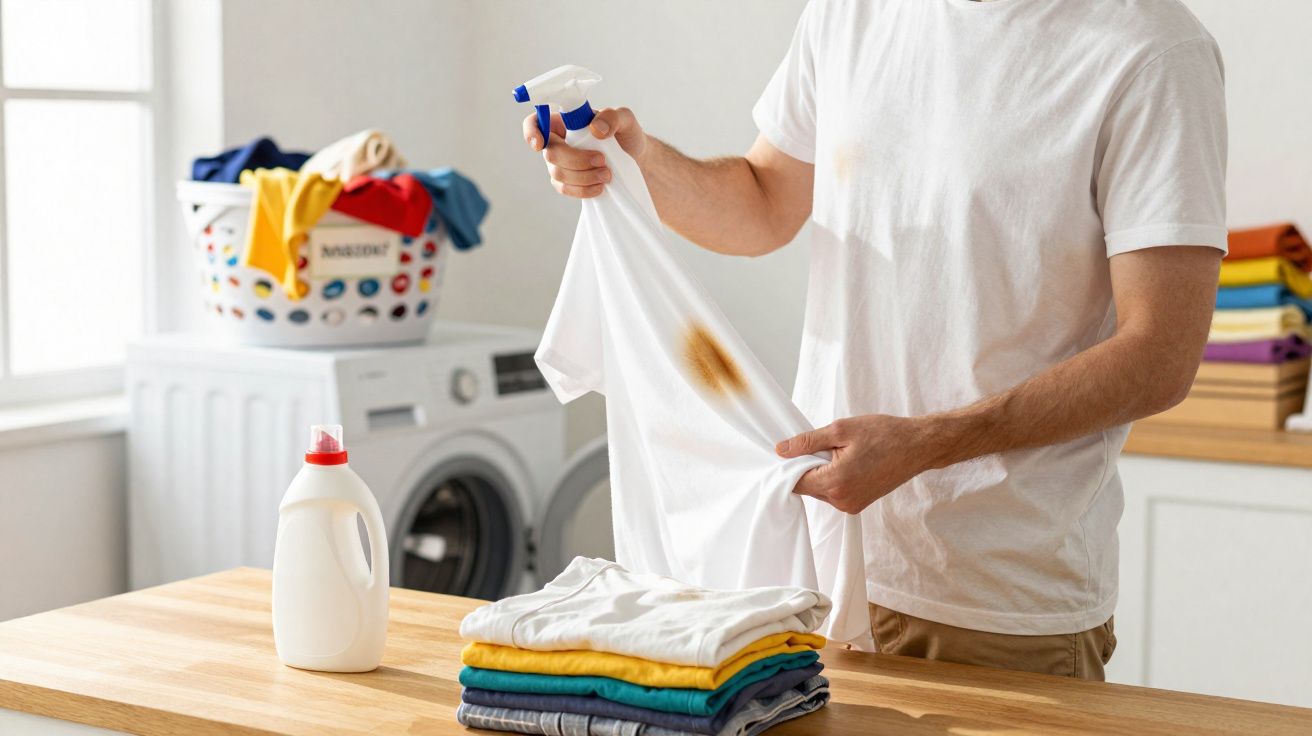
Here is the catch: as soon as the outside is visibly dirty, turning the item inside out gets in the way of the wash. A splash of sauce on the front, a grey collar, mud on the knee - all of those need direct contact with water, detergent and movement.
Every stain needs to face outwards so that water, detergent and friction can lift it out of the fibres.
If the item is still turned inside out, this is what happens:
- the dirty patch ends up folded inward or pressed against other laundry
- water and detergent reach the stain zone less effectively
- the useful rubbing action happens on cleaner areas instead
The result: the machine may make the fabric smell fresh, but the stain - or at least a shadow of it - often remains visible, usually only really becoming obvious once the item is dry.
Stubborn cases: stains that often survive a wash
Certain marks are especially resistant when they are hidden away on the inside during the cycle:
- Grease and oil (cooking oil, butter, salad dressing)
- Sauces (tomato, curry, Bolognese)
- Mud and earth
- Grass stains
- Make-up, foundation, lipstick on collars or cuffs
They all have one thing in common: they cling to fibres, spread, or set into the fabric if they are not treated properly. That can mean a stain that seemed to have vanished reappears after drying, or leaves a pale, ugly ring behind.
“Smells clean” does not automatically mean “is clean” - especially with grease and colour stains.
The simple rule: when to wash right side out, and when to wash inside out
A quick rule of thumb sums up the dilemma neatly:
| Situation | How to wash |
|---|---|
| Outer surface visibly dirty or stained | Wash right side out, and pre-treat first if possible |
| No visible stain, just worn | Wash inside out to protect colours and prints |
| Sportswear or performance clothing with no visible marks | Wash inside out so the detergent can reach sweat areas |
| Very delicate print or flocking | Usually wash inside out, even if stained - then pre-treat thoroughly |
How to pre-treat properly so the stain actually has a chance
If you leave stains to the machine alone, you may end up washing the item a second time, often with hotter settings - and that puts much more stress on fabrics than a short pre-treatment does.
The most effective three-step approach is: see the stain, dampen it, and apply the right stain remover.
In practice, the following works well depending on the stain type:
- Grease stains: put a drop of washing-up liquid on the slightly damp patch and massage it in gently.
- Protein-based stains (sweat, blood): rinse with cold water first, then use a stain remover - never start with hot water.
- Strongly coloured stains (tomato sauce, curry): allow an enzyme-based stain remover or gall soap to work in, then rinse briefly.
- Mud: let it dry completely first, brush it off, then pre-treat and wash.
- Persistent odours: apply a little bicarbonate of soda to the affected area as a gentle deodoriser.
More important than vigorous scrubbing is the contact time. A few minutes is often enough for the product to penetrate the fibres. By contrast, heavy rubbing damages the fabric and makes fine textiles look tired very quickly.
What to do before the wash: sort smarter, not harder
The most important step happens before the machine even starts: the quick look into the laundry basket. A brief check is often enough:
- Are there visible stains on the outside?
- Are typical friction points such as collars, underarms or trouser hems discoloured?
- Are hooks, bra clasps or zips open and likely to damage other items?
Heavily soiled items are better kept out of the regular laundry pile, pre-treated separately, and then washed with similar items. That helps prevent dirt from spreading and stops entire loads needing another run.
A useful extra habit is to treat fresh stains as soon as possible. The longer a mark sits in the fabric, the more likely it is to set - especially on cotton, jersey and blended fabrics. A quick response at the sink can often save an item from a second wash.
Practical examples from everyday life
A few typical situations make the “stain facing outwards” rule much easier to picture:
- Children’s trousers with grass and mud on the knee: let them dry first, brush off the dirt, treat the grass mark, then wash the trousers right side out.
- Black T-shirt with a little sweat under the arms: turn it inside out, and treat the underarm area with a little bicarbonate of soda or stain remover if needed.
- Jeans with ketchup on the front: dampen the stain with lukewarm water, work in a stain treatment, then put the jeans into the machine right side out.
- Sports top made from performance fabric, with no visible marks: wash inside out on a gentle cycle to protect the membrane and any print.
If you apply this logic a few times on purpose, you will quickly notice the difference: fewer items need a second wash, fabrics last longer, and the gap between “smells fresh” and “looks genuinely clean” becomes much more obvious.
For expensive pieces in particular - such as good jeans, running tops or favourite hoodies - that extra glance before you throw them in the basket is well worth it. A quick check to see whether the dirt is on the outside, the right pre-treatment, and then the correct direction in the drum: often that is all it takes to keep clothes looking better for longer and to stop stains becoming permanent guests.



Comments
No comments yet. Be the first to comment!
Leave a Comment