
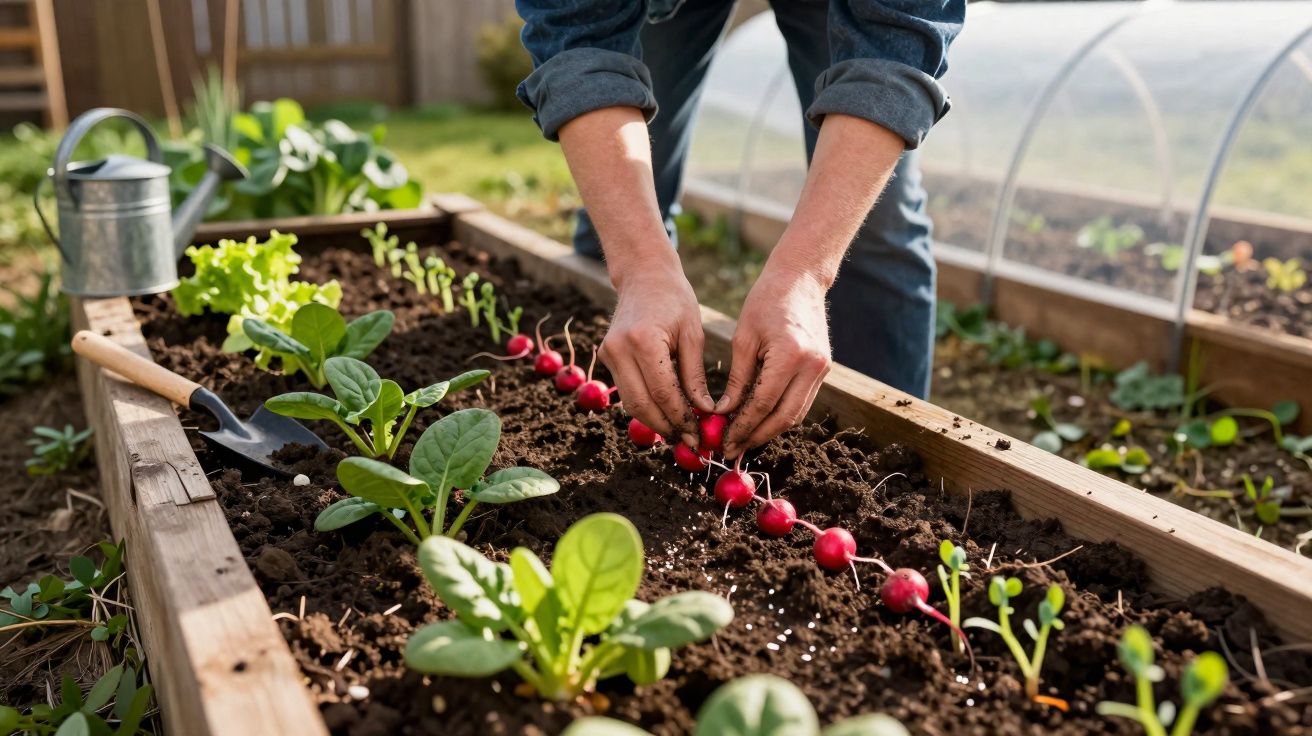
The winter is finally loosening its grip, your hands are itching to get back into the soil, and yet you do not want to wait ages for that first pickings.
March is exactly where the season begins to work in your favour. If you sow and plant wisely now, you can be harvesting crisp radishes, tender lettuces or young spinach leaves after only a few weeks - well before summer brings the big glut of vegetables. Four especially speedy crops can make sure your plot is already producing properly in spring.
Why March is the starting gun for the vegetable garden
From March onwards, the mood in the garden changes. The days grow longer, the soil thaws, and the sun starts to gain strength. The vegetable patch wakes up - and with it comes the chance of an early harvest. Anyone who acts now lays the foundations for the whole season.
Before you reach for the seed packets, the soil needs some attention. After winter, there is often wet leaves, dead plant material and snapped twigs lying about. These should be cleared away. That allows air to reach the soil, makes life harder for fungal diseases, and removes some of the hiding places slugs rely on.
The next step is the basis of every good harvest: the soil itself. Loosen it with a garden fork or a soil cultivator, and remove stones and root debris. A layer of well-rotted compost improves the structure and feeds the young seedlings with nutrients. Gardening specialists have said for years that humus-rich soil produces faster-growing and more resilient plants.
It is also worth sketching out a rough planting plan before you sow. Where will leafy crops go, where will root crops sit, and where do climbing plants belong? Fixed areas for lettuce, root vegetables and climbers prevent overcrowding and reduce competition for light and nutrients.
A quick check of the seed packet is time well spent too. Sowing depth, spacing and germination time vary from variety to variety, and a small adjustment at the start can save a great deal of thinning and re-sowing later on. In a cool March, a cloche or fleece laid over the bed can also help the ground warm up a little faster.
If you prepare the soil carefully in March, you will harvest noticeably more - and earlier - in April and May.
March vegetable garden planning: these four crops deliver the first harvest in under 30 days
Many classic vegetables such as tomatoes or peppers take a long time to become ready for picking. These hardy early starters are very different: they tolerate the cold and grow quickly. Four of them are especially attractive in March.
1. Radishes - the lightning-fast crop for impatient gardeners
Radishes are the sprinters of the vegetable patch. Just a few days after sowing, the first seedlings push through the soil. Depending on the variety and the weather, you can pull the first roots from the ground after only three to four weeks.
- Germination: usually after 4–7 days
- First harvest: around 25–30 days after sowing
- Position: sunny to partially shaded
- Special feature: ideal for children and beginners
Sow them in shallow drills and cover them with only a thin layer of soil. If you sow a short row every few days, you will stretch the harvest over several weeks. Any plants that end up too crowded should be thinned early, otherwise the roots stay small or become woody.
2. Cut-and-come-again lettuce and leaf lettuce - tender leaves in record time
Not all lettuce is the same. Cos and iceberg lettuce take a bit longer, but cut-and-come-again and leaf lettuces produce tender leaves incredibly quickly. If sown densely, you can cut the first leaves after just three to four weeks.
One big advantage is that you only harvest the outer leaves while the heart remains in place. The plant then keeps growing, so your bed keeps producing fresh salad over a long period. In spring especially, even a partially shaded spot is enough to keep the young leaves juicy and mild.
3. Spinach - young leaves make a proper power food
Spinach loves cool temperatures, which makes it perfect for early spring. Sown in March, the plants sprout very quickly. For so-called baby leaves, three weeks is often enough.
The younger you harvest spinach, the more tender and delicate it tastes. The leaves can be eaten raw in salads, wilted briefly in a pan, or blended into smoothies. Experts regularly point to its high levels of vitamins, minerals and secondary plant compounds.
Young spinach leaves are among the quickest and most nutrient-dense harvests in the spring bed.
4. Early peas - the first sweet pods of spring
Peas take a little longer than the other three candidates, but early varieties often produce the first pods in just under six weeks. For them, the trick to a harvest in under 30 days is raising the plants first: sowing indoors at the beginning of March and setting them out later shortens the waiting time considerably.
Mangetout and shelling peas are especially popular because the young pods can be eaten raw or briefly blanched. Children love nibbling them straight from the plant, which makes the frustration of the long winter break fade very quickly.
March vegetable garden preparation: how to get bed and seed ready properly
For these turbo-charged vegetables to show their full potential, the starting conditions must be right. Three points matter especially: soil, spacing and watering.
Soil: loose, warm and rich in nutrients
All four crops prefer loose, crumbly soil. Waterlogging slows them down, while hard clods stop the fine roots from spreading. Slightly raised beds or low ridge beds warm up faster and drain better - a real advantage in spring.
Spacing and sowing depth at a glance
| Vegetable | Sowing depth | Spacing within the row | Row spacing |
|---|---|---|---|
| Radishes | approx. 1 cm | 2–5 cm | 15–20 cm |
| Cut-and-come-again lettuce / leaf lettuce | 0.5–1 cm, cover only lightly | 5–10 cm | 20–25 cm |
| Spinach | 1–2 cm | 5–10 cm | 20–25 cm |
| Peas | 2–3 cm | 4–6 cm | 30–40 cm |
If you keep roughly to these distances, you avoid stress from competition and reduce the risk of disease. Rows sown too tightly may look lush and green at first, but they often pay for that later with weak growth and tiny yields.
Watering: moist, but never sodden
During germination, the soil must never dry out completely. At the same time, young roots do not like sitting in wet ground all the time. The best solution is gentle watering, ideally with a watering can fitted with a fine rose, giving small amounts more often rather than drenching the bed.
One spring tip that is worth its weight in gold: water in the morning. That way, the leaves and the surface of the bed can dry again before evening, which helps prevent fungal diseases and makes conditions less attractive to slugs.
Protection from cold, slugs and other pests
March can be unpredictable: mild sunshine by day and ground frost at night. A simple fleece tunnel or an old window frame used as a cold frame is enough to protect tender young plants and keep the soil a few degrees warmer.
At the same time, the first tender leaves also attract the first hungry visitors. Slugs adore young lettuce and spinach leaves. Physical barriers such as slug fences, rough strips of wood wool, or targeted hand-picking in the evening often work better than any chemical treatment.
How to build the quick harvest into your yearly plan
These four speedy crops are ideal for filling gaps in the bed. Before slower-growing crops such as brassicas, celeriac or tomatoes need the space, you can grow radishes or spinach there first. By the time the main crop wants the bed, the early starter has already been harvested.
That means you can use your growing space twice without overloading it. A typical home-garden combination might look like this:
- March: sow radishes and spinach in rows
- April: make the first harvest, then plant young tomatoes or brassicas into the cleared spaces
- May/June: let the main crops grow, while continuing to sow salad between them
If you plan like this, you get fresh vitamins in spring, plenty of main crops in summer, and a well-organised bed that still looks after itself into autumn.
Why an early start in March is doubly worthwhile
The quick harvest in under 30 days is only part of the benefit. Sowing in March helps you settle into a rhythm, get to know your own soil, and see early on which parts of the garden are warm, damp or on the cool side.
Radishes, lettuces, spinach and early peas forgive many beginner mistakes. At the same time, they immediately show how small changes in soil, water and position affect growth. That direct feedback helps you shape the rest of the gardening season more deliberately - and makes you want to keep going after that first rapid harvest.
Comments
No comments yet. Be the first to comment!
Leave a Comment