
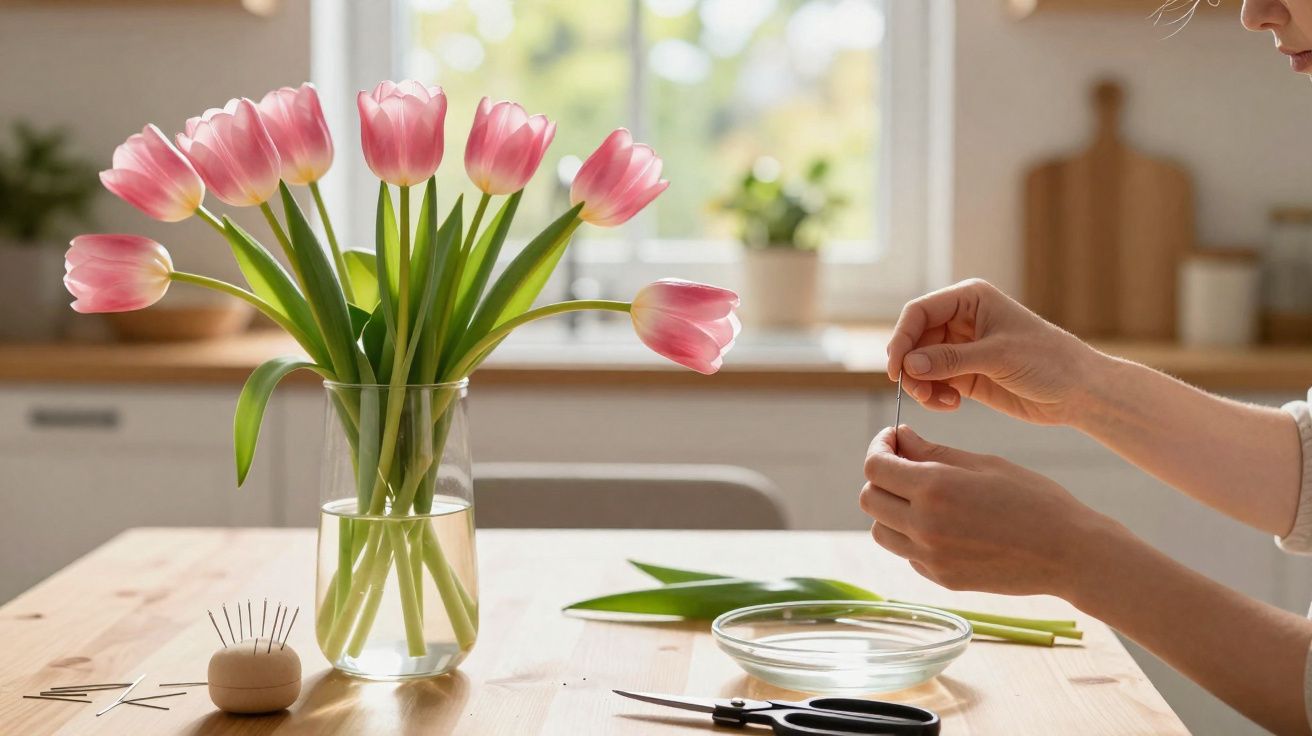
A surprisingly simple move can have them standing upright again in seconds.
Many amateur gardeners give up after the first disappointment and decide that tulips must simply be “drama queens”. Yet a test carried out in the United Kingdom suggests otherwise: with one tiny, targeted movement and a few straightforward care tricks, these spring favourites can stay handsome for much longer - no expensive florist magic required.
Why tulips collapse so quickly in a vase
Tulips behave differently in a vase from many other cut flowers. After they are cut, they keep growing, usually by 1 to 3 cm, and they lean towards the light. As they do so, the stem twists slightly.
Their stems are soft and hollow inside. Once the bloom becomes heavier, only the gentlest nudge is enough for the whole flower to flop over the rim of the vase. Warm rooms and other unsuitable conditions make the problem worse.
- warm indoor air dries out the leaves and the bloom
- sunny windows heat the water and the stems
- ripe fruit nearby gives off ethylene gas, which makes flowers age faster
- air bubbles and bacteria can build up inside the stem
Florists call this an “air lock” in the stem. It blocks the flow of water, so the bloom receives less moisture and collapses - even though there is still plenty of water in the vase.
This invisible air lock in the stem is one of the most common reasons tulips suddenly collapse in a vase.
The 3-second needle trick that gardeners swear by
An amateur gardener in England wanted to find out for herself and set up a small kitchen test: the same tulips, the same vase, the same corner on the worktop - but four different methods.
She made four tiny bouquets and treated each one differently:
- a vase with water and a splash of vodka
- a vase with water and a few coins
- a vase with plain water only, as the control
- a vase with plain water and a pin prick in the stem just below the bloom
All the tulips were given the same fresh diagonal cut under running water. They then spent six days in the kitchen - and the difference became very clear.
The result of the experiment
After only a few days, the tulips in the vodka vase looked the most exhausted. The stems were soft, the leaves drooped, and the blooms quickly lost their shape. Rather than helping the flowers, the alcohol stressed them.
The coin version lasted a little longer, but even there the flowers soon leaned over the rim. The control group in plain water performed only slightly better.
The fourth vase was the clear winner: the tulips whose stems had been pierced with a needle just below the bloom were still standing the straightest. The gardener called this the “clear winner” because those stems stayed visibly firmer.
A tiny prick beneath the petals is enough to release trapped air - and the tulip lifts itself upright again.
How the needle trick works in practice
In effect, this is a kind of venting for the stem. Air collects in the hollow centre and acts like a stopper. The puncture creates a tiny exit for that air pocket, allowing water to rise freely again.
Here is the practical method:
- have a clean sewing needle or pin ready
- hold the tulip gently by the bloom
- place the needle about 1 to 2 mm below the base of the petals
- push it right through the green stem in one quick, smooth motion
- withdraw the needle and return the tulip to the water
The puncture is barely noticeable and does not seriously harm the plant. Many tulips visibly perk up within a short time, sometimes within a few hours.
Step-by-step: how to revive limp tulips
If you have already nearly given up on a bouquet, you can often enjoy it for several more days with a small rescue routine.
Before you start, move the flowers away from radiators and direct sunlight. If they have been standing near fruit, place them somewhere else as well; even a short spell in a cooler room can make the stems easier to handle.
1. Recut the stems
Take the flowers out of the vase and, under cold water, trim 1 to 3 cm off the stems at an angle. The slanted cut increases the surface area for water uptake.
2. Clean the vase thoroughly
Pour away the old water and rinse the base and sides of the vase well. Even a slight residue of washing-up liquid and bacteria can shorten the flowers’ life noticeably. After that, rinse with clean water.
3. Add fresh, cool water
Tulips prefer cool water. If a sachet of flower food came with them, stir it in according to the instructions on the packet. This slows the spread of germs in the water and gives the stems extra nourishment.
4. Use the needle trick
If the heads are hanging badly, apply the pin trick to each tulip. The puncture should be quick and decisive so that the stem is not crushed.
5. Choose the right spot
Place the rescued tulips somewhere fairly cool, away from radiators, stoves and strong sunshine. Fruit bowls - especially those containing apples or bananas - are better moved to another room.
Kept cool, given a fresh cut and set in clean water, tulips often reward you with several extra days of flowering.
How to stop tulips drooping in the future
A few simple habits when buying and caring for tulips can cut the risk right from the start.
If you are buying tulips as a gift, a good extra step is to keep them lightly wrapped while you travel home. That helps protect the heads from getting bent before they even reach the vase.
| Tip | Effect |
|---|---|
| buy them in the morning | the blooms are fresher and the stems less stressed |
| choose buds that are still tightly closed | the flowers last much longer in the vase |
| remove leaves that would sit in the water | less rot, cleaner water, fewer bacteria |
| change the water every day | prevents slime and air bubbles |
| keep the vase cooler overnight | slows growth and opening |
Common mistakes - and why they backfire
A great deal of well-meant advice has circulated for decades, but some of it does little good and some of it can even do harm.
- Alcohol in the water: may slow germs, but it stresses the delicate stem and makes the leaves wilt faster.
- Coins in the glass: are said to release copper, but in normal household amounts the effect is barely measurable.
- Hot water: puts the cells under strain; tulips prefer water that is fresh and cool.
- Direct sunlight: causes water to evaporate more quickly and speeds up the ageing of the blooms.
The pin trick succeeds exactly where other methods fail: it solves a real physical problem in the stem instead of merely “seasoning” the water.
Practical examples for everyday life
If you like giving tulips as a present, the trick is easy to use deliberately: buy the bunch the evening before, cut the stems at home, clean the vase properly, apply the needle trick and then leave the flowers somewhere cool overnight. The next day, you can hand over a noticeably sturdier arrangement.
It is equally worthwhile in the office. In heavily heated rooms, bouquets often begin to sag after only a day. With a clean vase, daily water changes and the tiny air-release hole just below the bloom, the spring display will often last until the weekend.
Risks, limits and extra tips
The trick does have limits. If tulips are already badly dehydrated, the stems feel rubbery, or the petals fall off when touched, even a perfect puncture will not save them. At that stage, there simply is not enough life left in the flower.
Anyone with pets should also make sure they do not drink from the vase water. Tulips are mildly toxic to cats and dogs, especially the bulbs, although the plant sap can also cause stomach upset.
It is also interesting to see how tulips behave in mixed bouquets: they often grow faster than the other flowers and push themselves above the rest. Using the needle trick and keeping the arrangement in a cooler place can slow this “running ahead” effect, helping the bouquet stay balanced for longer.
If you enjoy small experiments, you can repeat the kitchen test yourself: place a few tulips in different vases, some with the pin prick and some without. After only a few days, you will see which method really works best in your own home - and most of the time, the plain, quick needle wins.


Comments
No comments yet. Be the first to comment!
Leave a Comment