
Many people tip it away without a second thought - and have no idea how much that seemingly harmless oil is punishing their pipes, the environment, and even their own budget.
Open a tin of sardines and the routine is often the same: tip the fish out, send the oil straight down the sink, rinse with water, done. It feels tidy, convenient and hygienic. In reality, that reflex quietly causes blocked pipework, extra costs and avoidable environmental harm. At the same time, a flavourful and nutritionally valuable part of the product is lost down the drain instead of ending up on the plate.
What really happens to sardine oil in the drain
In a warm kitchen, the oil looks thin and harmless. Inside the plumbing, the picture changes. There, the fat cools quickly, thickens and clings to the inside walls of the pipes.
With every serving of fish oil, an invisible fatty coating builds up inside the pipework, and it is almost impossible to shift on its own.
Step by step, the following happens:
- The usable diameter of the pipe narrows, so water drains away more slowly.
- Fatty deposits form, giving food scraps and limescale something to stick to.
- The trap starts to gurgle and bubble.
- A persistent greasy smell rises from the drain.
- Eventually the pipe blocks completely and an emergency plumber is needed.
In older homes, where pipes are already narrow or awkwardly shaped, only a few years of this habit can create serious build-up. Shop-bought drain cleaners usually remove only part of the problem, while the rest travels further along the pipe and settles again. The bill arrives later - and it is rarely cheap.
Environmental damage from fish oil in wastewater
The other problem sits outside your home. The oil does not simply disappear because it has gone down the plughole. It reaches wastewater treatment plants and waterways, where it behaves like any other load of cooking or frying fat.
Just one litre of cooking oil can form a film on the water’s surface covering around 1,000 square metres. That shimmering layer:
- disrupts oxygen exchange between air and water,
- harms fish and microscopic organisms,
- alters how light behaves in the water,
- can accumulate in sediments and food chains.
Treatment plants can catch some of the fat, but large quantities push them towards their limits. Cleaning performance drops and the workload increases. That is why environmental rules in many countries forbid discharging larger amounts of cooking oil into the sewer system. Commercial kitchens must install grease separators, while households at least share some responsibility for what goes down the drain.
A tin contains more than fish: the oil is a nutrient-rich package
Pouring the oil away means giving up one of the tin’s most useful features. As the sardines sit in the tin, fat components move from the fish into the liquid, while flavours dissolve and spread through the oil.
The golden liquid is, in effect, a concentrated sardine essence with flavour, omega-3 fatty acids and fat-soluble vitamins.
Sardines are oily cold-water fish, which is exactly where the much-discussed omega-3 fatty acids are found. These fats may help reduce cardiovascular risk and play a role in the body’s inflammatory processes. Some of them end up in the tinned oil, together with vitamins such as D and E, both of which dissolve best in fat.
So if you throw the oil away, you still eat the fish - but you lose part of the product’s nutritionally interesting side. You also send away a noticeable share of the tin’s typical sardine flavour. That is especially obvious when the contents are being prepared by hand in the kitchen.
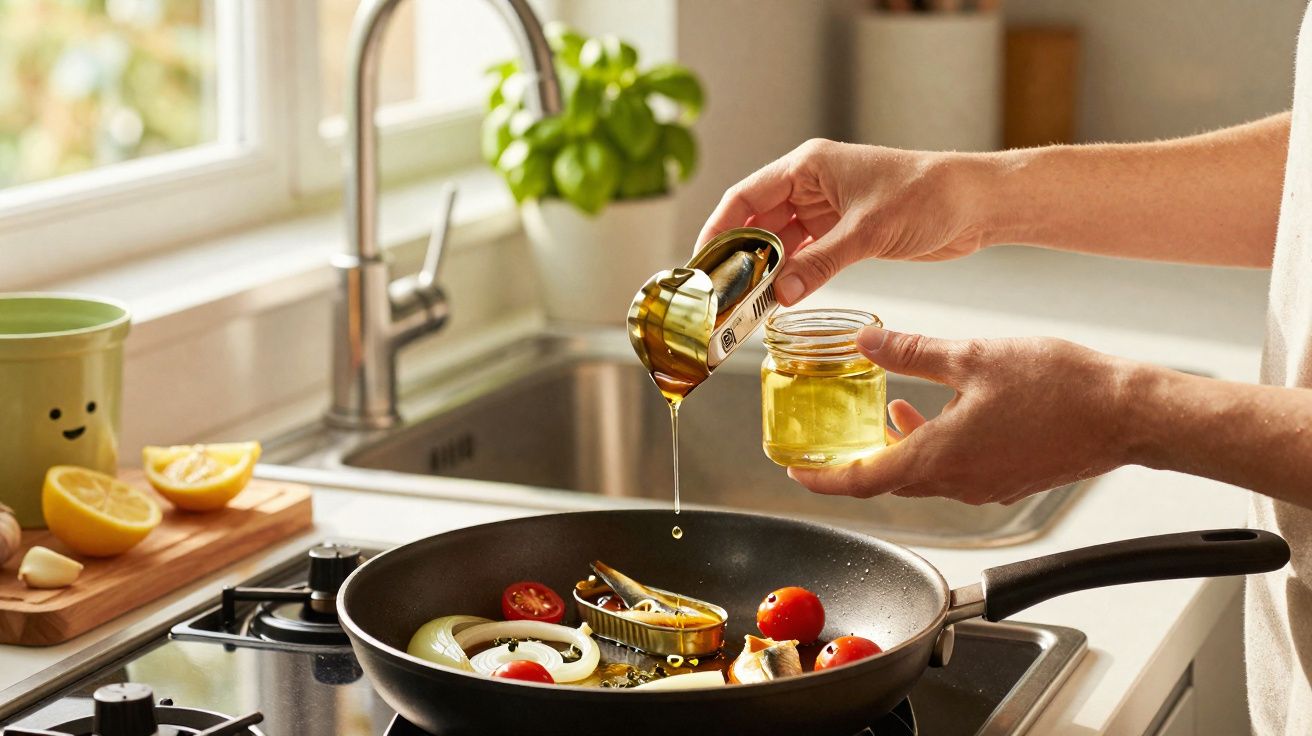
If you are not using the oil straight away, let the tin cool first and then transfer it to a clean, sealed jar. Kept briefly in the fridge, it can be used for cooking later in the week rather than being wasted.
How to use sardine oil well in the kitchen
The oil from the tin works very well as a partial substitute for ordinary cooking fats. The key is to use it sparingly and pair its strong flavour with the right ingredients.
Simple everyday ideas for more flavour and less waste
- Boost a vinaigrette: Replace part of the usual olive oil with sardine oil, then add vinegar or lemon juice, mustard, salt and pepper. It works especially well with tomatoes, leafy salads or warm potatoes.
- Rillettes on toast: Roughly mash sardines with a little of the tin oil, cream cheese or quark, lemon and herbs. The result is a spreadable topping with a bold flavour.
- Quick pasta sauce: Sweat garlic in a little neutral oil in a pan, stir in some sardine oil, add lemon zest and chopped parsley, then toss through cooked pasta.
- Lift vegetables: After roasting or frying vegetables such as courgettes, drizzle over a small spoonful of sardine oil for extra depth and a light marine note.
If you are sensitive to a strong fish taste, mix the oil with other fats. One part neutral vegetable oil to one part oil from the tin softens the flavour while still keeping the nutrients and kitchen benefits.
Extra use in savoury cooking
Sardine oil can also replace a little of the fat you would normally use for sautéing onions, finishing warm grains or enriching a fish pâté. A small amount is usually enough; the aim is flavour, not heaviness. For best results, add it near the end of cooking so the aroma stays fresh.
What if you really do not want to eat the oil?
Some people do not like the smell or taste of the oil. Occasionally the contents may also seem rancid, for example if the tin has been stored badly or is very old. In those cases, the oil still does not belong in the sink; it needs to be collected another way.
Clean ways to dispose of sardine oil
A practical household approach looks like this:
- Keep a small screw-top jar or an empty bottle ready.
- Pour the oil from the tin into the container.
- Seal it tightly and store it somewhere cool and dark.
- Once the jar is full, take it for proper disposal.
Where “proper disposal” means depends on where you live. Many local councils provide collection points for cooking oil at recycling centres. In some places, special containers are even available in car parks or at recycling sites. Oil collected there can sometimes be turned into energy or technical fats.
If there is no collection point and no practical alternative, the last resort is residual waste: put the sealed jar into your general household bin. That way, the fat at least stays out of the sewer system.
It is worth checking your local council’s guidance, because accepted drop-off methods can vary from one area to another. A quick look online can save confusion and ensure the oil ends up in the right place.
Why such a small amount still makes a difference
Many people dismiss it with, “It is only a few drops per tin.” In total, though, it adds up to far more than you might expect. Millions of households regularly buy tuna, sardines, mackerel or herring in oil. Every small kitchen moment at the sink is repeated countless times every day.
| Amount per tin | Households | Oil down the drain per week |
|---|---|---|
| approx. 15–20 ml | 1 million | 15,000–20,000 litres |
Even a slight change in behaviour reduces these volumes significantly. If you stop for a moment every time you open a tin - use it, or collect it instead of rinsing it away - you relieve not only your own pipes, but also wastewater treatment plants and waterways over the long term.
Keeping health and budget in view
Fish tins are often seen as a cheap and convenient source of omega-3. That is true, provided the contents are used fully. Once the oil is poured away, some of that value disappears. People who rarely eat fresh fish, in particular, can improve their intake of beneficial fatty acids by making better use of the oil from the tin.
There is also a financial angle. First, the oil increases the true value of the product, because a simple tin can become a complete meal with just a few basic ingredients. Second, not sending fat into the drain reduces the risk of expensive pipe cleaning. A brief move to a screw-top jar can save more than many people realise.
A small kitchen habit with a big effect
Anyone who takes this seriously does not need complicated changes. A permanent jar under the sink, a few tried-and-tested recipes in mind, and the tin oil either ends up in the pan or in a sealed container - not in the trap. Over time, it becomes routine, as ordinary as sorting the recycling or switching off the lights when leaving the kitchen.
The next time you reach for a tin of sardines, it becomes a small choice point: use the liquid as a flavour carrier and nutrient source, or collect it for orderly disposal. Only one option really should not exist any more - the direct route into the drain.




Comments
No comments yet. Be the first to comment!
Leave a Comment