
More and more amateur gardeners are turning to a remarkably straightforward trick using items they already have at home.
When spring arrives and the first seeds need starting indoors, space quickly becomes a problem: small pots, seed trays and room on the windowsill are all in short supply. That is exactly where a method that is currently gaining rapid momentum in gardening forums comes in - and it only relies on things most households already have to hand.
What the seed snail method is and how it works
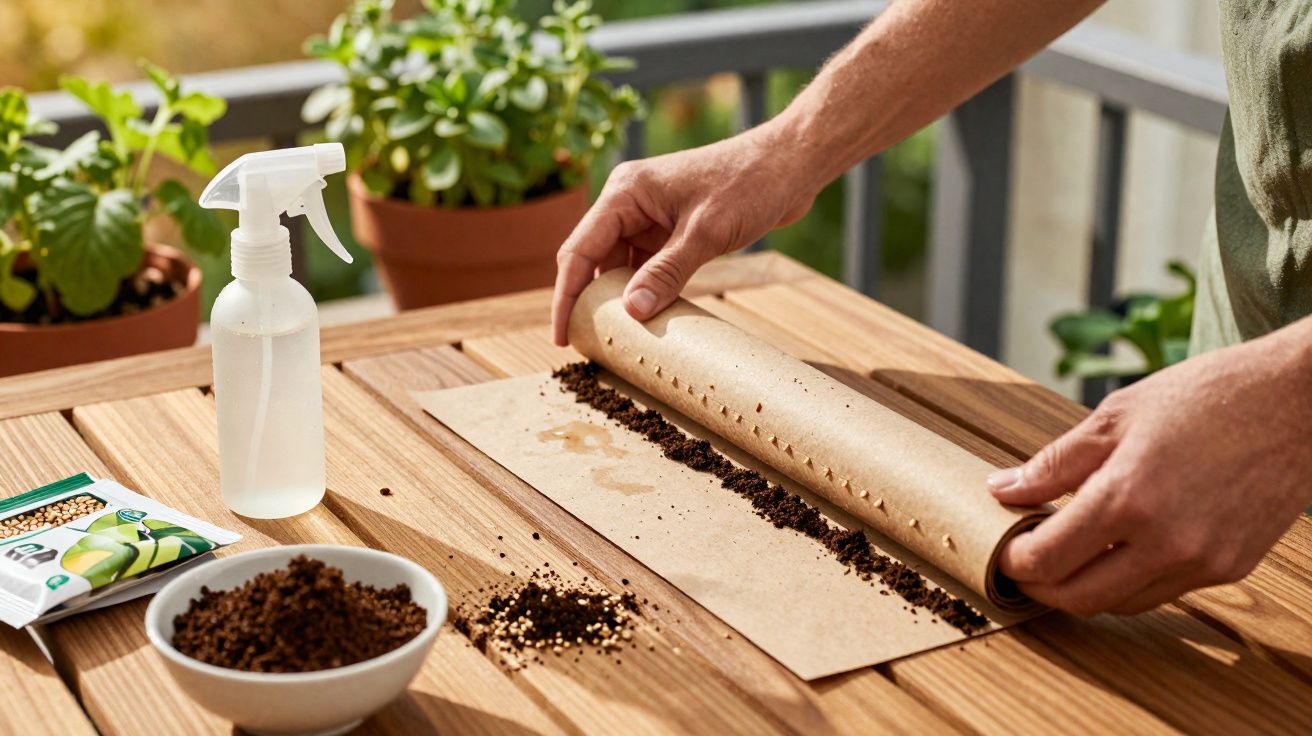
The so-called seed snail method is a technique in which seeds are not sown into individual pots, but instead into a rolled-up strip made from flexible material. This is lined with paper and seed compost, then rolled up tightly together with the seeds inside.
In the end, you have a compact “seed snail” that can give dozens of seedlings a start in very little space.
The roll stands upright in a tray, with the top edge facing upwards. The result is a small, space-saving mini garden that fits on almost any windowsill and uses very little new material.
Why gardeners are switching to the seed snail method
Many home gardeners are looking for solutions that save money, reduce waste and still work reliably. The seed snail technique meets several needs at once:
- Less space needed: Instead of lining up lots of separate pots, you only need one compact roll in a tray.
- Recycling instead of buying new: Old plastic bags, newspaper or leftover film can be given a second life.
- Gentler pricking out: When the roll is carefully unwound, each young plant appears individually with very little root damage.
- Good oversight: Seedlings grow close together, so you can quickly see which varieties are off to a strong start.
- Cost savings: Seed compost and seed are usually the only things you really need to buy.
Household materials: what works best
No one needs specialist kit for the seed snail method. In most cases, a quick look in the kitchen cupboard and paper recycling is enough.
Suitable base materials
- Thin plastic bags or bin liners, cut open
- Strips of newspaper
- Leftover decorating film or other soft plastic
On top of that goes a layer that holds moisture without falling apart immediately:
- Kitchen roll
- Thin fabric such as an old cotton T-shirt or muslin cloth
You will also need:
- Fine seed compost or sieved potting compost
- The seeds you want to grow, such as tomatoes, peppers, lettuce or flowers
- A shallow dish or saucer to keep the roll upright
Step by step: how to make a seed snail
1. Prepare the strips
Lay the plastic or paper base material flat on the table and cut it into long strips about 10 to 15 centimetres wide. It is better to work slightly longer rather than too short - the longer the strip, the more seeds it can hold.
2. Add the moisture layer
Place a strip of kitchen roll or fabric on top of the base strip. It should run along the full length without sticking out. This layer will later store water and help keep the compost stable.
3. Add the compost
Now spread a thin layer of lightly moistened seed compost over the top. The compost should be damp, not soaking wet. A gentle press with the hand is enough to keep everything in place.
The compost can be quite thin - what matters is a smooth, even layer that gives the seeds good contact.
4. Sow the seeds
Now place the seeds lengthways along the compost. Leave a few centimetres between each one so the young roots do not tangle too much later on. Small seeds, such as lettuce, need less space than larger ones like tomatoes or beans.
5. Roll it up into a “snail”
This is the key moment: carefully roll the strip up from one end. Try to keep it fairly firm, but not so tight that the compost gets squeezed out of the strip. By the end, you will have a compact roll that resembles a little snail shell.
Stand the finished roll upright in a tray. The seeds are now arranged all the way round in a spiral.
6. Choose the right spot and look after it
Add a little water to the tray so that the bottom edge of the snail sits slightly in the water. The paper will slowly soak it up and keep the compost moist.
- Position: bright, but without strong midday sun in the first few days
- Temperature: depending on the crop, usually between 18 and 22 °C
- Check: the compost should stay lightly moist at all times, but never be dripping wet
Looking after seedlings: what really matters
After a few days, the first green tips will appear at the top edge of the roll. From this point on, light and the right amount of water become the most important factors.
- Light: Keep the roll as close to a window as possible; if needed, use a grow light so the seedlings do not become etiolated, meaning long and spindly
- Water: Check every day whether the paper is still moist. If the edge dries out, carefully add a little water to the tray
- Air: Stagnant moisture encourages mould. The roll should not sit in a sealed box without any air exchange
A useful extra measure is to label the outside of the roll. A simple marker can help you keep different varieties in order, especially if you are growing several crops at once on the same windowsill.
When the young plants should be moved on
As soon as the first true leaves appear after the seed leaves, it is time to move them on. This usually happens after two to three weeks, depending on the variety.
Open the snail gently
Lay the roll flat on the table and carefully unwind it bit by bit. Do not jolt the compost, and only open it as far as necessary. Lift out each plant together with a small block of compost and place it into a pot or directly into the bed.
Water well after transplanting, but do not flood the plants. During the first few days, the young plants need some protection from harsh sun and wind so they do not wilt.
Which plants are especially suitable
| Plant | Suitability for the seed snail method |
|---|---|
| Tomatoes | Very good; even germination and easy transfer into pots |
| Peppers / chillies | Well suited; save a lot of windowsill space |
| Lettuce | Ideal; many plants can be grown in a small area |
| Brassicas | Also suitable, as they can be pricked out robustly |
| Fine herbs sown very densely | Only partly suitable, as they can become badly tangled |
Benefits, limitations and small risks
The method is especially helpful for people with limited space, balcony gardeners and beginners on a tight budget. It saves plastic, makes use of materials already available and keeps sowing organised.
Even so, there are a few things to watch out for:
- Rolls that are too wet can develop mould or cause the seeds to rot.
- Very delicate species sometimes cope less well with later transplanting.
- Sowing too densely creates more work when it comes to separating the roots.
If you are unsure, it is best to try the seed snail method first with an easy crop such as radishes or lettuce. That makes it much easier to judge the right amount of water and spacing.
Practical extras for clever home gardeners
If you enjoy experimenting, the seed snail method can be adapted quite easily. Marks made with a pen on the outer edge of the roll help separate different varieties within one snail. Small wooden sticks placed in the tray can also show where each variety begins.
Another useful tip is that the paper layer breaks down over time. If you later want to plant directly into a raised bed or a large container, you can even plant some of the thin paper layers in with the seedlings. That means the roots are barely disturbed during transplanting.
For families, the method has an extra appeal: children can see how a plain-looking roll produces more and more greenery each day. It is motivating and makes the journey from seed to plant easy to understand - all without expensive professional equipment.




Comments
No comments yet. Be the first to comment!
Leave a Comment