
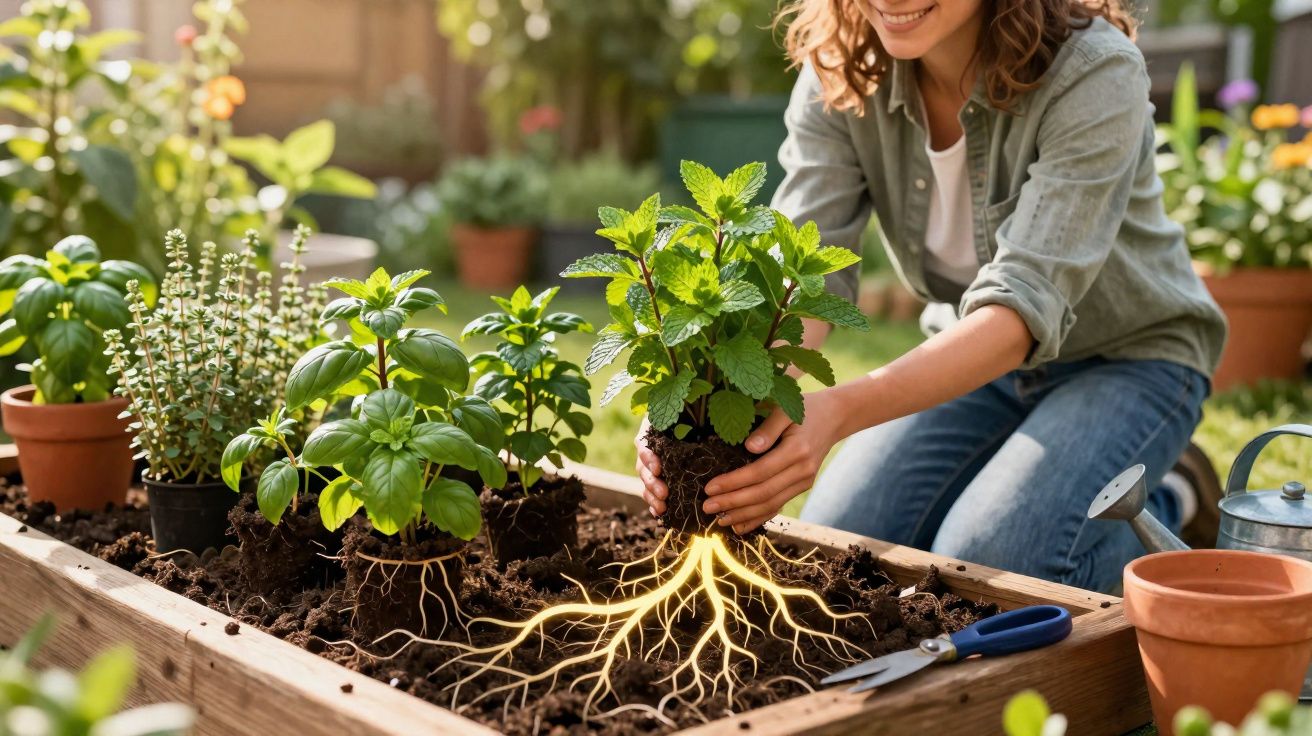
It smells wonderful, grows at breakneck speed and seems like the ideal herb for beginners - but behind the scenes, it is already preparing a silent takeover.
Anyone planning the next gardening season will spot it quickly at the garden centre: a pot of mint, dense, deep green and richly aromatic - perfect for tea, cocktails and summer cooking. What looks like a lucky, harmless purchase can, within a few months, turn into a green nightmare that wrecks beds and pushes other plants out.
Why the “perfect beginner plant” is so tempting
Mint gives overworked hobby gardeners exactly what they want
Mint fits the mood perfectly: little effort, big payoff. It is hardy, fast-growing, forgiving if you forget to water it, and it rewards every touch with an intense fragrance. For people with no gardening experience, it can seem like the ideal way to enjoy home-grown herbs anyway.
It is especially attractive to anyone trying to live more sustainably, use fresh ingredients more often, and yet lacking the time or routine that gardening demands. The plant usually arrives in shops already bushy, the leaves look healthy, and brushing against it releases that crisp, fresh scent associated with cleanliness and coolness.
Mint appears obedient and uncomplicated - in reality, it behaves like a plant conqueror with a long-term plan.
In many families, mint is the first herb children are handed as their own “project”. By the time anyone realises they have planted a green Trojan horse, the bed has often already turned into a monoculture.
Why garden centres promote it so enthusiastically
In spring, mint pots are placed right at the front: full, lush, green and irresistibly fragrant. From a retailer’s point of view, it is a dream plant. It grows quickly, looks good early in the season and more or less sells itself - especially when recipe cards for iced tea, summer drinks or Middle Eastern dishes sit beside it.
Warnings are usually nowhere to be seen. You will rarely find a label saying “caution: spreads aggressively” or “best not planted directly in the border”. The message is: easy, decorative, productive. For many amateur gardeners, that is enough reason to take home several pots straight away - and to lay the foundations for a later infestation that is hard to control.
The invisible danger: its aggressive root network
The real problem is hidden underground
What you see looks harmless: upright, slightly angular stems, serrated leaves and a dense carpet of scent. Mint’s true power lies deeper down, in the soil. There it forms a network of so-called rhizomes - underground shoots that spread horizontally and produce new plants.
These rhizomes store nutrients and energy, and they survive frost, drought and cutting back. Above all, they are the plant’s means of expansion: each section can form new roots below and fresh shoots above. Within a single season, mint can move metres away from its original planting spot.
Mint always finds a way - almost regardless of obstacles
Stones, shallow timber edging or thin border strips hardly slow it down. The rhizomes search for gaps, run underneath or around them, push through loose membrane and suddenly appear far away at the surface.
In carefully planned beds, this leads to a gradual loss of control. Where there were once clear lines and structures, everything starts to merge into one uniformly scented mass. If the soil is loose and fertile, mint is handed the perfect playground.
Even a small patch can alter the balance of a bed
Because mint spreads so effectively, it can change the character of an entire border long before anyone notices. What began as one healthy plant can quickly become a thicket that leaves little room for anything else. In a mixed planting, that means less breathing space, less variation and, eventually, a garden that looks far less diverse than it was intended to be.
Bad neighbour: mint as a ruthless competitor
It steals water and nutrients without mercy
Right in the middle of a vegetable patch, mint can cause serious damage. Its many fine roots sit in the top layer of soil and draw off water and nutrients before lettuce, beans or other herbs even get a chance.
Typical consequences when it grows close to other plants include:
- yellow, stunted leaves in otherwise undemanding crops
- growth stalling in young plants
- greater vulnerability to drought stress
- noticeably lower yields
In dry summers, the problem becomes even more obvious: mint survives thanks to its massive root system, while weaker species lose the battle for every drop.
How it slowly pushes other species out of the bed
Mint does not merely pressure neighbouring plants through water and nutrients. Its fast, dense leaf growth also creates plenty of shade. Low-growing species such as thyme or marjoram then lose the light they need and are gradually thinned out.
There is also likely a chemical effect: the high concentration of essential oils around the root zone, together with the sheer density of the root mass, alters the soil environment. Some sensitive species germinate less readily or establish poorly once the ground is firmly under mint’s control. A colourful mixed planting can therefore become an almost pure mint patch.
The broader effect on garden biodiversity
When mint is left unchecked, it does not only crowd out neighbouring herbs and vegetables. It can also reduce the range of flowering plants that support pollinators and other garden wildlife. The result is a bed that may smell wonderful, but offers less variety in structure, bloom time and habitat.
When the garden tips over: why removal is so difficult
Pulling it out often makes matters worse
Many gardeners only realise the scale of the invasion in spring or after a holiday: mint everywhere. The instinct is obvious - rip it all out as fast as possible. That often makes the situation worse.
When you tug on it, the underground shoots usually tear. What remains in the soil are countless rhizome fragments, which now behave like deliberate cuttings. The damaged plant switches into survival mode and resprouts from as many points as possible. What had been one larger, connected plant becomes dozens of smaller colonies.
A tiny piece of root is enough to start again
The most frustrating part is that even small fragments can grow into a full plant again. Anyone who uses a rotavator or powered hoe in a mint-infested area spreads the material across the soil and effectively creates a mint field that is almost impossible to rein in.
With run-away mint, only painstaking hand labour works - and it takes weeks or months.
Anyone who genuinely wants to tackle it has to comb through the soil layer by layer, collect roots and rhizomes carefully, and dispose of them properly. Compost heaps are not suitable for this, because pieces can grow again if the compost does not get hot enough.
Working methodically is the only reliable approach
A successful clean-up usually means repeating the process more than once. Even after the visible growth has been removed, the bed should be checked regularly for new shoots. Any fresh growth needs to be lifted as early as possible, before it can rebuild strength underground. The slower and more thorough the job, the better the chance of getting the plant under control.
Safe enjoyment: plant mint only within clear limits
Container growing is the most effective safety measure
Despite all its quirks, mint has plenty of strengths. No one needs to give it up entirely if they learn how to contain it. The safest method is to grow it in a pot - with genuinely solid boundaries.
Key points include:
- a large pot with firm, non-brittle walls
- a base with no open connection to the garden soil
- a position on a patio, balcony or solid paved surface
- regular pruning so it does not spill over the edge
This makes watering easy to manage, keeps the plant lush, and prevents it from escaping into the beds. If you like several varieties - peppermint, apple mint, Moroccan mint - each one should be grown in its own container so that they do not smother one another.
Root barriers in the ground - labour-intensive, but possible
If you are determined to grow mint in the soil, for example as a fragrant patch beneath a lone tree, you need a sturdy barrier around the planting area. Thick plastic sheeting, similar to that used for bamboo, is suitable. It must be buried in a ring and reach at least 30 to 40 centimetres into the ground.
The top edge should protrude above the soil, otherwise the mint will simply climb over it. Even then, regular checks are still necessary: rhizomes can press against weak points, force their way through or escape via small gaps. Anyone choosing this method commits themselves to ongoing inspection and maintenance.
Why mint still deserves a place in the garden
Culinary and health benefits
There is no need to banish the plant completely. It has a firm place in the kitchen: in salads, yoghurt sauces, desserts, lemonades and teas. Its flavour works beautifully with lemon, berries, chocolate or lamb dishes.
Mint also has a role as a home remedy. Fresh or dried leaves in hot water can support digestion after a heavy meal. The essential oils are invigorating, may have a mild antispasmodic effect and are often used in cold remedies or rubs.
With clear rules, it becomes a useful housemate
Anyone who chooses mint is, in effect, entering into a contract: pleasure in exchange for control. It provides large quantities of leaves, forgives mistakes in care and offers fresh greenery for most of the year. In return, it demands firm boundaries and consistent monitoring of its attempts to spread.
A practical solution is a combination of methods: mint in large pots for the kitchen and tea, and in the bed only in an extremely limited way - or not at all. That keeps the vegetable patch diverse while still giving this aromatic all-rounder a place. Managed properly, it becomes a valued resource instead of a green problem.






Comments
No comments yet. Be the first to comment!
Leave a Comment