
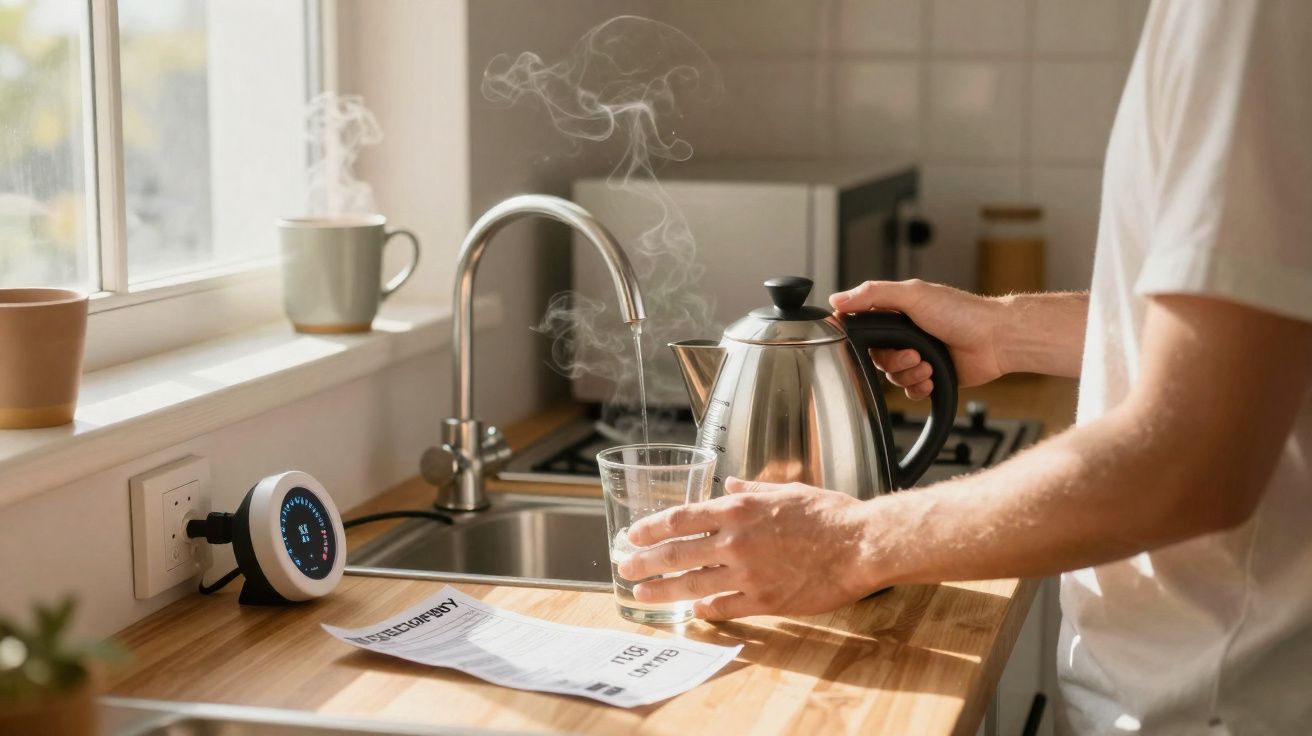
Many households keep an eye on the oven, fridge and dishwasher - yet another kitchen appliance can push the electricity bill up far more noticeably.
In most kitchens, it sits on the worktop and runs almost every day, often without attracting much attention. While we debate expensive fridges and power-hungry ovens, this unassuming helper keeps on working - and adds hidden extra cost to the electricity bill month after month.
Why the electric kettle is such a big power user
When people think about kitchen energy guzzlers, the oven, fridge and dishwasher usually come to mind first. Yet consumption analyses repeatedly place a different appliance surprisingly high on the list: the electric kettle.
At first glance, that may seem odd. A kettle only runs for a few minutes, so where could the heavy consumption come from? The answer lies in two factors:
- very high power draw, often between 2,000 and 3,000 watts
- extremely frequent use in everyday life
Because the kettle is so convenient, it gets used far more often than most people realise - and that is exactly why the electricity consumption adds up.
A single boiling cycle is inexpensive in itself. But if you work from home, drink tea constantly, prepare baby bottles, or regularly heat small amounts of water, the annual energy demand can be far higher than many households expect.
Typical power ratings compared
Modern electric kettles usually draw between 1,800 and 3,000 watts. That is more than some ovens use in normal operation. The difference is that an oven often runs for longer, whereas a kettle may be used much more frequently - sometimes ten times a day or more.
Typical power ranges
| Appliance | Typical power |
|---|---|
| Electric kettle | 1,800–3,000 watts |
| Filter coffee machine | 800–1,200 watts |
| Microwave oven | 700–1,500 watts |
| Induction hob (one ring) | 1,400–2,000 watts |
The high power rating makes water boil very quickly. At the same time, it means every unnecessary second costs money. If you also heat more water than you need, the energy demand rises without any real benefit.
How the electricity use builds up over the year
A simple calculation shows how noticeable the effect can become. Let us take a 2,400-watt kettle and this everyday pattern:
- 8 boiling cycles per day
- each one lasting around 2 minutes
- electricity price: 30 pence per kWh
That works out at:
- daily consumption: 0.64 kWh
- annual consumption: around 233 kWh
- annual cost: about £70
That £70 may not sound dramatic at first. In many households, however, the figure is much higher because:
- far more water is boiled than is actually needed
- in family homes, the kettle is used almost constantly
- working from home increases coffee and tea consumption
- older appliances are less efficient and take longer to boil
Many people always boil “the whole kettle” out of convenience - but then pay every time for the water they never needed in the first place.
Common mistakes that make the kettle an electricity guzzler
The kettle itself is not the problem. It is avoidable misuse that turns it into a power-hungry appliance. These points keep turning up in energy checks:
Filling it with too much water
The classic mistake: for one cup of tea, the kettle is filled right up to the maximum mark. The excess water stores heat, cools down slowly, and then has to be heated again later. That can easily double the energy required.
Running it constantly instead of planning ahead
Anyone who makes every cup of coffee or tea separately keeps the kettle in near-constant use. It is much more efficient to batch tasks together, especially if several people in the household want a hot drink at roughly the same time.
A lid that is not properly closed or a scaled-up heating element
If the lid is not fully shut, boiling takes longer. Limescale on the heating element acts like an insulating layer: the appliance needs more energy to heat the same amount of water.
Keep-warm mode and standby
Some models offer keep-warm functions. That may seem handy, but it costs energy continuously. Even illuminated switches or displays draw a small amount of power in standby mode - over a year, that adds up, especially if you have several appliances.
A further issue is size: a large kettle is not automatically better. If you mainly boil one cup at a time, a smaller model can reduce wasted water and therefore wasted electricity. Matching capacity to actual household use often makes a bigger difference than simply choosing the most powerful appliance on the shelf.
How to cut electricity costs without giving up convenience
If you want to reduce the power consumption of your kettle, you do not need to give up tea, instant coffee or hot water on demand. Even small changes in habit can make a noticeable difference.
Boil only the amount of water you actually need
The most important rule is simple: fill the kettle with exactly as much water as you need. A few practical tips help:
- mark the one-cup level on the inside wall with a waterproof marker
- use a measuring jug if the kettle has no fill markings
- boil several cups at once if you know someone else will want a hot drink shortly afterwards
If you heat just 200 millilitres more than you need each time, you can easily waste £10–£20 a year - with absolutely no benefit.
Descale it regularly
Limescale acts like insulation at exactly the wrong moment. If you replace a heavily scaled-up heating element with a clean one, the energy needed per boiling cycle drops noticeably. For many regions, experts recommend descaling every four to six weeks, and more often in areas with hard water.
Compare the kettle sensibly with the hob and microwave
A kettle is usually more efficient than a traditional hob, as long as you are heating only a small or medium amount of water. There are a few exceptions:
- very small quantities, such as 100 ml, can sometimes be heated more cheaply in the microwave
- if you are already using the hob for several pans, it may make sense to heat water there as part of the same process
- induction hobs can achieve similarly good efficiency to kettles, especially with larger volumes of water
The key point is not to use the same appliance out of habit every time, but to choose according to the amount and the purpose.
Which kettle types make the effect even worse?
Not all kettles are equal. Certain designs push electricity consumption up even further:
- glass kettles with LED lighting, which can tempt people into using them more often for the sake of the display
- models with a keep-warm function that hold water at temperature for longer periods
- hot-water dispensers with integrated heating stations that keep water permanently hot
These comfort features increase continuous consumption, because not only the boiling cycles but also the ready-to-use phases draw energy.
What role does the kitchen play in overall electricity use?
The kitchen is generally one of the most electricity-intensive areas in a home. It contains:
- large appliances such as the fridge, freezer and dishwasher
- frequently used devices such as the kettle, coffee machine and microwave
- small helpers such as the toaster, blender and food processor
The kettle stands out not because it runs all day, but because of the total number of uses. Optimising it does not just reduce costs; it also smooths household power peaks - which matters, for example, with time-of-use tariffs or when you use your own solar panels.
Practical everyday tips for economical use
Here are a few straightforward strategies that are easy to put into practice:
- Boil water for pasta or tea in the kettle first, then pour it into the saucepan - that is quicker and often more efficient than relying on the hob alone.
- If your kettle lets you choose a temperature setting, use the lowest sensible option, such as 70°C, 80°C or 90°C for green tea.
- Use a switched extension lead so that several small appliances can be fully turned off.
- When buying a new kettle, look for a sensible balance of power, insulation and capacity - an extremely powerful model is not automatically the best choice.
A good kettle should heat water quickly, but it should also match your actual routine. In a larger household, faster boiling may be useful; for one person making a few drinks a day, efficiency and the right size often matter more than headline wattage.
If you keep these points in mind, you turn a silent electricity guzzler back into what it is supposed to be: a practical, efficient kitchen helper that delivers hot water quickly without needlessly inflating the electricity bill.


Comments
No comments yet. Be the first to comment!
Leave a Comment