
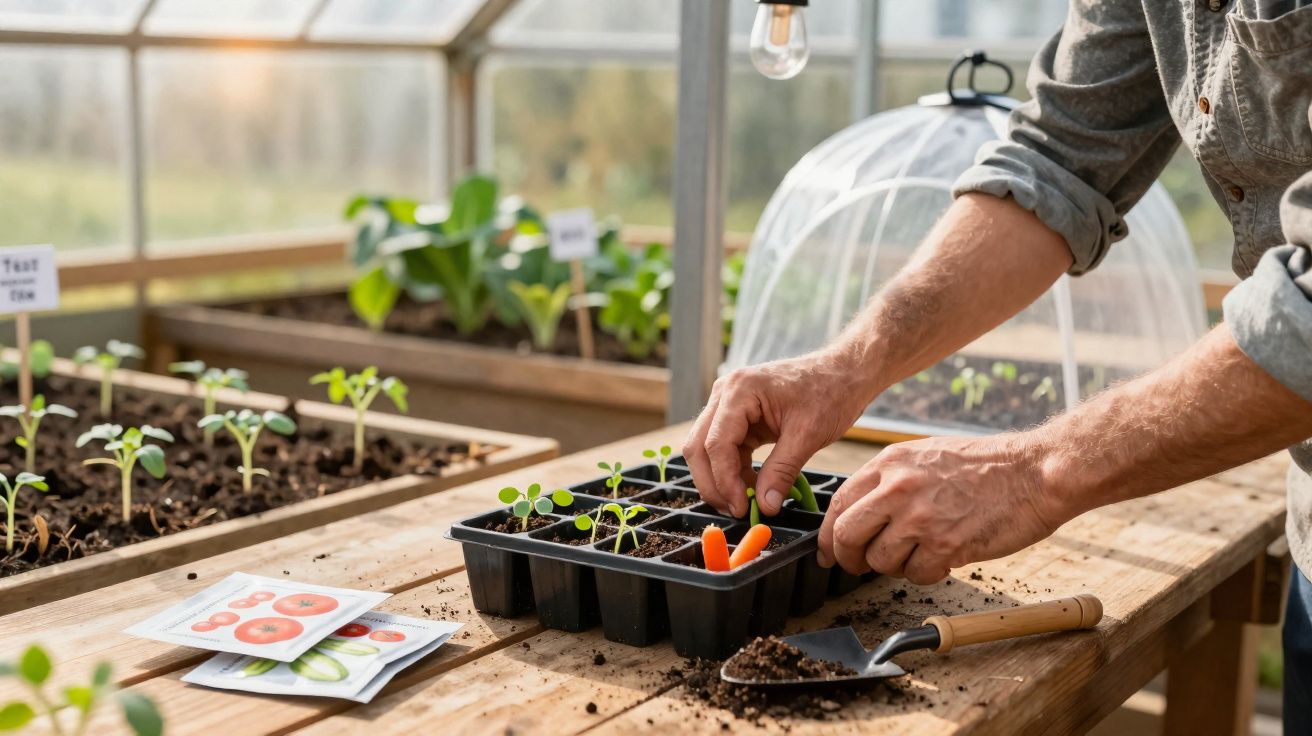
In July, many amateur gardeners end up saying, with real frustration, “I was far too late.” Tomatoes, courgettes, peppers and the rest need much more lead time than most people expect. The true starting signal for a full harvest basket is not in May, but right now in March. If you act now, you can be eating from your own garden in June, July and August; if you hesitate, much of the crop gets pushed into autumn or the entire season may be lost.
Why March decides the summer in the vegetable patch
March is, in a way, the hidden beginning of the growing season in the vegetable bed. The days are getting longer, the sun is stronger, and the soil is thawing. That combination is exactly what gets young plants moving quickly.
Sown in March, harvested in summer: many summer vegetables need three to five months from seed to plate.
Starting early with sowing and planting gives you several advantages:
- The first warm days speed up the growth of young plants.
- Roots can develop deeply and firmly before the height of summer brings real heat.
- Harvesting begins earlier, often in June, and continues well into late summer.
- The beds are used more efficiently instead of everything ripening at once in June.
Many classic summer crops - especially tomatoes, peppers and aubergines - need several months before they become productive plants. If you only begin in April or May, the harvest is quickly pushed into autumn, and cold or wet weather can easily ruin the result.
Early planning also makes crop care much easier. By staggering sowing dates, you avoid a single, overwhelming glut and instead spread picking, watering and feeding over a longer period. That makes the whole vegetable garden calmer to manage and far more reliable.
Which vegetables should get started now if they are meant to reach the table in summer?
Some crops go straight outdoors, while others need protected early sowing indoors. Both approaches work just as well on a balcony or on a bright windowsill; you do not necessarily need a professional greenhouse.
Tomatoes: the classic crop that needs March lead time
Tomatoes are the star of any summer garden - but only if they are started early enough. From sowing to the first red fruit, a good three to four months usually pass.
Sowing time:
- Start them warm in March, ideally at 18–20 °C, on a windowsill or in a mini greenhouse.
- Move them into the bed or into large containers only after the risk of frost has passed, usually from mid-May onwards.
How to raise them successfully:
- Place the seeds in small pots filled with loose, low-nutrient seed compost.
- Keep the compost evenly moist, but never soggy; avoid waterlogging.
- As soon as the seedlings have 4–5 strong leaves, prick them out and later plant them deeper into larger pots.
If you want an early and generous harvest, choose tried-and-tested early varieties such as fleshy salad tomatoes or classic cordon tomatoes, which set fruit quickly and do not take forever to ripen.
Courgettes: a turbo vegetable with huge yields
Courgettes are among the most productive vegetables of all. One plant can feed a whole family - provided it gets going in time.
Sowing time:
- Sow indoors in pots from March, or raise them in a cold frame.
- In mild regions, direct sowing outdoors is possible from mid-April, provided the soil is no longer icy cold.
How to keep the crop thriving:
- Site: sunny to partially shaded, with soil rich in compost or well-rotted manure.
- Space the plants at least 1 metre apart, as they spread widely.
- Water well and mulch the soil so moisture stays in and the fruits do not lie directly on the ground.
Early courgette varieties can produce their first fruits after around six to eight weeks. If you start in March, you may be picking by June.
Peppers and aubergines: heat-loving slow starters with a long runway
Peppers and aubergines are considered a little more demanding, mainly because they need warmth and plenty of time. Without early propagation, a summer harvest becomes difficult.
Sowing time:
- Start them warm in March, ideally at 20 °C or a little above.
- Plant them into the open ground or into large containers only after the risk of frost has passed, preferably against a sheltered south-facing wall.
Tips for healthy plants:
- Only pot them on once they have at least six true leaves.
- Give them a very bright position, no draughts, and as much sunshine as possible.
- Mulch the soil and water regularly, without letting the roots sit in water.
Anyone who begins in March has a good chance of seeing the first fruits in July. Plants sown later often only really get going in September - by which time cool nights are already a threat.
French and runner beans: start early, harvest for longer
Green beans produce tender pods and can be planned almost to the day. An early start stretches the harvest over many weeks.
Sowing time:
- In mild areas, sow under fleece or in a tunnel from March.
- Outdoors once the soil has reached about 12 °C - usually in April or May.
How to keep the plants strong and healthy:
- Put several seeds into small clusters, spaced about 40 centimetres apart.
- For runner beans, install sturdy supports; for French beans, earth up lightly so they remain stable.
- Water regularly but moderately - beans do not like waterlogged soil.
If you sow a new row every two to three weeks, you can harvest almost throughout the entire summer.
Carrots: March sowing brings early bunch carrots
Carrots sown early provide crisp bunches at the start of summer, ideal for raw snacks or as a side dish from the barbecue.
Sowing time:
- From March, sow directly into the bed in deeply loosened, as stone-free a soil as possible.
- If late frosts are forecast, lay fleece over the rows; this also helps keep carrot fly somewhat at bay.
How the roots grow evenly:
- Sow thinly in rows and thin out later when the seedlings are about 5 centimetres tall.
- Water regularly so the carrots do not split or turn woody.
Early varieties usually provide tender carrots from June onwards, while later sowings keep the rest of the summer supplied.
Practical March strategy: what goes where?
A rough structure for your planting plan saves a great deal of stress in May. A simple division helps:
| Area | Suitable vegetables in March |
|---|---|
| Warm indoor propagation | Tomatoes, peppers, aubergines, courgettes |
| Direct sowing in the bed | Carrots, early beans (depending on region), spinach, radishes |
| Cold frame / tunnel | Lettuce, kohlrabi, early herbs, further rows of beans |
If you fill your beds now with a mix of indoor sowing and direct sowing, you will be harvesting as early as June - and not everything all at once.
Professionals rely on protection and light in spring
Even the best seed will not do much if it drowns in cold rain or becomes weak and leggy in a dark corner. A few simple tricks deliver much better results:
- Protection with fleece or a cold frame: a mini greenhouse, a plastic tunnel or even an old window frame on a box is often enough to gain a few extra degrees.
- Steady moisture instead of a deluge from the watering can: small amounts more often are better; a fine rose is ideal.
- Maximum light: a south-facing windowsill is far better than the romantic but gloomy spot above the sink.
- Acclimatise gently before moving outside: put young plants outdoors during the day for a few days and bring them back in at night before planting them out permanently.
Hardening off is especially important for tender crops. A sudden move from a warm indoor room into cool spring air can shock seedlings, slow growth and undo weeks of careful nurturing. A gradual transition makes the plants sturdier and improves their chances of settling quickly once they reach the bed or container.
Why the effort in March pays off twice
If you spend a few evenings and one weekend on the garden or balcony now, you benefit in several ways at once. Your supply of vegetables becomes more independent, you save money in the supermarket, and the flavour of sun-ripened tomatoes or freshly picked courgettes beats any imported produce.
There is another advantage too: early sowing produces stronger plants. They build more robust roots, cope better with hot spells and often need less water later on. If you combine the right companions - for example carrots with onions to help against pests, or beans alongside courgettes to add more nitrogen to the soil - the bed becomes not only more productive, but also more resilient against disease.
And if you do not have a large garden, simply start in pots: tomatoes in containers of at least 10 litres, peppers and courgettes in even larger vessels, carrots in deep balcony boxes. The rules for the right start in March remain the same - only the available space is smaller. The summer will still taste like your own vegetables.


Comments
No comments yet. Be the first to comment!
Leave a Comment