
Intel unveils Wildcat Lake in the Core Series 3 line-up
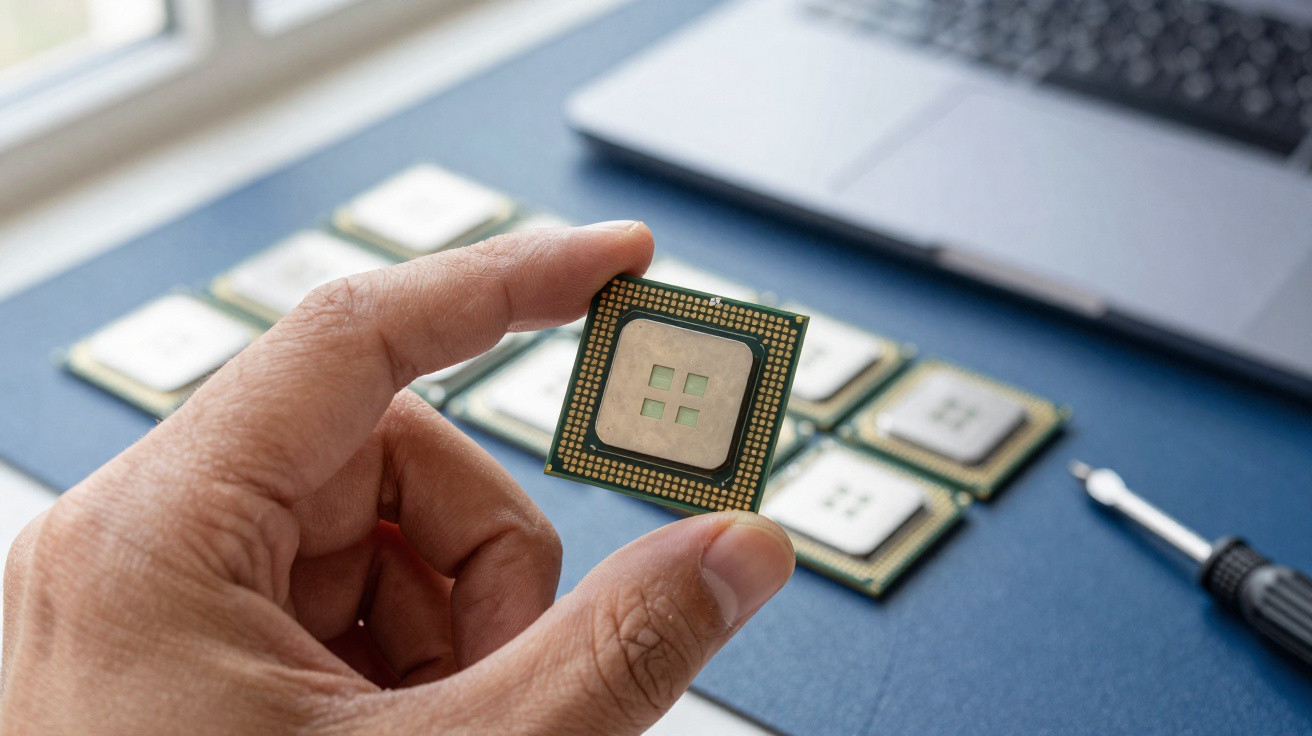
Intel has now given a full presentation of its Wildcat Lake processors, which make up the Core Series 3 range (without the Ultra branding). From an architectural point of view, they are essentially the same as Panther Lake, but implemented on a separate, smaller die with a limited number of cores.
Almost all models are effectively identical
In total, the family includes seven processors, and five of them share the same key specifications - both in CPU core count and in the GPU configuration.
Core configurations, iGPU options and the small die
The die itself tops out at just two big cores plus four LP cores. It does not include the usual small cores at all, and it also integrates an iGPU with two Xe3 cores.
As a result, five out of the six models use the full 2+0+4 layout, while one model comes with a 1+0+4 configuration. The two entry-level CPUs in the line-up have an iGPU with a single core, whereas the remaining ones have two.
NPU 5, memory, connectivity and Intel 18A
These processors also include an NPU 5 block rated at only 17 TOPS. Other notable specifications include boost clocks up to 4.8 GHz, support for DDR5-6400 and LPDDR5X-7467, a 15 W TDP with a maximum of 35 W, 6 MB of cache, two Thunderbolt 4 ports, Wi‑Fi 7, Bluetooth 6.0, and the Intel 18A process.
Performance versus Core 7 360, Core Ultra 7 150U and Core i7-1185G7
Performance from CPUs like these cannot be expected to be particularly high, but they are designed to be very power-efficient. Intel itself compares the Core 7 360 with the Core Ultra 7 150U (2+8+0), and in identical operating modes the new CPU uses 52–64% less power.
In terms of speed, in that same comparison the new processor is ahead by 10–111%. In AI workloads the gap is even larger, although that is unlikely to matter to most users. Against the Core i7-1185G7, the new chip is, on average, 41% faster in multi-threaded operation.
Overall, these are relatively low-performance yet very energy-efficient processors that should be inexpensive to produce and are intended for affordable laptops. Intel has already provided a list of around two dozen models that will receive the new CPUs.




Comments
No comments yet. Be the first to comment!
Leave a Comment