
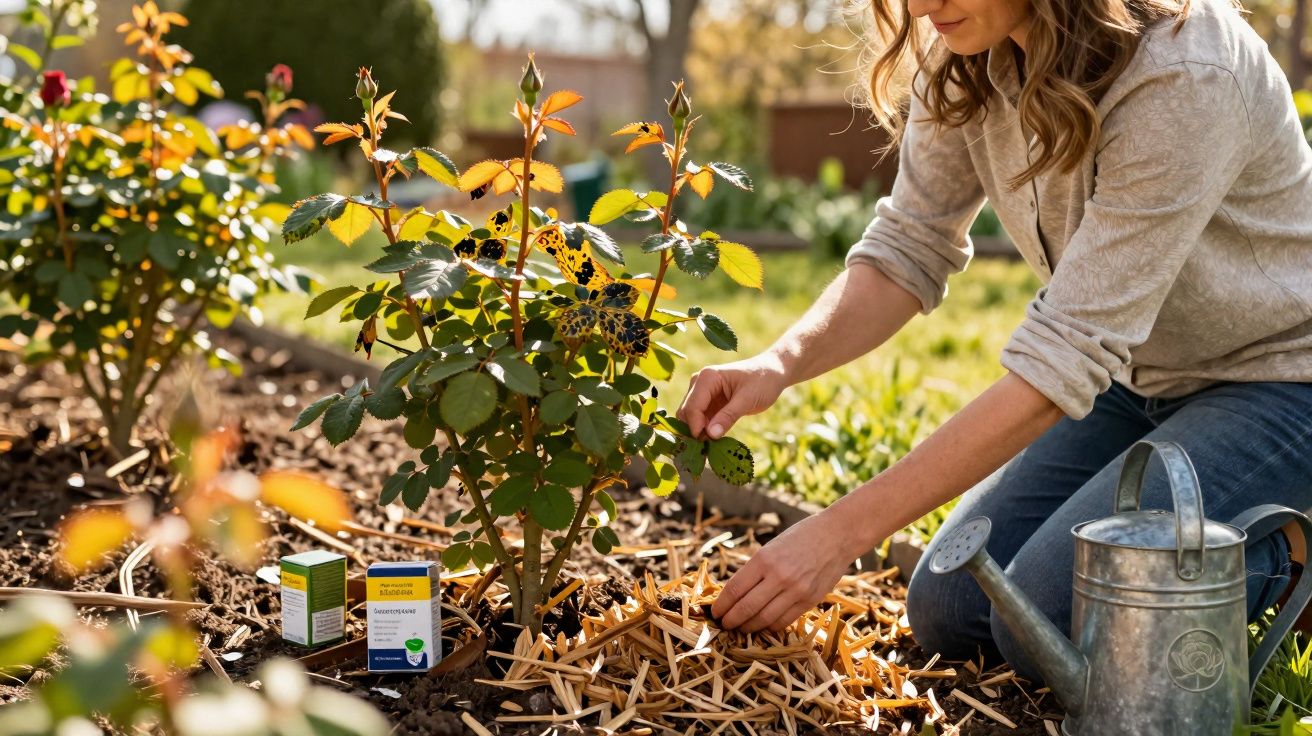
Many hobby gardeners ask themselves every year why their roses slump in June, produce hardly any flowers and look generally miserable. The real problem begins much earlier: a discreet fungus uses spring to establish itself in the rose bed. If you plan three straightforward jobs in March, you remove the disease’s foundations and set your roses up to stay vigorous and free-flowering well into autumn.
Black spots on rose leaves: what’s really going on
Black spot disease is one of the most common rose issues there is. The classic signs are yellowing leaves marked with dark, irregular blotches. Later, the foliage drops early-often by mid-summer. At that point the plants can look stripped and will manage only a few, smaller blooms.
The culprit is a fungus (Diplocarpon, also known as Marssonina rosae). You can’t see it with the naked eye, but it clings stubbornly to anything left behind in the rose bed: fallen leaves, small twig pieces and other plant debris. It “overwinters” there and simply waits for the right conditions.
"Between around 13 and 30 degrees and when leaves stay wet for longer periods, the fungus spreads explosively - mild, wet spring days are ideal."
In spring, raindrops splash spores up from the soil onto fresh rose growth. From there, wind and splashed water carry them on to other plants. A bed packed with roses or planted at tight spacing can then act almost like an express train for the disease.
Why March is the decisive month for roses
The good news is that you can break the cycle if you act early enough. March is particularly suitable because:
- the fungus is already lying in wait in the soil and on last year’s leaves,
- roses are just about to start growing,
- temperatures soon rise into the range that favours fungal spread.
In this short window, three simple tasks can noticeably reduce problems for the season ahead. This isn’t about chemicals; it’s mainly about cleanliness, protection and strengthening.
First step: a thorough tidy-up around the roses
The starting point is basic but crucial: tidying. Anything left over from last year in the rose bed can become a source of infection.
Remove old leaves without cutting corners
As you walk the garden in March, do the following at each rose bush:
- Pick up every old leaf from the ground, even those partly buried.
- Pull dead leaves and scraps of foliage out from the centre of the shrub.
- Cut out fine, dead shoots that are clearly dried up.
Important: do not put this material on the compost heap. The fungus can survive there and return to the bed with finished compost later on. Use general waste or take it to your local green-waste facility.
"If you carefully remove infected leaves in March, you take away a large part of the fungus’s starting base for the new season."
Second step: the right protective carpet at ground level
Once the area around the roses is clean, move on to the next part of the anti-fungus plan: a protective mulch layer. It helps in several ways at once.
Mulching: not just for looks, but a barrier against fungus
Suitable materials include, for example:
- well-rotted compost,
- bark mulch,
- wood chips,
- or a blend of compost and bark.
Spread the layer around the base of the rose without pressing it directly against the stems. A useful guide is about 3–5 cm thick-substantial, but not piled up like a mound.
"The mulch layer works like a shock absorber: raindrops bounce off without flinging fungal spores up from the soil onto the leaves."
There are additional benefits as well:
- The soil doesn’t dry out as quickly, so roses cope better through warm spells.
- Weeds grow much more slowly and are easier to remove.
- Compost used as mulch also supplies nutrients and improves soil structure.
If you have lots of roses, it’s worth scheduling mulching as a fixed March task: go bed by bed-clear, then mulch. That reduces disease pressure across the entire garden.
Third step: strengthen roses deliberately instead of only treating them
A rose that is strong and well supplied copes with disease far better than a weakened plant. Alongside pruning and siting, nutrient supply in March plays a key role.
The right feed at the right time
Towards the end of March, when you can see new growth beginning, an initial feed is worthwhile. Good options are:
- specialist rose fertilisers with a balanced nutrient ratio,
- well-rotted compost, around a spade’s width per plant,
- or organic-mineral fertilisers from garden centres.
Always apply fertiliser to the soil around the rose, not into the middle of the stems. Water in well afterwards so nutrients reach the roots.
"Well-fed roses grow more vigorously, form thicker leaves and sturdier shoots - which makes it much harder for fungi to gain a foothold."
Many gardeners also use plant tonics or strengthening products mixed into watering. Often, small amounts applied regularly are enough. It’s worth checking the dosage instructions so you don’t overdo it and stress the roses.
How the three March tips work together
Tidying, mulching and feeding complement one another and are most effective in that order. In practical terms, this is what happens:
| Step | Main effect |
|---|---|
| Remove leaves | Significantly reduces the amount of fungal spores in the bed |
| Mulch layer | Prevents splash infection and keeps the soil more even |
| Feed correctly | Boosts plant defences and encourages strong growth |
If you do these jobs every March, you create a kind of basic protection. Of course, in extremely wet summer weather you may still see an outbreak, but it is usually much milder.
What to do if your roses are already infected
If you already have a badly affected rose in the garden, you can’t completely undo the damage-but you can limit it. In that case, it pays to remove any remaining leaves from the previous year especially thoroughly, even if it’s a bit fiddly.
During the season, cut off heavily spotted leaves promptly and dispose of them before they produce spores in large numbers. At the same time, keep watering consistent: water roses less often but deeply, and where possible wet the soil rather than the leaves.
Helpful additions for healthier roses
Beyond the three March tips, a few adjustments can further lower disease pressure:
- Don’t plant roses too close together, so leaves dry quickly after rain.
- Choose the sunniest positions you can; shady spots encourage fungal problems.
- When watering, favour early morning rather than late evening.
- When planting new roses, look for tougher, disease-resistant varieties.
Some terms around rose diseases can sound complicated at first. “Fungal spores” are, simply put, tiny reproductive units-similar to seeds, but for fungi. They drift in the air, cling to raindrops or sit on old plant material. The goal of all these measures is to greatly reduce the number of spores around the rose.
If you invest an extra hour in your roses in March, you often save yourself many hours of frustration in summer. Healthy leaves, strong shoots and abundant blooms are rarely luck-they’re usually the result of a few well-chosen actions at the start of the season.





Comments
No comments yet. Be the first to comment!
Leave a Comment