
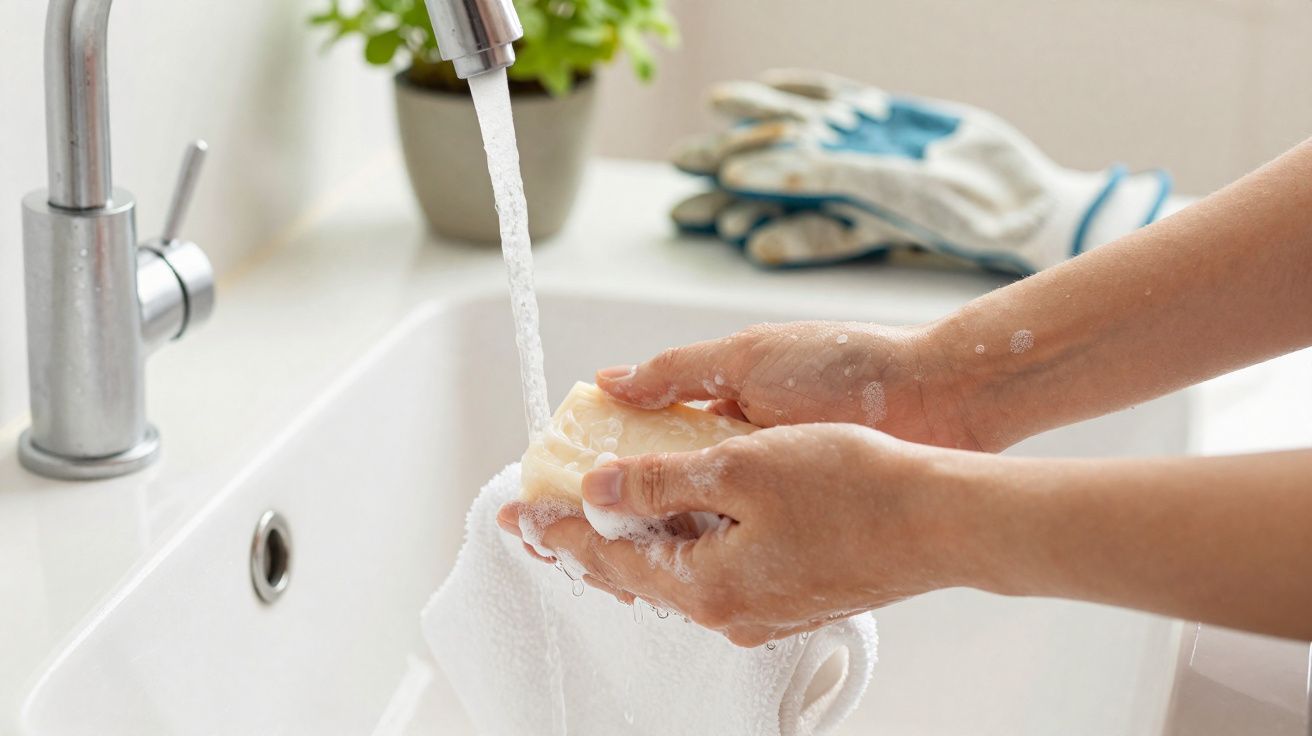
The answer often isn’t in a tub of cream, but right at the tap.
Plenty of people spend a lot on hand creams and still wonder why their skin feels like sandpaper. In many cases, the issue isn’t the cream at all, but the way we wash and dry our hands. Tweak a few small habits and you can often cut back on skincare products significantly-without giving up soft, comfortable hands.
Why hand cream on its own doesn’t fix the problem
When hands feel tight and uncomfortable, most of us automatically reach for hand cream. It helps at first: the oily layer calms things down. But after a few hours-and a few hand washes-everything feels the same again. That’s where the cycle begins.
A key reason is the skin’s protective oily layer, known as the hydrolipid film. If you wash the wrong way, this layer gets stripped off repeatedly. An overly harsh wash doesn’t just remove dirt; it also removes the natural lipids your skin needs. If you only keep “topping up” with cream without changing what’s causing the damage, you can end up in a kind of dependence: the skin stops recovering properly on its own and simply waits for the next hit of cream.
“If you adjust how you wash and dry your hands, you often only need hand cream occasionally-and still end up with softer hands.”
The hidden issue: tap water and washing too often
Tap water is considered clean and safe, and that’s absolutely true in many parts of Germany. But “safe” doesn’t automatically mean “kind to skin”. In areas with hard, limescale-heavy water, minerals can remain on the surface of the skin. Those deposits can draw moisture out, leaving hands feeling dry and dull.
If you’re washing your hands constantly-at the office, at home, in a workshop-that drying effect builds up. It isn’t only soap that can weaken the skin barrier; water itself can do it too. The more frequently you wash, the hotter the water, and the harsher the process, the more the skin on your hands tends to suffer.
The 30–35°C rule: why lukewarm water can save your skin
One of the easiest changes can also be the most impactful: using the right water temperature. Many people instinctively turn the tap up high because “hot water cleans better”. Others swear by icy water to reduce redness. Neither option does your skin any favours.
What heat and cold do to your skin
Very hot water dissolves fats. That’s great for washing up; it’s bad news for skin. The natural oils that act like a protective coat are essentially melted away. What’s left is exposed, easily irritated skin.
Ice-cold water isn’t a good solution either. Blood vessels constrict, circulation drops, and the skin receives fewer nutrients. It becomes more reactive and doesn’t repair as easily. This can be particularly noticeable on cold days-heated indoors, freezing outside.
The sweet spot sits clearly between the two extremes.
“Lukewarm water around 30 to 35 degrees cleans thoroughly without destroying the skin’s protective layer.”
How to get the right temperature-without a thermometer
You don’t need lab equipment to find the right setting. A few simple rules of thumb are enough:
- The water should feel neither hot nor cold-more like “neutral”.
- If you think, “it could be a touch warmer”, you’re usually in the right range.
- If you wash for longer, nothing should feel burning or tingling.
After just a few days of consistently using lukewarm water, many people notice less tightness and reduced redness.
The right cleanser: why moisturising (superfatted) soap can be a small revolution
Temperature is one part of the equation; what you wash with is the other. Standard supermarket liquid soaps and many shower gels contain strong surfactants, often sulphate-based. They remove grease extremely well-unfortunately also where you really need it: on the skin’s surface.
Moisturising (superfatted) soaps protect-there’s clear evidence
Dermatological investigations show that switching to so-called moisturising (superfatted) soaps or syndets can significantly reduce how much the skin dries out. These products include extra caring ingredients such as:
- almond oil or jojoba oil
- shea butter or cocoa butter
- glycerine, which helps bind water in the skin
When you rinse, a very thin, barely noticeable conditioning layer remains behind. That film helps buffer the drying impact of water and limescale. If you previously felt you had to apply hand cream immediately after every wash, you’ll often notice a difference within a few days of using these kinds of cleansers.
Signs your current wash gel is too harsh
A few red flags suggest your product is effectively “stripping” your hands:
- Your skin feels tight straight after drying.
- Small cracks or flaky patches appear around the knuckles.
- You need hand cream several times a day just to stay comfortable.
- After frequent washing, the skin stings slightly.
In these situations, moving to a milder, moisturising (superfatted) option is worth it-ideally a solid bar. That can be gentler on skin and reduce packaging waste.
The paper towel matters too: why rubbing ruins your skin
The biggest skincare mistake often happens after washing: drying. Many people vigorously rub their hands dry, especially in public toilets or when they’re in a rush. For your skin, that friction is pure stress.
How vigorous rubbing causes micro-damage
After washing, the skin is softened. If you then rub with pressure, you create tiny injuries that you can’t always see, but you can definitely feel: redness, rough patches, and sometimes even small splits between the fingers. If you’re already prone to sensitive skin, this habit quietly amplifies the problem day after day.
The tap technique: gently pat, don’t rub
A simple change in method can bring noticeable relief:
- Lay the towel on your hands instead of wrapping and twisting it around them.
- With a flat hand, press lightly and let the towel absorb the water.
- Between fingers, use the towel edge to dab briefly.
- Don’t rub until “bone dry”-a hint of remaining moisture is fine.
“If you only pat your hands dry after washing, you significantly reduce irritation-especially if you wash often.”
Spring, gardening, outdoors: a seasonal trap for hands
As soon as the weather warms up, many people head outside-to the garden, the barbecue, or the balcony. Soil, tools, pollen, and rapid temperature changes are tough on skin. Even if you wear gloves, some of the protective oils are still lost because friction and dirt gradually wear away at the surface.
What actually helps after gardening or DIY sessions
After heavy outdoor work, it’s tempting to “scrub everything properly clean” and instinctively reach for very hot water and hard rubbing. That’s exactly what you should avoid. A more skin-friendly order looks like this:
- Rinse off rough dirt first with lukewarm water.
- Use a moisturising (superfatted) soap and massage it in for a little longer.
- If needed, use a soft nail brush, but without pressure.
- Dry by patting only-don’t rub.
If your hands have been heavily stressed, applying a thin layer of a richer cream afterwards uses it as targeted support rather than a constant crutch.
Building a skin-friendly everyday routine
Small behavioural shifts tend to make the biggest difference day to day. One possible routine could look like this:
| Situation | Water temperature | Product | Method |
|---|---|---|---|
| Quick hand wash in between | Lukewarm (30–35 °C) | Mild, moisturising (superfatted) soap | Massage gently, pat dry |
| After gardening / workshop | Lukewarm, never hot | Moisturising (superfatted) soap, optional soft brush | Rub in longer rather than scrubbing hard |
| In the cold season | Consistently lukewarm | Especially mild products | Pat dry, then a little cream if needed |
When hand cream still makes sense
Once you change your washing habits, you often notice the urgent need to keep reapplying cream fades. Hand creams and salves still have their place-just as a deliberate extra rather than the main strategy. For example:
- In the evening as an intensive treatment before bed.
- After contact with solvents or very large amounts of water.
- With existing skin conditions such as eczema-after medical advice.
The key point is this: cream doesn’t replace better routines; it complements them. Only the combination of lukewarm water, a mild cleanser, gentle drying, and thoughtful use of cream leads to hands that stay calm and resilient over the long term.
Stick with these steps consistently and you’ll likely need far fewer products on the bathroom shelf-and may even find that, come winter, cracks stop opening up and a tube of hand cream lasts for months.






Comments
No comments yet. Be the first to comment!
Leave a Comment