
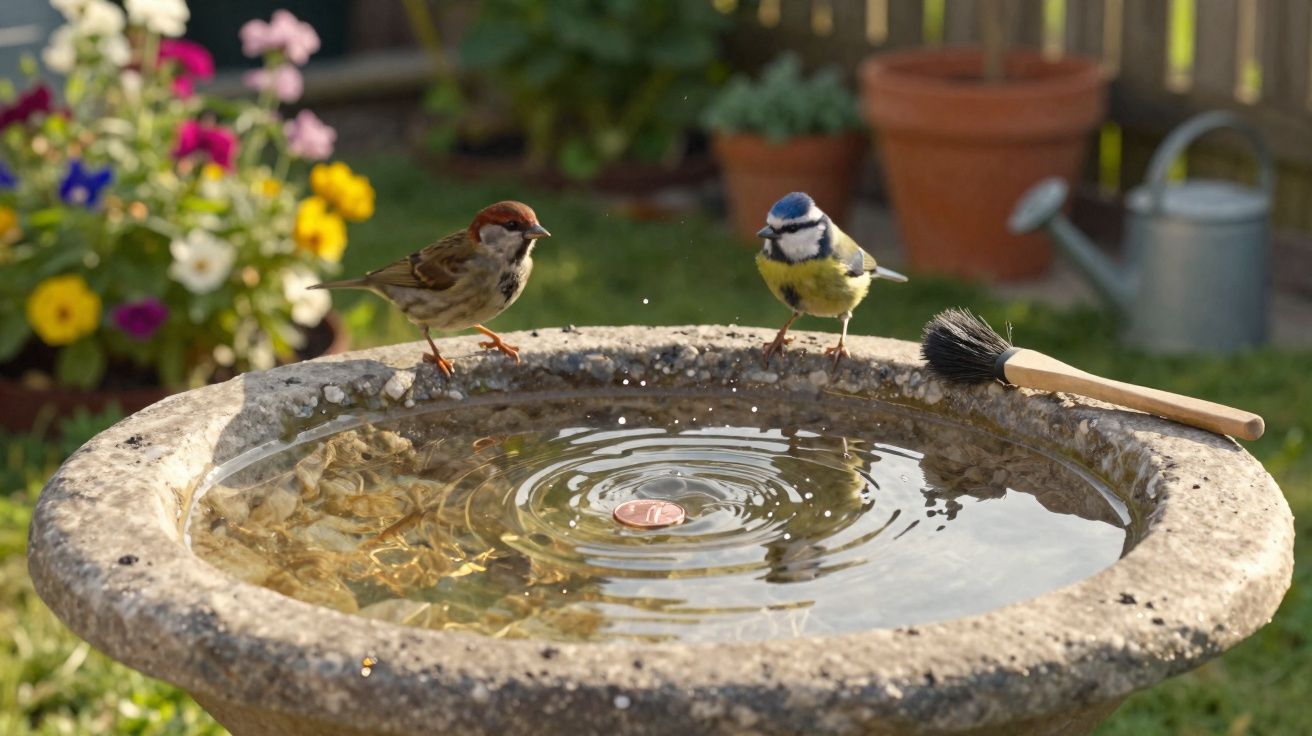
It started in British gardening groups and is now spilling over into gardens across Germany: if you keep a bird bath in the garden, you should simply drop a copper coin into it. It sounds like superstition, but there is a serious concern behind it-dirty water, sick birds, mosquitoes, and the question of whether a single 1-cent coin can really make any difference.
Why garden bird baths turn foul so quickly
A bird bath looks harmless enough: a bowl of water, a few sparrows, a bit of splashing about. In practice, that idyllic scene can turn into greenish muck after only a few days-and the reason is straightforward.
Leaves, pollen, seeds, leftover bird food and droppings all end up in the water. Sunlight warms the basin. Nutrients dissolve, algae thrive, and bacteria multiply rapidly. What began as a refreshing dip becomes a tiny bioreactor.
"Standing, unfiltered water in the garden behaves like a mini pond without any cleaning-only much warmer and far more densely populated."
For wildlife, that is more than just unpleasant. Dirty water encourages pathogens, parasites and fungi. Bird conservation organisations have been warning for years: if you provide a bird bath, you also take on a share of responsibility for the health of the animals visiting your garden.
There is a second knock-on effect as well: shallow bowls of water can also become mosquito nurseries. Warm, stagnant water is ideal for larvae. Neglecting your bird bath can, in the worst case, help a mosquito problem take hold.
The 1-cent idea: what’s really behind the copper coin trick
In Great Britain, some garden professionals now suggest a surprisingly simple routine: clean the bird bath thoroughly, refill it with fresh water, then place a copper coin in the bowl. The claim is that this slows algae growth.
In France, hobby gardeners reach for 1- or 2-cent coins. These euro coins have a steel core but are coated in copper. That thin copper layer is the key part of the trick.
"In damp conditions, copper releases tiny amounts of ions into the water, which can measurably slow algae growth-a small chemical side effect that gardeners take advantage of."
Specialists describe the effect as limited, but genuine. Copper acts as an algaecide: it interferes with certain metabolic processes in algae cells. As a result, the water tends to stay clearer for a little longer, and the green film forms later.
The coin does not perform miracles. The amount of copper ions stays low-otherwise it would be dangerous for animals. A 1-cent coin delays the issue, but it does not replace cleaning. Anyone who treats the coin as permission to leave water standing for weeks will ultimately harm the birds.
How garden owners can use the 1-cent trick safely
For the coin to help rather than cause problems, you need a clear routine. Practical advice from ornithology and horticulture largely comes down to four points:
- Empty the bird bath completely and refill with fresh water at least every two days.
- Once a week, scrub the bowl thoroughly to remove algae film and droppings.
- After cleaning, place a 1- or 2-cent coin in small bird baths; use a maximum of 2 coins in larger basins.
- Replace the coins roughly every three months if they corrode heavily or become discoloured.
Dosage matters. Too many coins in a small bowl raises the copper concentration. Small songbirds are sensitive to metal exposure, so experts advise restraint: better too little copper than too much.
Cleaning remains simple: clean water and a stiff brush; for stubborn deposits, a little vinegar can help, but it must be rinsed away thoroughly afterwards. Bleach, swimming-pool chemicals, pond anti-algae products or salt do not belong in a bird bath. They can damage feathers, irritate mucous membranes and, in extreme cases, be fatal.
Why so many gardens are adding bird baths right now
Hot spells are becoming more common, and many gardens turn into dry patches in summer. For birds, that is stressful: puddles disappear and natural water sources dry up. A bird bath provides blackbirds, tits and robins with much-needed drinking water and somewhere to bathe.
At the same time, more people are paying attention to biodiversity close to home. A bird bath does not only attract birds-it also draws in insects such as bees, bumblebees and butterflies if you provide shallow areas or stones as landing spots.
| Aspect | Effect in the garden |
|---|---|
| Regularly cleaned bird bath | Supports a healthy bird population and reduces disease risks |
| Copper coin in the water | Slows algae growth and makes maintenance easier |
| Standing, neglected water | Encourages mosquitoes, algae and pathogens |
Practical: what a sensible summer care week looks like
If you want to build the 1-cent trick into everyday life, it helps to follow a simple rhythm. Here is one workable scenario for a hot week:
Monday morning: tip out the old water, quickly rinse the bowl, and refill it. The copper coin stays in place, provided it is not heavily soiled. The first bird visitors usually make use of fresh water within minutes.
Wednesday: empty everything again and top up with fresh water. Check the surface for any hint of green. With a coin, algae usually stays noticeably more under control and the film remains thin.
Friday or Saturday: scrub thoroughly, including the rim and any decorative stones. Deposits loosen and the bowl feels smooth again. Finally, refill with clean water and either return the coin or replace it if it has gone very dark.
If you keep to this pattern, you often notice two things: birds use the bath far more frequently, and mosquito larvae almost disappear because they no longer get the time window they need.
Risks and limits of the copper trick
As appealing as the 1-cent hack sounds, it has clear limits. Copper is not selective. At higher concentrations it harms not only algae, but also invertebrates-and in extreme cases, the birds themselves.
The risk increases when there is only a small amount of water in a very small dish and several coins are added. Concentrated copper can then put strain on the animals’ liver and kidneys. Pets that drink from the bird bath may also react.
"The coin supports good care; it does not replace care-if you reverse that order, you miss the point."
It also becomes dangerous when garden owners reach for chemical solutions: pool chlorine, pond algaecides or bathroom-tile cleaners are not designed for birds. Residues on the feather layer disrupt the birds’ ability to regulate temperature and can leave them chilled on cool nights.
How to optimise a bird bath even further
The coin is only one element. If you genuinely want to help birds, also choose the right location. Partial shade is better than full midday sun. Trees or shrubs nearby provide escape routes from cats, but they should not be close enough to serve as a jumping-off point.
A slightly rough surface in the bowl helps birds grip securely. A shallow zone at the edge prevents fledglings or smaller species from slipping into deeper water. Stones or pieces of brick in the basin act as “islands” and also help insects avoid drowning.
If you set up more than one bird bath, you can reserve one purely for drinking water and keep a second as a “bathing zone” for longer splashes. That noticeably reduces the amount of dirt in the drinking water and lowers the risk of pathogens spreading across the whole set-up.
Why a cent in the water changes more than you might think
The trend may look quirky: a 1-cent coin in the bird bath, and half of Europe is talking about it. Yet that very simplicity creates a learning effect. Many garden owners who try the trick start paying closer attention to bird-bath hygiene for the first time.
Once you begin checking the water briefly each day, you quickly notice more: which species come and when they drink, how they respond to heat, and which animals suddenly appear in the height of summer. The coin almost becomes a reminder sitting in the bowl: don’t forget this is not a decorative object-it is a small responsibility.
In the end, the coin is not what matters most, but the combination: clean water, regular changes, sensible copper dosing and a safe location. Done properly, a simple trend turns into a genuinely useful detail in the garden-benefiting sparrows and blackbirds, and ultimately us as well through fewer mosquitoes and more birdsong.




Comments
No comments yet. Be the first to comment!
Leave a Comment