
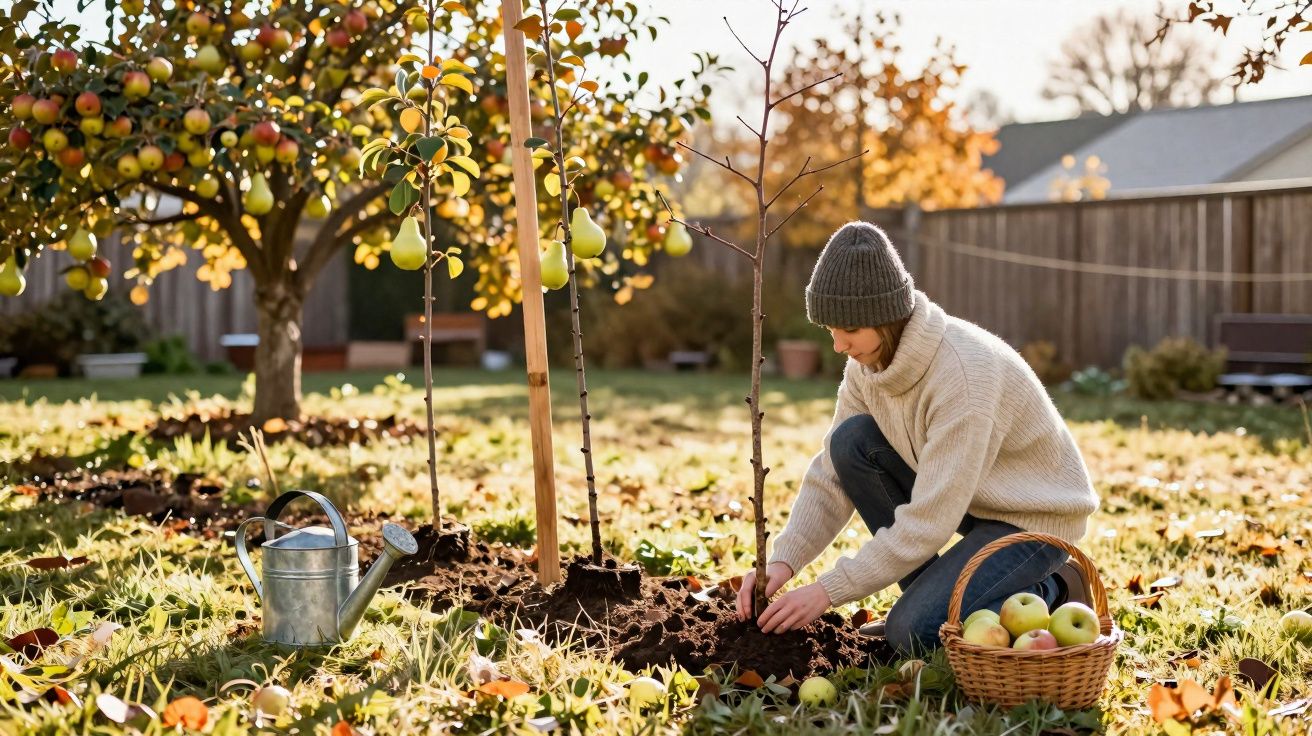
Many gardeners spend winter evenings flicking through seed catalogues, but in countless back gardens a quieter shift is already under way.
In temperate plots, seasoned growers are using the chilliest part of the year to lock in next season’s fruit - by planting certain trees now rather than waiting until April. Moving the planting window like this can affect yields, toughness and the way home orchards withstand climate swings.
Why winter is smarter than spring for planting fruit trees
For years, the unwritten advice has been straightforward: hold off until spring. The ground feels warmer, the days are longer, and there’s usually less mud. Yet nurseries and professional growers often don’t follow that timetable in their own orchards, particularly when they’re dealing with hardy, bare-root stock.
Planting the right fruit trees during winter lets roots settle quietly, so the first warm days trigger growth instead of shock.
With winters becoming milder and wetter across large parts of Europe and North America, the traditional calendar is shifting. In January and February, frost-free spells frequently last longer than they used to, and the soil can remain workable for stretches of days - exactly the sort of opportunity fruit trees can make the most of.
The science behind cold-season planting
Above ground, fruit trees are dormant, but their roots don’t simply “switch off”. Provided soil temperatures stay above roughly 4–5°C (around 40°F), the root system can continue to extend at a slow pace. For gardeners, that subtle growth is a major advantage.
If you plant before late February, the tree can spend weeks - and sometimes months - establishing and stabilising itself before spring’s surge. Rather than trying to produce roots, leaves and blossom all at the same time, the tree can tackle those demands in phases.
Roots first, foliage later: separating those two phases is one of the biggest advantages of winter planting.
This effect is backed up in practice, not just in theory. Commercial growers have noted that fruit trees planted in winter commonly establish more quickly, bloom more evenly, and cope with summer drought with less strain than comparable trees planted in spring.
Three fruit trees you should plant as soon as possible
Not every fruit species enjoys being planted in January, but a few genuinely excel when they go in during the dormant months. For a dependable “future fruit basket” in a typical UK or northern US garden, three choices consistently rise to the top.
1. Apple trees: the backbone of any home orchard
In cooler climates, apples are still among the most reliable and generous fruit trees you can grow. Young bare-root apples, in particular, tend to handle winter planting extremely well.
- They cope with low temperatures while dormant.
- They form roots steadily in cool, moist ground.
- They come in an enormous range of flavour, texture and picking season.
Putting an apple tree in during January or early February allows it to push out fine roots into the surrounding soil long before blossom time. When April arrives, it’s better placed to support flowers and early leaf growth without running down its stored energy.
A winter-planted apple can reach full cropping 6–12 months earlier than one planted at Easter, according to many orchard managers.
Dwarf and semi-dwarf rootstocks are especially practical for smaller gardens and raised beds, where you can prepare the soil thoroughly once, then keep it in good condition with mulch and compost.
2. Pear trees: slightly fussier, but big rewards
Pears often have a reputation for being more demanding than apples: they can be slower to start fruiting, more vulnerable to late frosts, and pickier about suitable pollination partners. Precisely because of that, an early start is valuable.
Winter planting supports pear trees in three key ways:
- Establishing roots early helps underpin stronger blossom in spring.
- Trees that are well anchored manage windy, wet late winters more effectively.
- Improved rooting helps pears cope with dry spells that now arrive earlier in many areas.
Because pear wood can be comparatively brittle in gales, it’s important to combine a solid root system with a support stake from the outset. Planting in winter - when the canopy is bare and light - also makes it easier to position the tree accurately and secure the stake properly without the drag of leaves.
3. Plum trees: fast gratification if you move early
Within the stone-fruit group, plums are the quick starters. Many types grow rapidly and can begin cropping well within a few years, as long as they establish properly.
Plums planted while fully dormant often leap into growth in their first spring, reducing the “waiting years” for a decent harvest.
They typically do best in ground that’s moist yet well drained, and winter conditions often provide that balance naturally. The main thing is to avoid a waterlogged planting hole, which can deprive their relatively fine roots of oxygen.
Since some plum varieties flower very early, planting now means the tree can start exploring deeper soil layers before blossom opens. That extra reach helps it hold fruit set through an unexpected warm spell or a sudden dry week in April.
Soil, not just season: what your ground should look and feel like
Opting for January instead of April won’t deliver much if the soil is sticky, compacted or frozen solid. How the ground behaves in your hand is as important as the date you choose.
The quick “hand test” for winter soil
Before you start digging, take a handful of soil from spade depth - 15–20 cm down - and give it a gentle squeeze.
- If it makes a ball that breaks apart easily when you prod it, it’s workable.
- If it squelches or stays as a solid lump, leave it a few days.
- If it streams through your fingers like sand, it will need organic matter to retain moisture.
Good winter planting soil is soft, crumbly and damp, not soupy or concrete-hard.
Digging heavy clay when it’s too wet can ruin its structure for months, forming a smeary layer that repels water rather than absorbing it. Waiting briefly for the soil to dry to a workable state is often more beneficial than planting on the “perfect” date.
Minimum site prep for apple, pear and plum
Even in a modest garden, some basic preparation makes a long-term difference. Treat it like laying the groundwork for a decade or more of harvests.
- Break up soil to at least 30–40 cm where the roots will sit.
- Incorporate well-rotted compost or garden manure to improve texture.
- In very heavy ground, add grit or sharp sand to help drainage.
- Keep fresh manure and strong fertiliser away from young roots to prevent scorching.
If you can, allow the prepared area to sit for a few days after digging. This gives the soil time to settle on its own, reducing future sinking around the tree and helping keep the root collar at the right height.
Step-by-step: how to plant winter fruit trees properly
Choosing the right day
Timing still matters, even in winter. Look for:
- Daytime temperatures between 5°C and 10–12°C (41–54°F).
- No hard frost forecast for the next two nights.
- Soil that’s damp, but not waterlogged, frozen or iced.
- Overcast or hazy conditions rather than bright, drying sunshine.
Bare-root trees are best planted as soon as you can after buying them. If the weather turns abruptly, heel them in: place them temporarily in a shallow trench, cover the roots with soil, then plant them in their final spot once conditions improve.
Spacing, depth and staking: the details that prevent problems
| Tree type | Spacing between trees | Usual planting depth | Support |
|---|---|---|---|
| Apple (dwarf/semi-dwarf) | 2–3 m | Graft union 5–10 cm above soil | Stake firmly for at least 3 years |
| Pear (on quince rootstock) | 2.5–3.5 m | Graft union above soil, as for apples | Strong stake, sheltered from dominant winds |
| Plum | 3–4 m | Graft just above soil, avoid deep planting | Stake in all but very sheltered sites |
When positioning the tree, fan the roots out like wheel spokes instead of forcing them straight down. Refill the hole with the loosened soil, then firm lightly with your boot - enough to remove air pockets, but not so much that you compact the ground.
The graft point - the swollen kink where variety meets rootstock - should never be buried. If it ends up underground, the tree can lose its dwarfing traits or even fail.
First drink, first mulch
After planting each tree:
- Water deeply, even if rain is due. Go for a slow soak, not a quick splash.
- Apply 7–10 cm of organic mulch: wood chips, leafmould, composted bark or straw all suit.
- Leave a few centimetres clear around the trunk so you don’t encourage rot or rodents.
The first watering helps the soil settle snugly around the roots. The mulch then works as insulation, moderating temperature swings and reducing evaporation on the occasional bright winter day.
What this timing means for your harvests
From bare branches to basket of fruit
The benefits of planting in winter can show up over several seasons. With a bare-root apple on a semi-dwarf rootstock, the pattern is often:
- Late winter: roots begin moving beyond the planting hole.
- Early spring: buds open more evenly, with reduced die-back.
- Summer of year one: restrained but steady growth, with enough vigour to form future fruiting spurs.
- Year two: a clear rise in blossom and the first worthwhile crop.
- Years three to five: the tree reaches full productivity sooner than an equivalent planted in spring.
Long term, many growers see a 10–30% boost in early-years productivity when trees go in during the dormant season instead of late spring.
This advantage is often stronger in places that now face hotter, drier summers. A cool-season start encourages deeper, better-shaped roots that can reach moisture that shallow-rooted, later-planted trees simply cannot access.
Risks and how to manage them
Winter planting has downsides, so it pays to be realistic and prepared:
- Severe frost after planting: in exposed gardens, wrap the trunk and lower branches with fleece on nights below about −5°C, especially on young plums.
- Waterlogging: if water sits around the base for days, cut shallow channels to direct it away, or gently build up a low mound around the tree to raise the planting area.
- Animal damage: rabbits, deer and even mice are more desperate for food in winter. Protect young bark with wire guards or tree spirals.
These risks don’t negate the upside - but they can if you ignore them. A quick check after heavy rain, frost or snow often catches small issues before they become serious.
Complementary tips: making your future fruit basket really work
Understanding a few key terms
Fruit tree labels can look like code, but a couple of terms reveal a lot:
- Rootstock: the root system onto which the fruiting variety is grafted. It dictates the eventual size and, to a degree, how quickly the tree begins fruiting.
- Pollination group: an approximate flowering window. Apples and pears in the same group, or adjacent groups, will generally cross-pollinate if they’re close enough.
- Bare-root vs container-grown: bare-root trees are lifted from fields and sold without soil around their roots. They’re usually cheaper and straightforward to plant in winter, but they need prompt attention.
Getting the right pollination partners - especially for apples and pears - can be the difference between a sparse handful of fruit and branches that bend under the harvest.
Building a mixed, resilient mini-orchard
After the core trio - apple, pear and plum - is established, many gardeners later tuck currants, raspberries or strawberries beneath and between the trees. This layered style:
- Reduces risk by spreading flowering and harvesting times.
- Brings in a broader mix of pollinating insects.
- Makes better use of space by combining tall trees, bush fruits and ground-level crops.
Mapping that layout while the trees are leafless in winter is often easier than you’d expect. You can step back, read the likely shade lines, and decide whether a sun-hungry plum or a more tolerant apple is in the right position. Trees planted now aren’t merely about this year’s blossom - they become the long-term framework for a fruit supply that can continue for decades.





Comments
No comments yet. Be the first to comment!
Leave a Comment