
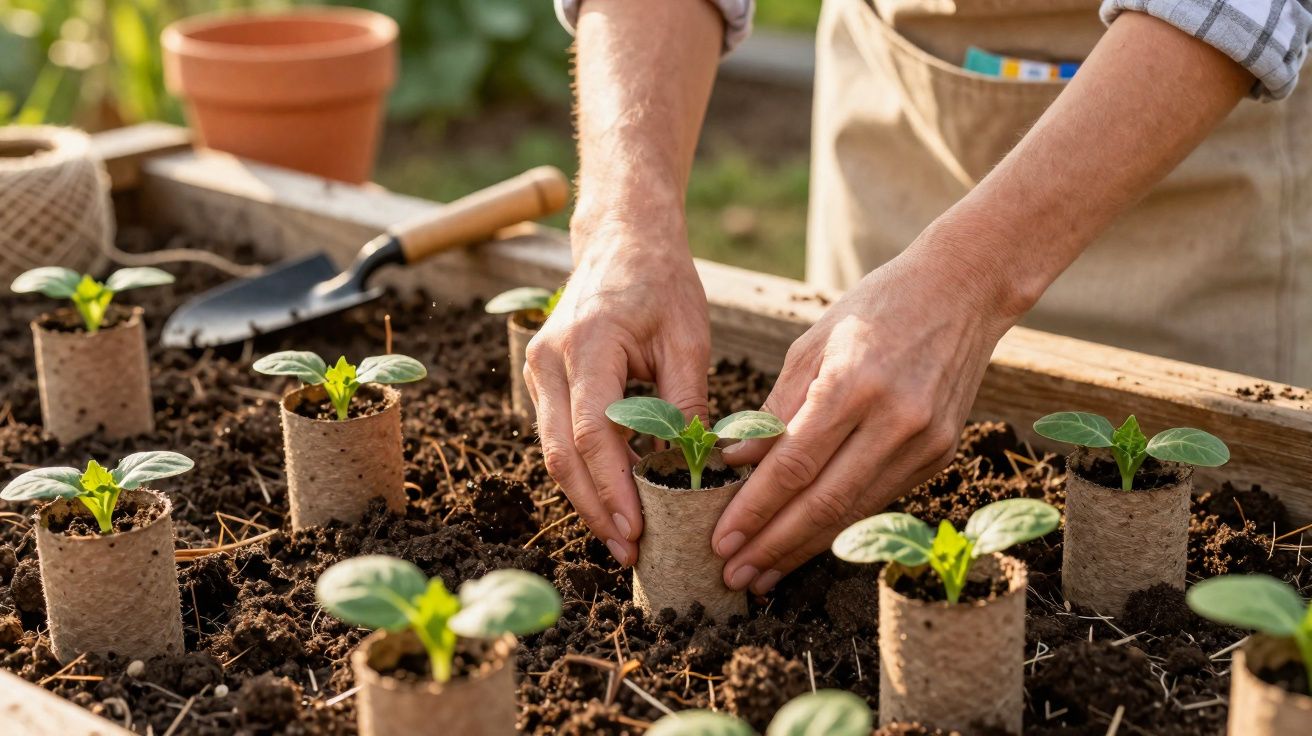
Hiding behind this curious sight is a surprisingly effective protective method.
What looks at first like an internet joke is now a talking point on balconies, patios and in vegetable plots this season. Influencers, keen amateur gardeners and even a few professionals are all advocating the same thing: stop throwing away empty toilet roll tubes and place them straight beside young plants. At the stage when delicate seedlings are most vulnerable, these plain cardboard cylinders can prevent one cold night from undoing weeks of effort.
Why toilet roll tubes can save spring in the vegetable garden
Spring means hope and anticipation for gardeners - but it also means pressure. Newly planted tomatoes, lettuce, peas and flowers are sensitive. If temperatures dip to just above 0°C and a few hungry slugs are on the prowl, entire rows can disappear by morning.
This is exactly where toilet roll tubes come in. The cardboard forms a small, enclosed ring around the plant. That simple shape creates several benefits at once:
- It slows cold draughts close to the ground.
- It makes it harder for slugs to reach the stem.
- It keeps the area around the root collar a little drier and more stable.
- It creates a slightly warmer microclimate around the young shoot.
The clever part is that the cardboard is permeable. Water still reaches the soil freely, so waterlogging is avoided. At the same time, the tube acts like a tiny windbreak that softens the worst temperature swings.
An old toilet roll tube becomes a plain but highly effective safeguard for tender young plants.
With gardening costs rising, the idea is also appealing from a budget point of view. Plant cloches, plastic tunnels and heated mini greenhouses can quickly become expensive, whereas empty cardboard tubes are already available in most homes and often end up in the bin.
Toilet roll tubes as frost protection for young plants: how to use them properly
The method is straightforward, but small mistakes can creep in. A few simple steps help avoid them.
Step by step: a protective collar in the bed
- First, plant as normal in the bed and water well.
- Place the toilet roll tube upright over the plant without crushing the leaves.
- Press the tube gently 2–3 cm into the soil so it stands securely.
- The top edge of the tube should extend a little above the leaves.
This creates a firm collar around the stem. Slugs must get past the cardboard barrier before they can reach the tender plant. In light ground frosts, the tube cushions the cold, especially in exposed beds and windy locations.
If a frosty night is forecast, the protection can be upgraded easily: a loose ring of straw or leaves around the tube helps keep the cold away from the soil. If late frost threatens, you can also place horticultural fleece over the row in the evening. The cardboard rings then stop the fleece from flattening the plants.
More than frost protection: other uses in the garden
Once you start using cardboard tubes in the garden, other possibilities quickly emerge:
- Marking direct-sown rows: cut tubes in half and place them like small markers over freshly sown spots.
- Barrier against bird damage: especially for peas and beans, the tube protects young growth from pecking beaks.
- Mini windbreak for window boxes: in container gardens, tubes can be split and used as half-arcs around sensitive seedlings.
- Shade for south-facing positions: on very sunny balconies, the cardboard gives the stem a little shelter in the first few days.
That means a single tube can often be used in different parts of the garden over several weeks before it finally breaks down in the soil or ends up in the compost.
A further advantage is that the tubes are easy to combine with other low-cost garden materials. A little mulch, some nettle-free leaf litter or a handful of straw can reinforce the effect without requiring any special kit. In other words, this is a small intervention that fits neatly into a low-waste, low-budget gardening routine.
Toilet roll tubes as inexpensive seed trays for stronger roots
Many problems in the bed begin indoors. Raising plants on a windowsill often produces leggy, weak seedlings with sensitive roots. Here, cardboard tubes can shine again - this time as small, biodegradable plant pots.
Turning cardboard tubes into seed containers
The conversion takes just a few minutes:
- Leave the tube at the desired height or shorten it if needed; 6–8 cm is usually enough.
- Cut one end into four equal flaps.
- Fold the flaps inward to create a base.
- Fill with loose seed-starting compost and press down lightly.
- Sow one or two seeds and water carefully.
After three to four weeks, once the seedlings look sturdy and have formed their first true leaf pair, the whole thing - tube included - can go into the bed. Over time, the roots grow through the cardboard, which gradually decomposes. This avoids pricking out and repotting, both of which often stress the roots.
Growing seedlings in a cardboard pot reduces root damage and gives them a few crucial days’ head start.
This approach is also appealing for children. They can follow the whole process from seed to plant and see how something that looks like waste can become a useful part of a cycle.
From protective collar to humus: using tubes sensibly in the compost
At the end of the gardening season, the tubes get one last job in the compost heap. Cardboard counts as “brown material” in composting: it adds carbon to the mix and balances out moist, nitrogen-rich kitchen scraps.
| Compost use | Effect of the cardboard tubes |
|---|---|
| In thin layers between grass clippings | Prevents compaction and keeps air in the heap |
| Cut into small pieces and mixed with kitchen waste | Absorbs moisture, helps reduce odour and rot |
| Crumpled roughly as an intermediate layer | Provides habitat for compost worms and micro-organisms |
If you want them to rot down faster, it is worth tearing the tubes by hand or cutting them into rough strips. Mixed with coffee grounds, vegetable peelings and garden waste, they help create nutrients that will feed your beds next year.
Common mistakes and the limits of this method
Useful as toilet roll tubes are, they do not solve every problem. Knowing the limits makes them far more effective.
- The cardboard collar is too tall: if the tube sticks up too far, the plant gets less light and air. It is better to shorten it.
- A site with constant waterlogging: in very wet corners, the cardboard can start to mould. Other forms of protection are better there.
- Using untreated cardboard: avoid printed, coated or strongly coloured tubes, as they may introduce unwanted substances into soil and compost.
- Underestimating a slug infestation: if slug pressure is extremely high, the cardboard barrier alone will not be enough; extra measures such as slug fences or beer traps may be necessary.
In very windy spots, it also helps to press the soil lightly around the outside of the tube. Otherwise, gusts can tip it over and the protection is lost. If you tend to water generously, make sure the soil inside the ring has a moment to dry slightly after watering.
How to fit toilet roll tubes into everyday gardening
Many households collect enough tubes within a few weeks to equip an entire bed. A small storage spot in the house or shed makes sense - for example, a box or bucket where the empty tubes can stay dry.
A sensible seasonal plan might look like this: in late winter, use the first tubes as seed pots. In April and May, move those seedlings into the bed, where fresh tubes can then be used for frost and slug protection. By midsummer, worn and damaged tubes can gradually go onto the compost heap and return their last bit of value to the system.
This method is especially effective in small gardens or on balconies. Where there is no room for large plastic tunnels or permanent raised beds, the cardboard rings allow you to work very precisely: protect vulnerable areas, safeguard especially at-risk crops and stabilise awkward corners.
Why this simple trick changes many home gardeners for good
Anyone who has watched a full row of tomatoes survive a late frost while unprotected neighbouring plants collapse will see cardboard tubes in a different light. The visible difference after a few cold nights often convinces people more than any theory.
At the same time, regularly checking the cardboard collars trains your eye to notice the microclimate in the garden: where does the soil stay damp longest, where does the wind strike hardest, where do the first slugs appear? Observations like these help you plan beds better next year, place crops differently or even reorient entire rows.
In the end, this is not just a clever upcycling trick but a different way of gardening: making the most of what is already available, supporting plants in a targeted way and treating the soil as a living system. An empty toilet roll tube may look insignificant, but in spring it often decides whether your carefully raised seedlings survive the night or leave only a bare patch in the bed by morning.

Comments
No comments yet. Be the first to comment!
Leave a Comment