
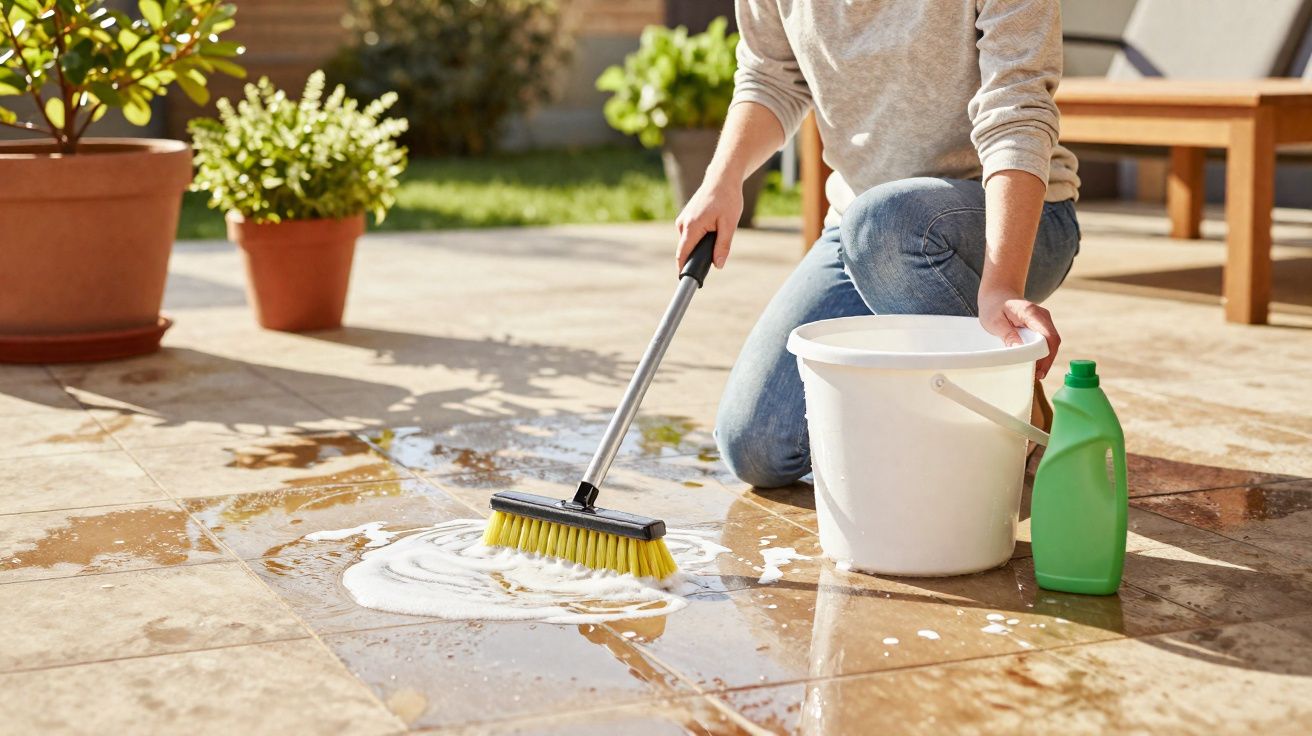
After winter, a terrace often looks grey, stained and far from inviting - yet a cheap household remedy can quickly bring it back into shape.
If you want to enjoy your first coffee outside in March or April, you are often greeted by a rather discouraging sight: green deposits, dark grout lines and dull slabs. Many people then reach instinctively for aggressive cleaners or a pressure washer. In reality, an astonishingly simple and inexpensive product from the cleaning cupboard is enough to give the terrace floor a thorough clean - without putting plants, pets or your budget under strain.
Why the terrace changes so quickly after winter
Over several months, rain, dirt, fallen leaves and exhaust fumes build up on the surface. Fine sand collects in the joints, while algae and the first patches of moss settle in between them. In shady areas, moisture lingers for longer, which is why slabs and decking boards become discoloured, especially on concrete, clinker bricks or rough tiles.
The transition from winter to spring is particularly sensitive: the days are already milder, but the nights are still cool, and the sun sits low in the sky. Moisture dries slowly, so the surface stays damp for a long time. That creates perfect conditions for green film and black edges forming along the joints.
Before you start, it is worth checking the forecast and choosing a dry spell with enough time for the terrace to dry properly afterwards. If you clean just before rain returns, fresh dirt can cling to the damp surface again almost immediately, and you may end up having to repeat the job.
If you clean thoroughly at the right moment, you can often enjoy an entire spring and a good part of the summer without stubborn deposits returning.
The inexpensive cleaner that works on almost any terrace
To get the terrace ready for the season, you do not need a shelf full of specialist chemicals. All you need is a liquid, plant-based cleaning product that many households already know: a concentrated soap solution made from vegetable oils. It cuts through grease, loosens dirt films and dull grey residue, while remaining relatively gentle on surfaces.
The big advantage is that this product is biodegradable, contains no harsh solvents and is therefore much kinder to flower beds, lawn edges and plant pots right next to the terrace. Pets can walk across the area again without danger as soon as it has dried.
- suitable for wood, concrete, clinker bricks and many tiles
- plant-based and free from harsh solvents
- economical: a few spoonfuls are enough for a full bucket
- gentler on plants and soil life than chlorine-based cleaners
Mixed with hot water, the concentrate becomes a powerful yet surface-friendly cleaner. A container usually lasts for several seasons, because only small quantities are needed per bucket.
An added bonus: while you are cleaning, it is a good time to clear drainage channels, gullies and the edges near doors. If dirty water is left pooling there, it can undo some of the work and encourage fresh staining once the terrace is dry again.
Step by step: how to clean a terrace in spring
1. Choose the right time
The ideal day is dry, with no rain due and temperatures clearly above freezing. That way the surface dries faster after cleaning, and the cleaner is not immediately washed away again. A light breeze helps to carry moisture off the terrace as well.
2. Remove coarse dirt first
Before any water comes into play, sweep the surface thoroughly. Leaves, pine needles, small twigs, gravel and loose sand should go into a dustpan or compost caddy. This step makes a real difference to how well the cleaner works later on, because loose particles otherwise act like abrasive grit while scrubbing and can roughen delicate surfaces.
3. Mix the cleaning solution
For a large terrace, use a bucket with around 10 litres of hot water. Stir in roughly 10 tablespoons of the liquid cleaner. For a smaller area or lighter dirt, 5 litres of water and 3 to 4 tablespoons are usually enough.
As a rule, it is better to dose a little conservatively and go over the area a second time if needed, rather than cleaning with an overly strong mix from the outset.
4. Work with a brush, not a pressure jet
Next, apply the mixture to the floor using a stiff brush or scrubbing brush. Work in sections so that no area is missed. Pay particular attention to heavily soiled patches and dark joints. The brushing motion does not just create mechanical friction; it also spreads the cleaner evenly across the surface.
On very dirty terraces, it is worth leaving the foam to work for five to ten minutes. During that time, the soap loosens grease, soot films and organic residue. Try to keep the surface from drying out in the meantime - on sunny days, it is better to work in stages.
5. Rinse thoroughly and let it dry
Once the dirt has loosened, the most important step follows: rinse the terrace thoroughly with clean water, ideally using a garden hose. If you want to use as little water as possible, you can also pour several buckets of clean water over the area and then go over it with a mop.
If too much water is left sitting on the terrace, a squeegee or a large cloth is useful. That helps the floor dry faster and prevents streaks. After a short time, the surface will already look noticeably lighter and fresher.
Correct dosage and protecting delicate materials
For smaller cleaning jobs in between, a much milder mixture is enough. In many cases, 3 to 4 tablespoons in 5 litres of lukewarm water will remove dust and light dirt.
If the product is overdosed or not rinsed away properly, a thin film may remain behind and feel slightly greasy. On glazed tiles or smooth stone slabs in particular, the surface can then seem more slippery, especially after a rain shower. That is why you should always keep rinsing until no foam is visible.
If you are unsure, test the mixture first on an inconspicuous corner of the terrace.
Avoid harsh home remedies - they do more harm than good
Many people reach for strongly acidic or alkaline home remedies out of habit. Classic examples are clear vinegar solutions or bicarbonate of soda. These substances may give short-term results, but they can noticeably damage certain types of stone.
Particularly sensitive surfaces include:
- natural limestone
- marble slabs
- finely ground quartz stone
- polished granite
On these materials, strong acids or alkalis can roughen the surface, leave matt patches or destroy fine textures. Chlorine-based products also do not belong on a terrace: they can severely damage plants, leach grout and cause discolouration.
How useful is a pressure washer really?
Pressure washers are tempting because they blast visible dirt away so quickly. However, the powerful jet removes not only moss and soil but also material. On decking boards, the stream digs into the soft surface, the fibres rise up, and the wood looks rougher and ages more quickly.
On concrete slabs and paving stones, the upper, finer layers can gradually be worn away. Jointing material is also washed out, which makes it easier for water to seep in and encourages weed growth. If you still want to clean a terrace with a pressure washer despite these risks, you should:
- keep the nozzle much farther away
- use pressure-reducing attachments
- avoid lingering in one place
- re-point the surface afterwards if necessary
How often should you clean a terrace properly each year?
For many households, one intensive clean in early spring is enough. A second round in late summer or autumn does no harm, especially if there are many trees nearby or birds often dirty the surface.
Between those deep cleans, regular sweeping is usually sufficient. If leaves are removed quickly and dust is not allowed to build up on the terrace for months, less dirt settles deeply into the material. That makes the next spring cleaning easier and helps protect the surface.
Practical extra tips for a terrace that stays attractive for longer
If you are already doing the spring clean, it is worth taking a closer look at the condition of the terrace. Cracks in slabs, loose joints or swollen wood should not be ignored. Small repairs can often be completed with little effort at this stage, before frost and heavy rain make the damage worse.
Useful measures include:
- topping up jointing material before weeds can take root
- protecting decking boards with oil or stain once they are dry
- using saucers under plant pots so standing water does not build up
- moving furniture around rather than leaving it permanently in one place, to avoid stains and pressure marks
If you care for the terrace in this way, you will need far fewer aggressive cleaning sessions. Gentle products, warm temperatures and a good brush are enough year after year to keep the outdoor area pleasant and welcoming. That is how a grey, winter-worn surface becomes a place where you are happy to walk barefoot and enjoy the first warm days.



Comments
No comments yet. Be the first to comment!
Leave a Comment