
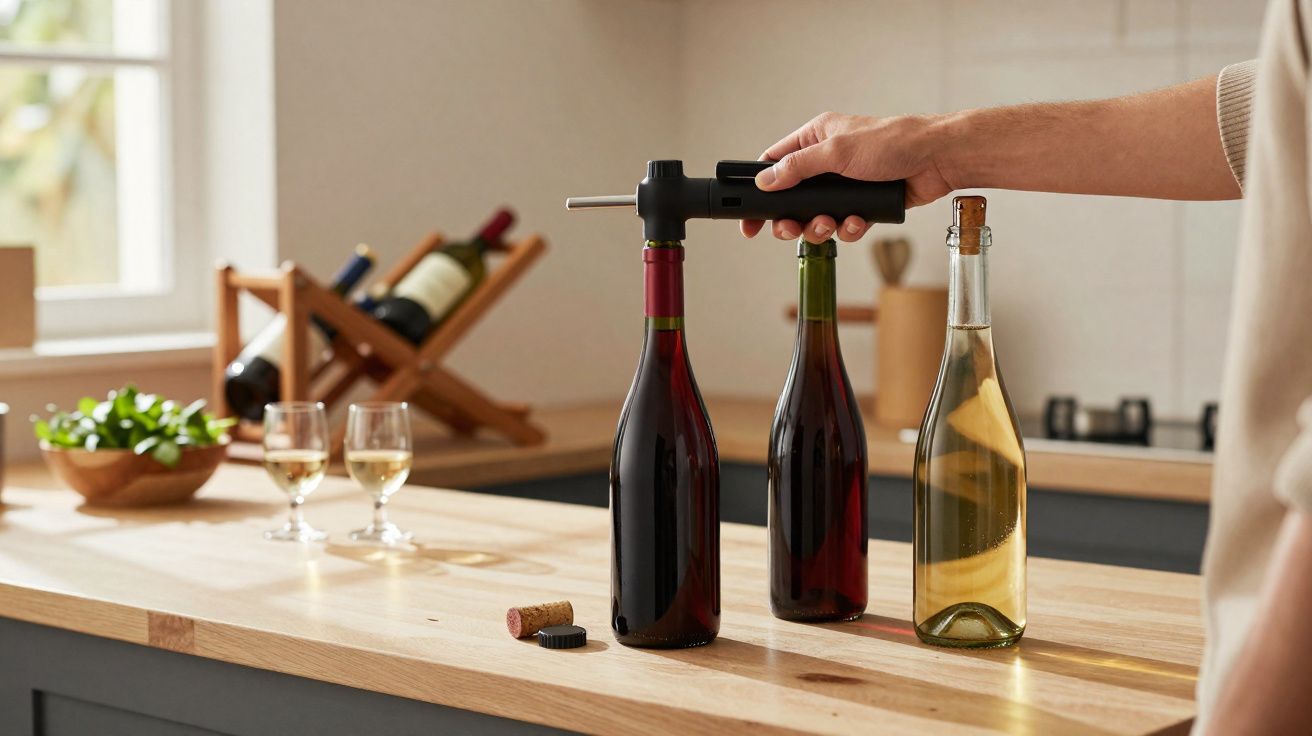
A cosy evening, the bottle isn’t finished - and the next day you start wondering: can you still drink what’s left with a clear conscience?
People often underestimate how quickly wine loses its character once it’s been opened - and how straightforward it is to slow that down. Depending on the style, you may have anything from a few hours to several days before a pleasant glass turns into a disappointment. With a handful of simple habits, you can noticeably extend that window.
How long does an opened bottle really last?
The moment the cork comes out (or the screw cap is undone), the clock starts. Oxygen, light and temperature gradually push the wine away from what it was meant to taste like. How long it stays enjoyable depends heavily on the type of wine.
Red wine: the most resilient option in the fridge
Red wine is usually the toughest of the lot. Thanks to its tannins and generally firmer structure, it tends to cope with oxygen better than many other styles.
"On average, opened red wine stays good for 3 to 5 days - provided it’s resealed straight away and stored in the fridge."
Many people leave red wine out at room temperature out of habit. For an already-opened bottle, that accelerates the decline. Lower temperatures slow the chemical reactions that dull aromas. If you keep the bottle chilled and simply let it warm slightly before the next glass, you’ll get more good pours from it.
Full-bodied, tannin-rich reds (for example those made from Cabernet Sauvignon or Syrah) can even taste a touch smoother on day two or three. Lighter, more delicate reds fade faster and are better finished within two to three days.
White wine and rosé: more delicate, but manageable
White wines and rosés are more sensitive to oxygen. Their appeal often comes from freshness, acidity and fine fruit notes - exactly the qualities that disappear first.
"Opened whites and rosés usually stay appealing for 2 to 3 days if they’re well sealed in the fridge."
With highly aromatic styles such as Sauvignon Blanc or Muscat, the expressive bouquet often drops off after about 24 hours. They’re frequently still drinkable at that point, but the flavour can seem noticeably flatter. Whites aged in oak can behave differently: with more structure, they often hold up for an extra day or two.
Sparkling wine: the sprint among bottles
With sparkling wines such as Crémant or Champagne, every minute counts. Here it’s not only about aroma - it’s mainly about the fizz.
"Open bottles with carbonation should be finished within 1 to 2 days - using a dedicated pressure stopper."
The old trick of putting a spoon in the neck does practically nothing. What actually helps is a sturdy sparkling-wine stopper that can hold pressure. Without one, the wine can go flat within hours and quickly loses its charm. Reseal it immediately and put it back in the fridge - not after the last guest has left.
The most important rules after opening
Whether it’s red, white or sparkling, the most critical minutes start as soon as you’ve poured the first glass. Getting the basics right can buy you valuable extra days.
- Reseal immediately - don’t leave the neck open on the table
- Put the bottle straight in the fridge, even for red wine
- Avoid light and heat; don’t store it near the hob, a window or a radiator
- If needed, remove air with a vacuum pump
- For sparkling wine, use only proper pressure stoppers
Leaving an opened bottle on the worktop under a kitchen light or next to the oven is almost a guarantee of rapid aroma loss. Once it becomes habit, the trip to the fridge is just a simple routine.
How tech helps: vacuum pumps, smaller bottles, professional systems
If you regularly end up with half-finished bottles, a little equipment can preserve far more quality in what remains.
Vacuum pump: minimal effort, noticeable benefit
A basic hand pump with a matching rubber stopper pulls some of the air out of the bottle, which slows oxidation in a way you can taste.
"With a vacuum seal, many wines remain appealing for one to two days longer than they do with a simple cork."
The wine will still evolve, but it won’t deteriorate as quickly. This is especially useful when you already know the bottle won’t be finished the same evening.
Decant the remainder into smaller bottles
A surprisingly effective approach is to transfer the leftover wine into a smaller, clean bottle. Less air sitting above the wine means slower ageing. Ideally, use a funnel and keep splashing and shaking to a minimum.
Professional options for wine enthusiasts
If you want to keep expensive bottles fresh for weeks or even months, systems that use protective gas are popular. An inert gas is introduced into the bottle to displace oxygen. These setups are most worthwhile for people with sizeable wine cellars or for hospitality settings - for everyday use, the fridge plus a vacuum pump is usually enough.
How to tell when wine has "turned"
Even with careful storage, leftovers eventually lose their spark. A few signs make it clear when a wine is no longer meant for drinking.
- Colour shift: red wine looks brownish; white wine turns deeper yellow or amber.
- Smell: instead of fruit or spice, you get a vinegary note or a musty, oxidised character.
- Taste: dull, flat, sour, with no clear structure.
"As soon as wine clearly tastes like vinegar or sherry, it doesn’t belong in a glass anymore."
A slight drop in freshness or a bit more softness is normal and not automatically a fault. It becomes a problem when the wine no longer gives any pleasure and you’d have to force yourself to finish it.
If it’s no longer good in a glass: put it in the pan
Once the wine has passed the point where it works as a drink, it doesn’t have to go down the sink. As long as it doesn’t seem truly spoiled or mouldy, it can be excellent for cooking.
Typical ways to use it in the kitchen
- Red wine for slow-cooked dishes, Bolognese, goulash or gravy and pan sauces
- White wine for risotto, fish dishes or lighter pan sauces
- Rosé for Mediterranean-style stews or vegetable skillet dishes
In these cases, it’s fine if the wine has lost some aroma. Combined with onions, herbs and stock, it becomes part of a new flavour profile. Just avoid wines that are strongly vinegary or otherwise "off", as they can spoil the entire dish.
Why air, light and heat cause problems
The drop in quality is down to straightforward chemistry. Oxygen reacts with compounds in the wine - especially aroma molecules and pigments. This process is called oxidation. It’s what makes red wine look brownish and leaves white wine tasting tired.
Light adds extra energy that speeds these reactions along, particularly in clear bottles. Heat accelerates everything even further. That’s why an opened bottle left on a warm windowsill can seem to age in fast-forward.
Practical everyday examples
If you only want a single glass of red with dinner, it helps to stick to a set routine: put the cork or screw cap back on immediately, store the bottle in the fridge, and take it out early enough the next day so it can come up a little in temperature.
After a party with several opened bottles, a quick “rescue round” is worth doing: group the leftovers by style, protect any still-worth-drinking wines with a vacuum pump, and keep sparkling wine only with a pressure stopper. Anything that already tastes weak can be earmarked straight away for cooking in the next few days.
Once you internalise these simple patterns, you not only cut down on waste - you’ll also often have a respectable half-bottle ready for a spontaneous evening, rather than a sad, tired remnant with no character.





Comments
No comments yet. Be the first to comment!
Leave a Comment