
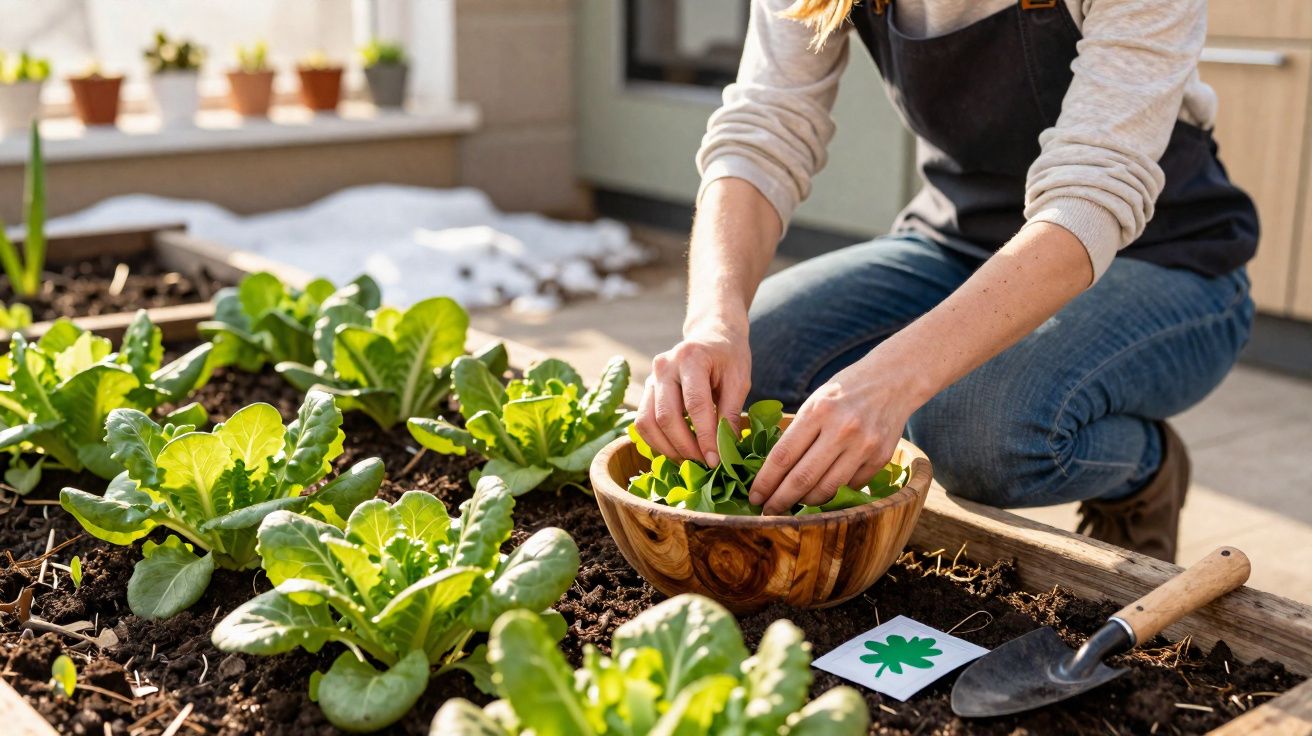
While plenty of people are still waiting for the first radishes or the first head of lettuce, a delicate green has already got going: winter purslane, also commonly known here as Tellerkraut or winter postelein. Once you’ve had it in a garden bed or a balcony planter, you genuinely start to wonder why, in March, you’d still put up with pricey supermarket veg.
The March miracle: what makes winter purslane so special
Winter purslane (Claytonia perfoliata) is the sort of plant that quietly proves people wrong. It looks fairly unassuming, yet nutritionally it really delivers. Its leaves are packed with vitamin C, alongside minerals such as magnesium and iron. In that in-between period when local fresh vegetables can still be thin on the ground, this herb provides exactly what many bodies are missing.
"Winter purslane is considered by herb enthusiasts to be one of the most exciting spring vegetables – because it grows when other crops are still in winter sleep."
It copes with temperatures just above freezing, handles short days without trouble, and makes brilliant use of the damp air in the colder months. While young lettuce plants are still shivering in March, Tellerkraut can already be forming dense green carpets.
How to spot Tellerkraut in the garden and in the wild
In spring, many people walk straight past it because they can’t quite place it. In fact, it’s pretty easy to identify:
- delicate, pale-green leaves-longer at first, later almost spoon-shaped
- characteristic stems that appear to “grow through” a round leaf, as if through a small plate
- often forms loose cushions or low mats
- prefers moist, cooler spots such as bed edges, shady garden corners, or along paths
If you’re not confident, it’s best to sow it first in your own garden or a raised bed. That way you’ll learn its look before you start picking from wild sites later on.
Harvesting in March: growing it is really that simple
One of its biggest advantages is how little attention winter purslane needs. Once it’s sown, it more or less takes care of itself.
Sowing – the ideal timing
Tellerkraut is typically sown in autumn and winter. The seeds need cold conditions in order to germinate. The best windows are:
- outdoors: October to February
- in a planter or raised bed: right through to late winter
- indoors on a windowsill: almost year-round, as long as it doesn’t get too warm
Scatter the seed on the surface and press it in gently. Fine seed like this doesn’t do well when buried under a thick layer of soil.
Position and care – almost foolproof
Winter purslane prefers cool conditions and light shade, but it will also manage in sun provided the soil doesn’t dry out completely.
- Position: partial shade to sun; ideal along bed edges or in a balcony planter
- Soil: loose, humus-rich, evenly slightly moist
- Watering: regularly, but avoid waterlogging
- Fertiliser: usually unnecessary; on poor soils, a little compost is enough
You can start cutting the first leaves after around four to six weeks. A useful bonus: if you don’t cut too low, the plants will grow back. That means one patch can provide several rounds of harvesting.
In the kitchen: mild, nutty, and surprisingly versatile
In flavour, winter purslane sits somewhere between young spinach and lamb’s lettuce, with a gentle, slightly nutty taste. That makes it an easy “starter green”, including for children or anyone who usually avoids vegetables.
Ways to use Tellerkraut
- Fresh salad: wash whole rosettes and toss with oil, lemon juice or mild vinegar, a little salt, and nuts.
- Green smoothie: blend a handful of leaves with apple, banana, or pear and a little water or plant-based drink.
- Soup topping: sprinkle over potato or vegetable soup just before serving-don’t simmer it for long so the vitamins stay.
- Pesto: purée Tellerkraut with nuts or seeds, garlic, oil, and a little salt; use with pasta or spread on bread.
- On bread: top buttered bread or a cream-cheese sandwich with fresh leaves for a quick vitamin boost.
"Because Tellerkraut tastes so mild, it effortlessly replaces supermarket salad in March – while bringing much more freshness to the plate."
Why Tellerkraut takes off in March
Winter purslane comes with a built-in “cold code”. The seeds need low temperatures to kick-start growth. Cool nights, moist air, and very little competition in the bed-those are its ideal conditions.
The first plants can start appearing from January, and by March they’re often at their best. Once the days get noticeably longer and it stays warm, the plant retreats and leaves the space to summer vegetables.
Mini vegetables as an extra: greens from the windowsill
If you don’t have a garden, you can still bring that early-spring freshness indoors. Tellerkraut grows remarkably well in trays and shallow pots on a windowsill, and it pairs perfectly with other mini vegetables.
Popular options include:
- cress – a classic all-rounder that’s ready to cut after just a few days
- radish leaves – peppery, great on bread or in salads
- broccoli sprouts – containing mustard oils that are considered particularly valuable
Combined with winter purslane, this creates a small “vitamin bar” right on the windowsill, with first harvests possible in five to seven days.
More than salad: Tellerkraut for the immune system and the home medicine cabinet
Traditionally, people with herbal knowledge have used winter purslane for more than just eating. Its high vitamin C content supports the body’s defences in the darker months. If you’re feeling tired, drained, or slightly under the weather, fresh greens can be a real help instead of relying only on tablets from the chemist.
On top of that, it contains secondary plant compounds that are credited with anti-inflammatory properties. Many people deliberately reach for a large plate of fresh, finely sliced leaves when a sore throat is just starting.
The plant is also used externally: crushed leaves can be placed on minor skin irritations. They have a slight cooling effect and may help to calm redness. Of course, for serious or unclear symptoms this doesn’t replace a visit to the doctor, but it can complement conventional treatments in a gentle way.
Practical tips for beginners in March
If you want to start now, you don’t need a complicated gardening plan. A few basics are enough:
- a small bed, a raised bed, or a larger balcony planter
- loose soil, enriched with a little compost if needed
- a thin sowing layer-Tellerkraut doesn’t like being buried deeply
- regular but gentle watering
When in doubt, sow in several short rows or small patches. That way you can harvest in stages and keep a supply of fresh greens going for weeks.
Why Tellerkraut is worth growing in any garden
In March, many home gardeners are still dealing with waterlogged soil, cold winds, and empty beds. That’s exactly where winter purslane shines. It fills gaps, makes use of the remaining warmth in the ground, and produces a surprising amount of leaf growth in a small space.
At the same time, it fits perfectly with a sustainable, economical approach: minimal effort, very low resource use, and no long transport routes. Once you’ve watched an unremarkable patch turn into a green carpet of edible leaves within a few weeks, you tend to look at your planting plan differently.
Ideally, Tellerkraut becomes a regular part of the yearly rhythm: sow in autumn, harvest in late winter and spring, then let tomatoes, beans, or courgettes take over. That creates a cycle in which there’s fresh green food on the table in almost every season-and that’s what makes this modest March plant a quiet star, often well ahead of many classic vegetables.





Comments
No comments yet. Be the first to comment!
Leave a Comment