
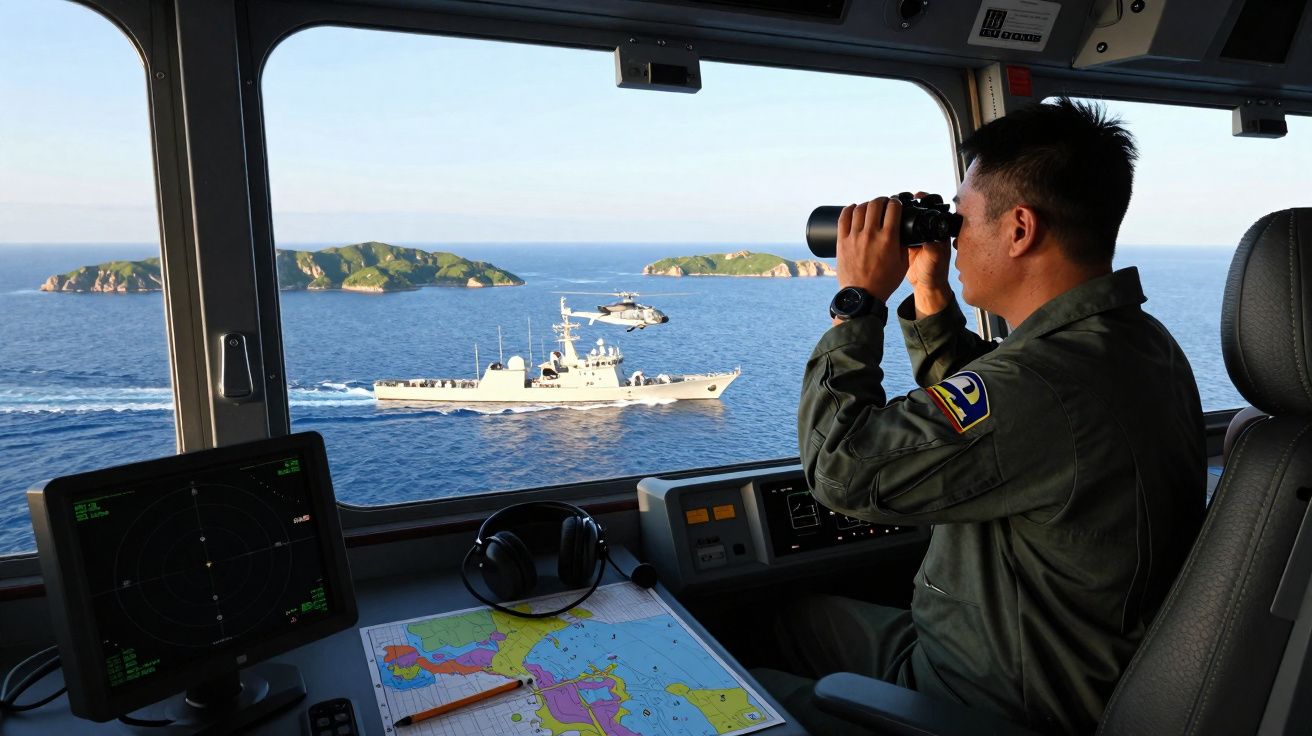
Russian naval activity in the north-western Pacific has intensified, and Japan has been keeping a close watch on the latest anti-submarine drills conducted by Russian Navy corvettes in waters near the Kuril Islands-an important corridor regularly used by military units moving between the Sea of Japan and the Pacific Ocean.
Russian Pacific Fleet anti-submarine exercises near the Kuril Islands
Russian media reported that the corvettes Gremyashchiy (337)-the lead ship of her class-and Gromkiy (335)-a Steregushchiy-class vessel-both assigned to the Pacific Fleet, carried out a search-and-destroy serial against a notional “enemy” submarine while transiting straits within the Kuril island chain. The event involved detecting a submerged contact that attempted to break contact, followed by the use of tactical tracking and signalling measures designed to compel the submarine to surface.
In the official Russian account, when the simulated submarine did not comply with issued instructions, the corvette Gromkiy performed an electronic training launch of a torpedo using the Paket-NK anti-submarine system, after which the target was assessed as “neutralized”. The episode was described as routine training undertaken during a maritime passage. Over the same period, the ships reportedly used 30 mm AK-630 automatic artillery systems and 12.7 mm heavy machine guns to rehearse responses to aerial drones and unmanned surface craft.
Japan’s vigilance and tracking of Russian vessels
Alongside these developments, Japan’s Ministry of Defence stated that Japan Maritime Self-Defence Force units were tasked with surveillance, tracking and intelligence collection relating to other Russian Navy ships moving through sensitive areas.
Japan noted in particular that, on 1 February this month, it detected a Russian Steregushchiy III-class frigate heading towards the Pacific via the Tsugaru Strait. Regarding the Japanese assets involved, the Ministry confirmed the deployment of the destroyer JS Chikuma, assigned to the 15th Escort Division based in Ominato, as well as a P-3C Orion maritime patrol aircraft from the 2nd Air Group based in Hachinohe.
Sustained activity across key access routes
The timing of Russia’s anti-submarine training and Japan’s monitoring efforts again underlines the strategic value of the approaches to the western Pacific, and of the straits linking the Sea of Japan to open waters. Against this backdrop, the repeated presence of Russian units-matched by Japan’s consistent observation-points to a pattern of sustained naval activity in which training, capability signalling and mutual scrutiny are increasingly normal features of the regional environment.
You may also like: Japan deploys fighter jets and patrol aircraft to monitor the presence of Russian ships and intelligence aircraft in the Pacific






Comments
No comments yet. Be the first to comment!
Leave a Comment