
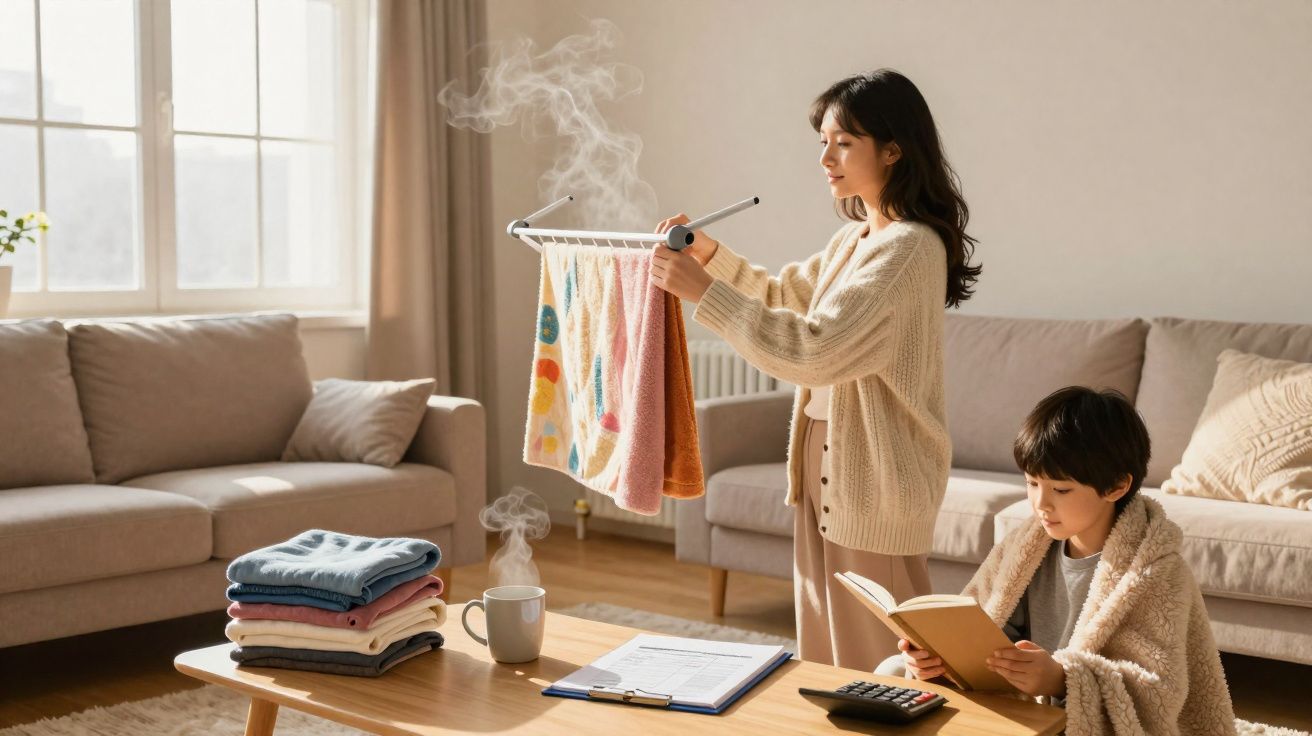
Households across the UK are heading into yet another winter of cautious thermostat adjustments and anxious checks of the smart meter. With that mood in mind, Lidl is due to release a budget heated clothes airer next week-closely mirroring Martin Lewis’s long‑running mantra to “heat the human, not the home”-with the promise of lower-cost, more focused warmth.
Lidl heated clothes airer: a middle‑aisle buy that fits the times
Arriving in Lidl’s Specialbuys middle aisle, the new product is a foldaway heated clothes airer that comes with a fitted cover, sold under Lidl’s own label. It is the sort of practical seasonal purchase that shows up every autumn and then, once the first properly freezing weekend arrives, tends to disappear from view.
The idea is straightforward: a low‑watt heating element warms a set of metal rails, while a breathable cover helps keep the warmth close to the washing. You tuck it into a corner of the lounge or a spare room, plug it in, and let gentle, consistent heat do the drying work that a high‑energy tumble dryer would usually take on.
This season’s pitch is clear: a gadget that dries clothes and takes the edge off a cold room, while costing pennies per hour to run.
That launch timing also matches how many people now approach energy use. Instead of investing in elaborate smart‑home set-ups, households are increasingly looking for small, manageable devices that can shave the bill without sacrificing everyday comfort-exactly the niche a heated airer aims to fill.
Why Martin Lewis fans will care
Martin Lewis, founder of MoneySavingExpert, has spent years returning to one central piece of winter guidance: prioritise warming people and small areas rather than trying to heat an entire home. He regularly highlights heated throws, electric blankets and low‑watt drying options as examples of targeted warmth that can help budgets go further.
Lidl’s heated clothes airer sits squarely within that thinking. It is not a substitute for radiators or central heating, but it can create a warmer “micro‑zone” in the places you actually spend time-working, relaxing or watching TV. As your laundry dries on the rails, you also get a mild background warmth in the same area, which may make it easier to drop the thermostat by a degree without feeling uncomfortable.
Instead of paying for every cubic metre of your home to feel toasty, you pay for one plug socket to make one room more comfortable.
There is a mindset shift involved, too. When you believe a device draws only a couple of hundred watts, it can feel less stressful to run it for a few hours. Compared with the clunk and surge of a tumble dryer starting a cycle, a heated airer’s quiet warmth can seem like a gentler impact on the wallet.
What it costs to run compared with a tumble dryer
Lidl has not shared precise wattage details, but comparable heated airers are typically around 230W. Using a common variable tariff of about 29p per kWh, the running cost works out at roughly 7p per hour. Keep it on for five hours and you are looking at around 35p.
A condenser tumble dryer, on the other hand, often uses about 2–3kWh for a full cycle. At 29p per kWh, that puts a single load somewhere in the region of 58p–87p. Once the colder and wetter months drive more washing indoors, households that tumble-dry several times a week can notice that gap quickly.
| Drying option | Typical energy used | Estimated running cost* |
|---|---|---|
| Heated airer with cover | 230W for 5 hours (1.15kWh) | About 33p |
| Condenser tumble dryer | 2.5kWh per cycle | About 73p |
| Radiator drying (no fan) | Higher boiler use, hard to track | Unclear, plus risk of damp and condensation |
*Using 29p per kWh as an indicative tariff; figures vary by provider and region.
If a household normally runs two loads a week, switching most tumble‑dryer cycles to an airer could reduce costs by around £1–£2 every seven days. Over a four‑month heating season, that can become a meaningful cushion-particularly when combined with other small measures such as heated throws or draught blockers.
How the gadget actually dries faster than a regular airer
Anyone who has tried to dry jeans on a standard rack in January will recognise the downside: fabric that stays cold, a musty odour, and stubborn damp patches that can hang around for days. The Lidl version addresses those problems through a combination of basic physics and practical design.
- Warm rails apply heat right where moisture sits, speeding evaporation at the point of contact.
- The cover holds a pocket of warmer air around the clothes, keeping the immediate environment slightly warmer than the room.
- The heat stays gentle and evenly distributed, so fabrics are put under less strain than they would be inside a tumble dryer drum.
Add a small dehumidifier in the same room and the results can improve again. Lower humidity helps moisture escape from fabric more easily, and the room can feel more comfortable at the same thermostat setting. It also helps reduce window condensation and the damp smell that can come with winter drying.
Think of it as a mini drying cabinet: slow, steady warmth plus controlled moisture levels, rather than blasting clothes with high heat for half an hour.
Getting the most warmth for the least money
Placement and setup
Where you position the airer can matter just as much as how long you leave it on. Choose a room you actually occupy in the evening-such as the lounge or a corner of a home office-and steer clear of the coldest, draughtiest space in the house.
Many experienced users place it near the sofa, pull the cover down most of the way, and then leave one side slightly ajar so a little warmth can spill into the room. That way, the airer doubles as a subtle heater for anyone nearby while the washing dries.
Small habits that cut drying time
A handful of small adjustments before and during each load can reduce the hours the airer needs to run:
- Select a higher spin speed (around 1200–1400 rpm) on the washing machine to remove more water first.
- Space items out rather than letting them overlap; compressed layers trap moisture.
- Turn thicker pieces, such as hoodies, partway through so each side spends time against the warm rails.
- Put lighter items nearer the top, where heat collects beneath the cover; they dry sooner and free up space for bulkier garments.
- Include one clean microfibre cloth to help draw out moisture and slightly accelerate drying.
A low-cost digital hygrometer can be useful as well. If the room’s humidity rises above about 60%, opening a window for ten minutes or running a dehumidifier briefly can ease the bottleneck and prevent the air feeling heavy and clammy.
Safety and wear‑and‑tear
As with any heated appliance, basic precautions still apply. Keep the cable out of walkways, make sure the frame is level and secure, and leave some space between the unit and items like bedding or curtains. Do not heap clothing over the control area or near the plug, where unwanted heat build-up can occur.
Because the method is slower and uses a lower temperature, it is often gentler on clothing than tumble drying. Fewer high‑heat cycles can mean less shrinkage and reduced lint loss. Over a year or two, that may help everyday items-school polos, pyjamas and cotton T‑shirts-last longer, quietly cutting replacement costs.
Why budget shoppers keep chasing heated airers
The ongoing demand for these products reflects a broader shift in how the UK is adapting to higher living costs. More shoppers now favour tools that deliver quick, visible benefits, rather than expensive tech that promises savings “over the long term”.
A heated airer often lands in the sweet spot: it is usually far more affordable than many heaters, it tackles a recurring winter frustration, and the payoff is easy to see-dry uniforms, warm socks and no alarming spike on the meter.
In a season shaped by tiny decisions - an extra jumper here, one less radiator there - a low‑watt dryer feels like a controllable lever rather than another unknown cost.
It also neatly reinforces the advice people hear from trusted figures such as Martin Lewis. Instead of pushing households to replace whole heating systems, it encourages a simpler approach: warm the space you are using, at the time you are using it, for only as long as necessary.
How this compares with other targeted‑heat options
To get through winter, many households now rely on a small kit of low‑watt solutions. A heated airer often sits alongside options such as:
- Heated throw or electric blanket for evenings on the sofa or at bedtime.
- Oil‑filled radiator for a box room or home office used for a few hours.
- Under‑desk mini heater for remote workers.
- Thermal curtains and draught excluders around doors and windows.
Each item serves a different purpose. Throws warm the person directly. Oil‑filled radiators help maintain an even temperature in a small room. The airer solves the problem of drying clothes and, as a side benefit, adds a little ambient warmth. Together, they form a layered strategy that can reduce reliance on the main heating.
There is, however, a small trap to watch for: becoming too relaxed. When energy-saving devices feel inexpensive to run, it is easy to leave several on longer than necessary, eating into the savings. A smart plug with an energy readout-or simply checking the smart meter once a week-can help keep usage disciplined.
What to think about before you rush to Lidl next week
Specialbuys stock often struggles to meet demand, particularly when products arrive just as night-time temperatures fall. Anyone determined to pick up the airer may need to visit early in the week, and accept that availability can differ significantly by branch and region.
If money is especially tight, it is still sensible to do a quick mental check before buying. Consider how often you currently use the tumble dryer, whether you can set the rack up safely, and whether you can pair it with decent ventilation or a dehumidifier. The biggest savings come when the airer genuinely replaces a pricier habit, rather than becoming another rarely used item stored away in a cupboard.
Used carefully, a low‑watt heated airer matches the new winter approach: small devices, modest running costs, and a sharper focus on where warmth actually matters-around people, around daily routines, and around those persistent piles of damp washing that arrive with the cold months.





Comments
No comments yet. Be the first to comment!
Leave a Comment