
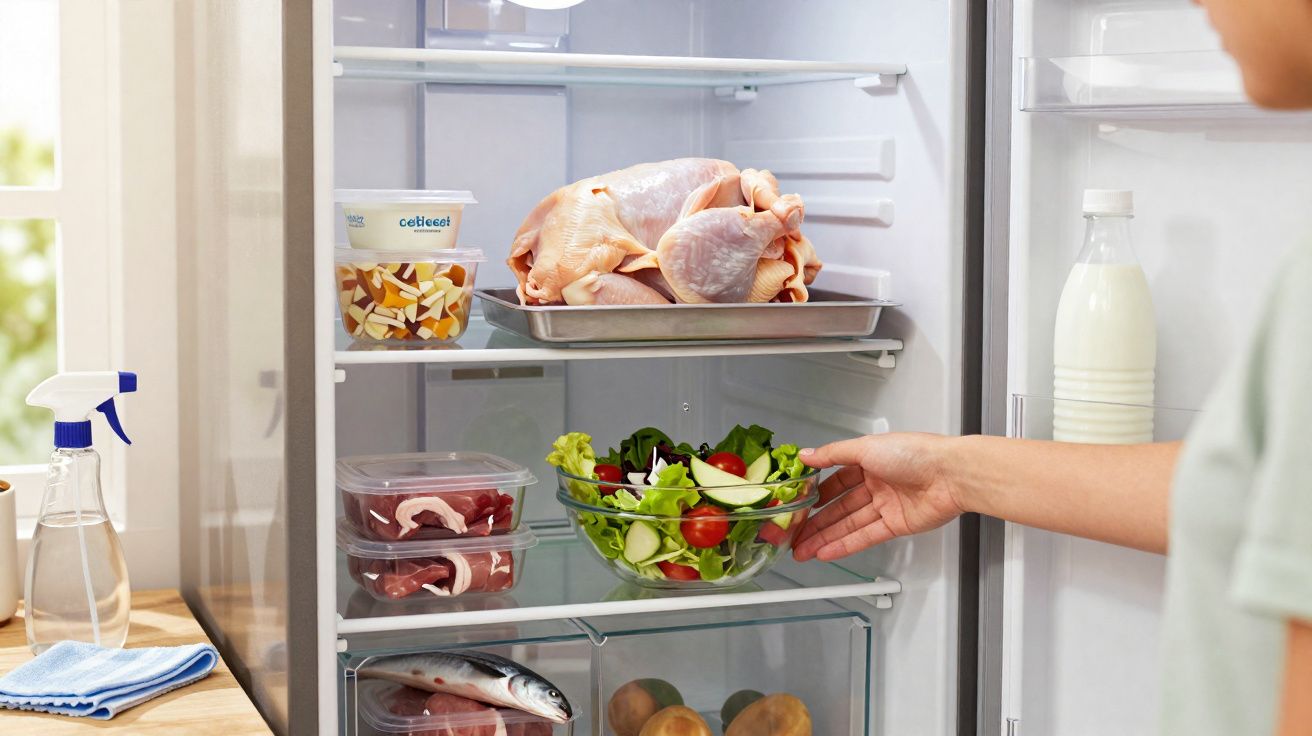
Many people think the fridge is a safe haven - yet one common, almost invisible sorting mistake can transfer bacteria straight on to our food.
In everyday life, the fridge door is opened and shut dozens of times, food is shoved inside, moved around and stacked on top of one another. Most people focus on keeping things cold. That is exactly where the problem starts: it is not only the best-before date that affects our health, but also where each item is placed inside the appliance. One small loading mistake is enough for salmonella and other germs to travel from one food to the next.
Why the fridge is not a safe place for germs
A fridge slows bacteria down, but it does not kill them. Between 0 and 4 degrees Celsius, many pathogens feel less comfortable, yet they can survive without difficulty. That includes salmonella and certain strains of E. coli, both of which can cause severe stomach and intestinal infections.
Official advice recommends setting the coldest area of the appliance to around 4 degrees Celsius. That sounds reassuring, but it does not change one crucial fact: as long as food has not been fully cooked through or thrown away, bacteria can remain on its surface or in escaping juices - and from there contaminate other items.
The question is less about how cold the fridge is, and more about which foods touch one another or come into contact with their juices.
That is where the issue of cross-contamination begins: if foods touch, meat juices drip on to other food, or contaminated packaging slides across a glass shelf, germs move quietly from A to B.
The most common mistake: putting raw meat and fish in the wrong place
In many homes, a tray of raw chicken or minced beef ends up somewhere in the middle of the fridge. Next to it may be a bowl of pasta salad, an open cheese board or already washed fruit. Sometimes the meat packaging is even stored in the same vegetable drawer as the vegetables.
The problem is that even a tiny drop of meat juice can contaminate a large surface. If that liquid drips on to leafy salad, cucumbers, tomatoes or a ready-made dish that will not be reheated later, salmonella can land directly on the plate.
Particularly risky are:
- raw poultry, such as chicken, turkey and duck
- minced meat
- raw fish and seafood
- steaks or chops releasing meat juices
These foods are high-risk items and should always be stored in a place where they cannot contaminate anything from above - while themselves remaining properly protected.
How salmonella risks arise in everyday life
On paper, almost everyone knows that raw meat is tricky. In the rush of daily life, though, the routine often looks like this:
- unpack the shopping and shove everything in quickly
- leave raw poultry in its plastic tray, next to the bowl containing yesterday’s leftovers
- the outer packaging has already been on the supermarket conveyor belt, in the trolley and in the boot, so it has touched plenty of surfaces
- in the fridge, it then sits on glass shelves that are rarely cleaned thoroughly
If the tray leaks slightly, or if moisture carrying germs escapes, those bacteria end up on the shelf. Later, you may place yoghurt pots, an open pack of sliced meat or cut fruit there. There is no direct contact with the meat - but the surface has already been invisibly contaminated.
For healthy adults, an infection usually ends with severe diarrhoea, vomiting, fever and a few very unpleasant days. For children, older people, pregnant women or anyone with a weakened immune system, this kind of food poisoning can become considerably more serious.
Three simple rules for a safer fridge
The ideal fridge layout follows a clear order: raw foods at the bottom, ready-to-eat foods at the top.
1. Use the lowest shelf for anything raw and high risk
The coldest zone, usually the bottom shelf above the vegetable drawer, is for high-risk products:
- raw meat and poultry
- raw fish and seafood
- minced meat and carpaccio
These foods should be stored in well-sealed containers or in airtight bags. Wherever possible, remove the outer supermarket cardboard or film before putting them away, because those materials are often contaminated.
2. Use the middle shelves for cooked food and dairy products
The shelves above are suitable for:
- cooked dishes and leftovers, always covered
- yoghurt, quark and desserts
- sliced meat, cheese and opened tins
Important: leftovers such as stews, sauces or pasta dishes should cool quickly and then be moved into the fridge in tightly closing containers. They should not be kept in the fridge for longer than two to three days.
3. Make sensible use of the vegetable drawer and door shelves
The vegetable drawer is intended for fresh, raw plant foods:
- salads, herbs, cucumbers and tomatoes, if they need chilling
- carrots, peppers, cabbage and broccoli
- some cut fruit
Important: do not store raw meat, fish or open meat products in the vegetable drawer. Keeping both in the same compartment creates an ideal situation for cross-contamination.
The fridge door is the warmest area. It is the right place for drinks, juice, sauces, mustard, ketchup, jams and butter - in other words, products that are not especially sensitive to minor temperature changes.
One useful extra habit is to avoid overfilling the fridge. Cold air needs room to circulate, otherwise some areas stay warmer than others. A simple thermometer can also help you check whether the appliance is really keeping food in the safe range, especially in older or heavily loaded fridges.
A small cleaning routine makes a big difference
A completely sterile fridge is unrealistic, but a good basic level of cleanliness is easy to maintain. Once a month, a quick check is worthwhile:
- throw out anything that is out of date or clearly spoiled
- wipe glass shelves and compartments with warm water and a little washing-up liquid or a vinegar solution
- do not forget handles and rubber seals, as they are touched frequently
Strong chemical cleaners are usually unnecessary. Thorough wiping and drying removes a large share of germs and helps prevent the build-up of biofilms, which are ideal for bacteria.
It also helps to label leftovers with the date you cooked or opened them. That makes it much easier to use them in time, rather than letting them sit at the back of the fridge until they become a hidden risk.
How to avoid cross-contamination in practical terms
Alongside correct storage in the appliance, a few simple kitchen habits can lower the risk:
- use a separate chopping board for raw meat
- wash your hands immediately with soap after touching raw animal products
- change tea towels and sponges regularly, or wash them at a high temperature
- never place raw meat directly on to other food, even “just for a moment”
Anyone who makes these habits part of the routine can significantly reduce the risk of stomach and intestinal infections, without making major changes - mainly by building small everyday practices.
How salmonella behaves - and why cooking alone is not enough
Salmonella dies at sufficiently high temperatures, for example when meat is cooked all the way through. The problem starts when dangerous juices have already contaminated other foods before cooking, and those foods are later served cold.
A simple example: the chicken comes out of the oven properly cooked, so the meat itself is free of germs. But raw meat juice has already dripped on to a salad sitting next to it in the fridge. That salad ends up on the plate uncooked - along with the bacteria. In that case, even careful preparation of the meat does not prevent infection.
When to act if food poisoning is suspected
Typical signs of an infection with salmonella or similar pathogens include:
- sudden, severe diarrhoea
- nausea and vomiting
- cramping abdominal pain
- fever and tiredness
If the symptoms last, if a high fever develops, if there is blood in the stool or if circulation problems occur, medical treatment is needed - especially for children, older people and pregnant women. A clear diagnosis also makes it easier to identify mistakes in your kitchen and fridge organisation and improve them later.
Why it is worth checking your own fridge
A fridge feels harmless because everything is kept cool. In reality, tiny details decide the level of risk: is the chicken stored above the leafy salad? Is the minced meat in the vegetable drawer? Are the packaging and glass shelves cleaned regularly?
If you go through every shelf consciously and adjust the layout once, you create a safety system that works every day - without any extra effort. The combination of the right temperature, clear sorting and a little hygiene turns the fridge back into what it is supposed to be: a place that protects food rather than turning it into a risk.



Comments
No comments yet. Be the first to comment!
Leave a Comment