
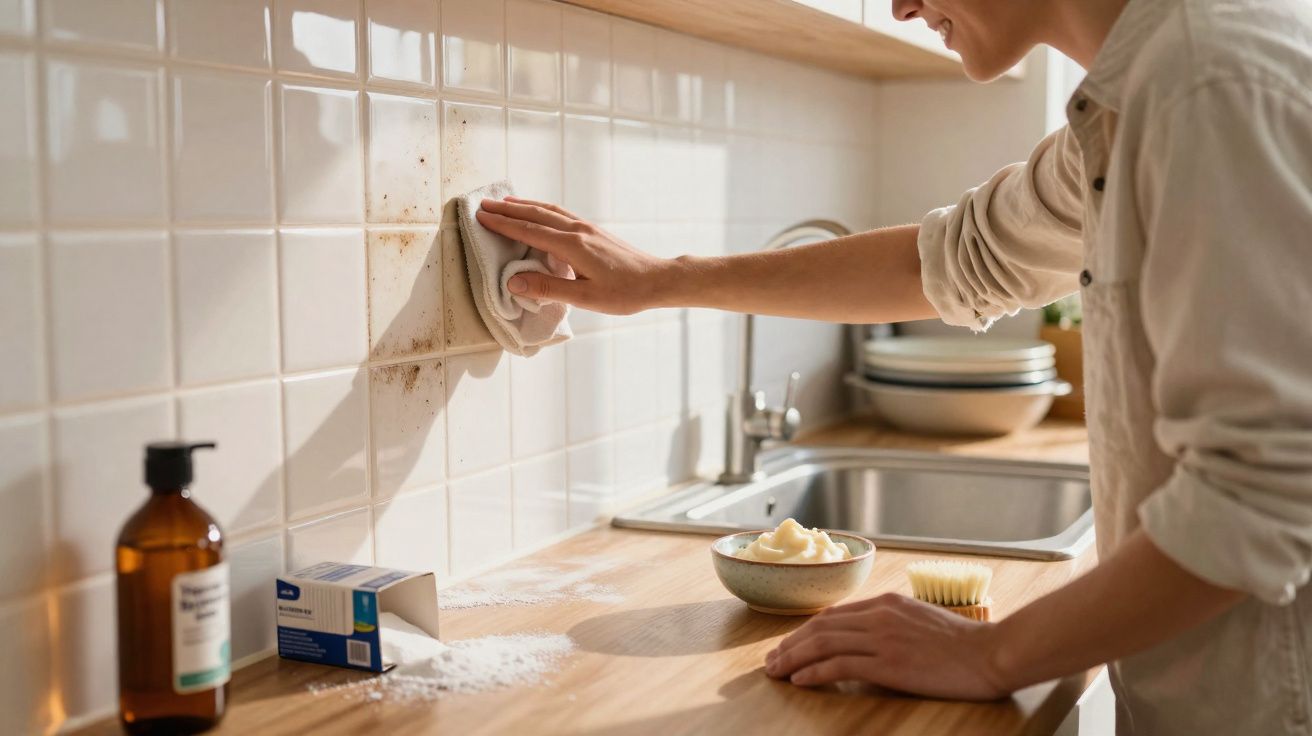
Many people now rely on homemade cleaning mixes because they want to cut costs and avoid harsh products. One pairing quietly sits near the top of the favourites list: baking soda and hydrogen peroxide. Used together, they deliver surprisingly strong results - from stained grout lines to burnt-on residue in pans. If you plan to use them, it helps to understand how they work and to follow a few basic rules.
Why baking soda and hydrogen peroxide work so well together
Baking soda - often sold as “bicarbonate” or “baking soda” - acts like an ultra-fine scouring powder. It helps lift build-up without seriously scratching surfaces, and it also neutralises unpleasant odours.
Many people know hydrogen peroxide from first-aid cupboards or hair bleaching products. Around the home, it stands out for its whitening and disinfecting action: it releases oxygen, which attacks dirt and colour compounds and can damage microorganisms.
The combination of gentle abrasion and oxygen power creates a deep-cleaning effect - especially on light-coloured surfaces and textiles.
When you combine the two into a paste, you get a lightly foaming cleaner that spreads easily, clings well, and, after a short dwell time, can shift marks that standard all-purpose cleaners often fail to remove.
Removing stains from clothing: how the duo works
Stubborn stains on fabrics can often be treated far more effectively with baking soda and hydrogen peroxide than with detergent alone. Fresh fruit or juice stains, in particular, tend to respond strongly to the oxygen-based bleaching action.
Step-by-step guide for stains on clothes
- Check the stain: use only on washable fabrics, and test on a hidden area first.
- Apply the liquid: drip a little hydrogen peroxide directly onto the stain.
- Add baking soda: sprinkle a thin layer over the damp area.
- Leave to work: about 30 minutes for coloured fabrics, up to one hour for white laundry.
- Gently brush: work the stain carefully with a soft brush.
- Wash as normal: launder the item in the machine as usual.
If the stain is still visible after the first round, you can usually repeat the process a second time. Many users report that older fruit marks, deodorant staining or light sweat marks become noticeably paler or disappear completely.
Cleaning the bathroom: brighten grout, tiles and taps
In bathrooms, limescale, soap residue and dark deposits build up over time - especially in grout lines and hard-to-reach areas. This is exactly where the baking soda and hydrogen peroxide combination shows its strengths.
Getting tile grout white again
For grout, a thicker paste works best. It clings more effectively and can do its job without sliding off.
Here’s what to do:
- Mix baking soda with a small amount of hydrogen peroxide until you have a spreadable paste.
- Work it into the grout using an old toothbrush or a small brush.
- Leave for a few minutes; for heavier soiling, up to 15 minutes.
- Scrub again with the brush.
- Rinse thoroughly with warm water.
After treatment, many grout lines look noticeably lighter because discolouration and deposits are lifted without needing aggressive chlorine.
Gently cleaning bathroom surfaces
The duo can also be used on basins, shower trays and larger tiled areas. For this, a slightly runnier mix is enough.
Put a small amount of baking soda in a bowl, pour in hydrogen peroxide, and stir with a spoon until it turns into a creamy mixture. Apply with a soft cloth, leave briefly, then rinse with water. The cloth helps remove loosened grime and a film of limescale without heavily scratching delicate surfaces.
In the kitchen: tackling burnt-on residue, grease and odours
In kitchens, grease, food residue and burnt-on patches tend to build up on baking trays, frying pans, pots and the hob. This is another area where the homemade duo can be particularly effective.
Burnt-on baking trays and pans
For heavily soiled trays and pans, it helps to use a thicker layer of the paste:
- Rinse off loose dirt with hot water.
- Sprinkle baking soda generously over the affected areas.
- Dampen with hydrogen peroxide until a thick, sticky paste forms.
- Leave for 15–30 minutes.
- Work over the area with a soft brush or a non-scratch sponge.
- Rinse very thoroughly with clean water.
Afterwards, many trays and pans look much cleaner - without having to handle aggressive spray-on oven cleaners. For very old, burnt-on layers, one pass is often not enough, but the build-up can usually be reduced gradually.
Grease films and sticky surfaces
On cooker hoods, cupboard doors near the hob, or worktops, a fine layer of grease can build up and become sticky over time. A milder version of the mix can help here:
- Put a little baking soda on a damp sponge.
- Add a few drops of hydrogen peroxide.
- Work the surface in circular motions.
- Wipe with a damp cloth, then buff dry with a clean cloth.
This approach can also loosen sticky handles or splashes on the kitchen wall. With sensitive materials such as natural stone or wood, test first in an inconspicuous area.
Where you need to be careful: safety and limits of the method
As useful as this mixture is, it is still chemically active. Keep the following in mind:
| Aspect | Recommendation |
|---|---|
| Skin contact | Wear rubber gloves to avoid irritation. |
| Material compatibility | Test on a hidden area first, especially on natural stone, aluminium and delicate textiles. |
| Mixing ratio | Mix only small quantities fresh; do not store. |
| Concentration | Use low-strength solutions intended for household use (typical high-street products). |
| Contact with eyes | Avoid completely; if it splashes, rinse immediately with plenty of water. |
On sensitive natural stones such as marble or granite, both baking soda and hydrogen peroxide may leave stains or dull patches. Not every coating reacts the same way on lacquered furniture surfaces either. A quick compatibility test before treating a large area helps avoid unpleasant surprises.
Further uses and practical tips
Beyond the usual areas - bathroom, kitchen and laundry - there are a few other worthwhile household uses:
- Brighten discoloured plastic chopping boards.
- Work on crusted deposits in grout around the hob.
- Reduce odours in bins by sprinkling in a little baking soda after cleaning.
- Lighten mild discolouration on silicone seals in showers and baths.
A common question is how this differs from traditional chlorine-based or specialist cleaners. Baking soda and hydrogen peroxide tend to target grime and discolouration more selectively, without such a strong smell or intense irritation to the airways. In some cases the mix works more slowly and needs time to sit, but it typically puts far less load on indoor air.
The hygiene angle is also worth noting. Hydrogen peroxide works against many bacteria and fungi, particularly on smooth surfaces. For heavily contaminated areas such as toilet rims or drains, a dedicated bathroom cleaner can still be sensible, but for everyday use this homemade mixture is often enough for many tasks. If you consistently wear gloves, mix small amounts fresh, and rinse treated surfaces thoroughly, you end up with a practical day-to-day tool for a cleaner home - with manageable effort and cost.


Comments
No comments yet. Be the first to comment!
Leave a Comment