
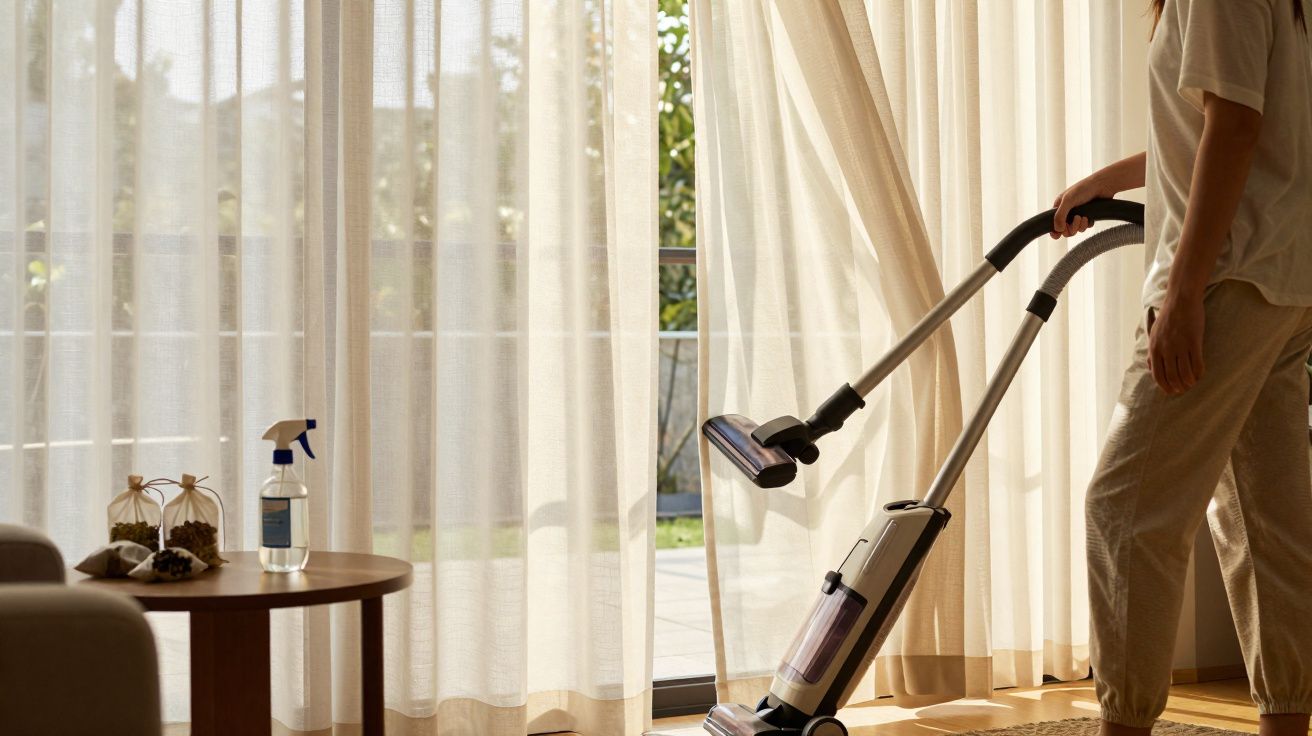
The very idea of taking down every curtain, washing it, drying it and hanging it back up is irritating even to read. It’s no surprise this chore keeps getting pushed to the bottom of the list. The good news: a few targeted steps are enough to make net curtains and heavy fabric curtains look cleaner, smell fresher and help allergy sufferers breathe more easily - without removing anything or using the washing machine.
Why curtains get dirtier faster than they look
Curtains often appear clean, but they rarely are. Fabric acts like a filter for whatever is floating around indoors. Over weeks and months, plenty builds up that you can’t easily see:
- Household dust and fine particles brought in from outside
- Pollen - a real issue for allergy sufferers
- Cooking smells, cigarette smoke, pet odours
- Grease particles from the kitchen, especially in open-plan layouts
The tighter the weave, the more it can hold. In city flats with heavy traffic noise, or homes close to busy roads, an extra grey film can settle on the fabric. Pets and frequent candle burning can intensify the effect even further.
“Clean, fresh-smelling curtains change the whole feel of a room - often more than a freshly mopped floor.”
Cleaning curtains without taking them down: step by step
1. Remove dust and pollen with the vacuum cleaner
The simplest - and most important - move is regular vacuuming. Many people remember sofas and mattresses, but curtains are easy to overlook.
How to do it gently:
- Fit a soft brush attachment to your vacuum.
- Turn the suction down slightly so the fabric isn’t pulled in.
- Keep the curtain lightly taut with one hand and vacuum from top to bottom with the other.
- Quickly vacuum the curtain pole and hanging points too - dust gathers there particularly easily.
Once a week is ideal, especially during pollen season. Keeping on top of it stops dirt from working its way deep into the fibres.
2. Deep-clean with steam - no washing machine needed
For a more thorough clean, a steam cleaner or garment steamer works well. Moist heat penetrates the fibres, loosens grime and kills some germs - without leaving standing water in a bucket.
How to use steam effectively:
- Pull the curtains smooth, holding the bottom lightly if needed.
- Heat the steamer and keep a safety gap of a few centimetres from the fabric.
- Work slowly from top to bottom, section by section.
- Put the window on the latch so moisture can escape.
Take care with delicate fabrics such as silk or raw linen: test first on an inconspicuous area, or skip steam altogether. Some care labels explicitly warn against high heat.
3. Treat stains locally with household remedies
Another common issue is the odd spot - for example from insects, children’s hands or drink splashes. That doesn’t mean the entire curtain has to go into the machine.
A reliable home solution is a mix of water and standard clear vinegar. Here’s how to use it:
- Pour one part vinegar and two parts lukewarm water into a spray bottle.
- Lightly mist the stained areas - don’t soak the fabric.
- Leave it to work for a few minutes.
- Dab carefully with a soft, light-coloured cloth - don’t rub, as that can roughen the fibres.
Before you try it for the first time, check colour fastness on a hidden patch. This quick safety test is especially worthwhile with strong colours.
How to make curtains genuinely fresh again - without a wash cycle
Neutralise odours instead of just masking them
Even when a curtain looks clean, it can still smell stale. In rooms that aren’t aired often, everyday odours from cooking and lingering dampness can settle into the fabric.
You can mix a simple fabric deodoriser spray with a few basic items:
- Fill a spray bottle with tap water.
- Add a few drops of essential oil to taste - lemon, lavender and eucalyptus are popular.
- Shake well.
- Mist the curtain lightly from a short distance.
A few sprays are enough: the aim is a fresh scent, not wet fabric. If you have pets or small children, choose oils that are well tolerated and use them sparingly.
Reduce lingering smells with small sachets
Alongside sprays, small sachets can bind unpleasant air over the long term. You can fill them yourself or buy them ready-made.
| Filling | Effect | Where to place it |
|---|---|---|
| Bicarbonate of soda or baking powder | Traps odours, absorbs a little moisture | At the lower end of the curtain pole or on the window handle |
| Dried herbs (e.g. lavender) | Adds a light, natural fragrance | Between the curtain and the wall, near the top |
Make sure the sachets don’t rub directly against the fabric, so they don’t leave marks. Every few weeks you can swap out the contents - minimal effort, but a noticeably fresher room.
Care routine: keeping curtains clean long-term with little effort
How often should you do what?
If you don’t want to wash curtains constantly, you need a routine that’s realistic. A simple rule of thumb can help:
- Daily: Air the room in the morning, ideally for 5–10 minutes with the window opened wide.
- Weekly: Run the vacuum over the curtains; if you have a steam device, give the room a quick steam refresh.
- As needed: Treat stains immediately - don’t wait for them to dry.
- Every few months: Depending on the fabric and the manufacturer’s guidance, do wash them - a gentle cycle is often enough.
“If you build in small steps regularly, you need the big take-down-and-clean far less often - and save your nerves.”
Common mistakes that make curtains age faster than they need to
A lot of damage to net curtains doesn’t come from dirt, but from the wrong care. These problems crop up again and again:
- Too much heat from a steam device on delicate fabrics.
- Scrubbing stains hard - it breaks fibres and can leave pale patches.
- Leaving curtains closed all the time in damp rooms (such as bathrooms): risk of mould.
- Using overly harsh cleaners, especially bleach-based products, on coloured fabrics.
If you’re unsure, check the care label or always test household remedies first on an inconspicuous corner.
When it’s still worth using the washing machine
As practical as cleaning curtains while they’re hanging is, it can’t fully replace washing. Over time an invisible film of dust, grease and nicotine can build up in the fabric. At the latest when a grey haze appears or the material starts to feel heavy, a proper wash is the only real fix.
A thorough clean is also advisable if there’s significant mould, or in smoking households. In some situations, replacement can even make sense - particularly where allergies are involved or the fabric shows visible damage.
As a rough guide: in an average household, a full wash once or twice a year is enough when combined with quick everyday methods. In homes with heavy cooking, a fireplace or smokers, a shorter interval may be more appropriate.
Better living comfort with fresh fabrics
Many people underestimate how much textiles affect the indoor climate. Curtains, carpets and sofa covers act like a second filter alongside ventilation. Keeping up with regular but simple care doesn’t just ease the load on your airways - it can also create a lighter, “brighter” feel at home.
Allergy sufferers in particular often notice improvements quickly when dust and pollen aren’t left sitting in fabrics for months. Paired with short airing sessions and reasonably dust-free floors, you can achieve a noticeably more pleasant indoor atmosphere - without a major cleaning marathon. That way, curtains shift from being a dreaded job to quietly supporting cleaner air and a fresher home.






Comments
No comments yet. Be the first to comment!
Leave a Comment